I'll tell you the whole history.
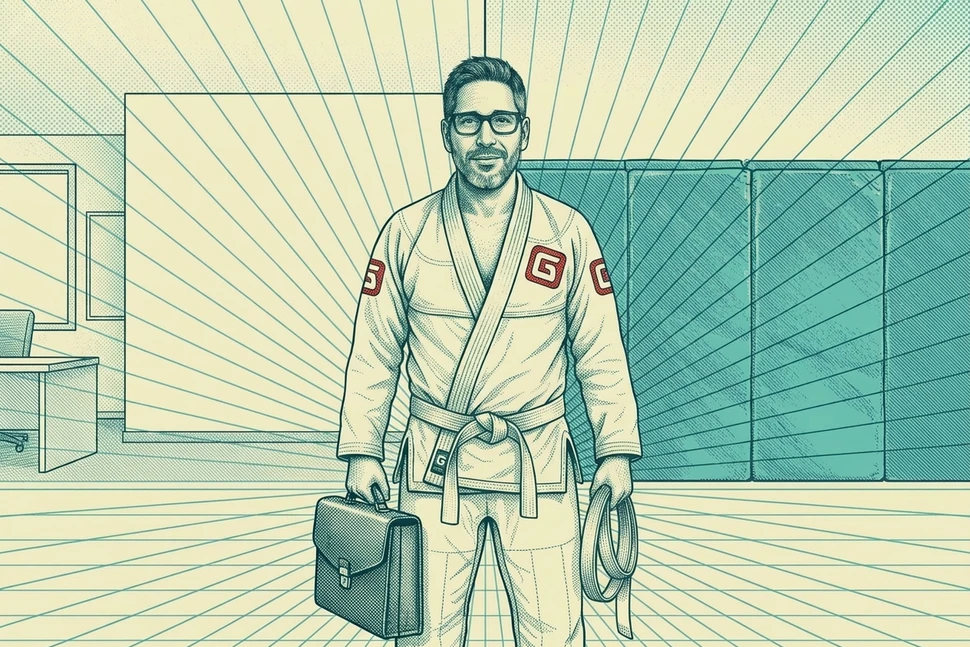
I'm a black belt in taekwondo. I used to compete.
I must have been 13 when I started, and I was very dedicated. I was training five to six times a week.
By the time I got my red belt, I was already teaching, mostly kids but even some adult classes. I got my black belt when I was about 17.
Then, like everybody my age, the UFC comes out, and I'm watching it like, oh crap. I got nothing.
My friends all knew I'd been active in the tournament scene and that I was undefeated. So naturally, as soon as the UFC came out, they came to me and wanted my take on it.
My take was: I got real nervous.
I saw what happened to people who weren't well-rounded. I had no idea what grappling even was, or wrestling. My assumption was that I could use the kind of kicks that are powerful enough to keep it from going to the ground to begin with.
Then I saw Royce Gracie get around lots of kickers and take them to the ground quickly, ending the match.
Suddenly my confidence shrunk, and I felt very vulnerable. I think a lot of people felt that way.
There was no jiu-jitsu anywhere near me. So I started judo.
White Belt With the Wrong Mindset
I was 17, 18. I joined a school at San Jose State, and all the kids there had been doing it since they were five.
And I walked in as a white belt with a certain mindset. I'd never lost a tournament.
I was already nervous because of what I'd seen in the UFC. The judo guys quickly confirmed my concerns. I got thrown a tremendous number of times.
At the time I think I weighed about 155 to 160 pounds. And I remember a woman who was maybe 105, 110 pounds throwing me into the air with ease.
After college I ended up in San Diego for a while, training at the San Diego Judo Academy. And these two Brazilian guys show up. It turns out it's Xande and his brother Saulo Ribeiro, and they're starting University of Jiu-Jitsu right there.
Brazilian culture and the art were still foreign to me, so I wasn't quite sure what to make of them. I didn't even know their legendary history.
I just thought they were a couple of guys training jiu-jitsu, which seemed kind of similar to judo to me at the time.
I did like six months there. All the ne-waza, the ground stuff, was something I always wanted to do in randori.
And I'm like, oh. This is different than judo. This is a level up.
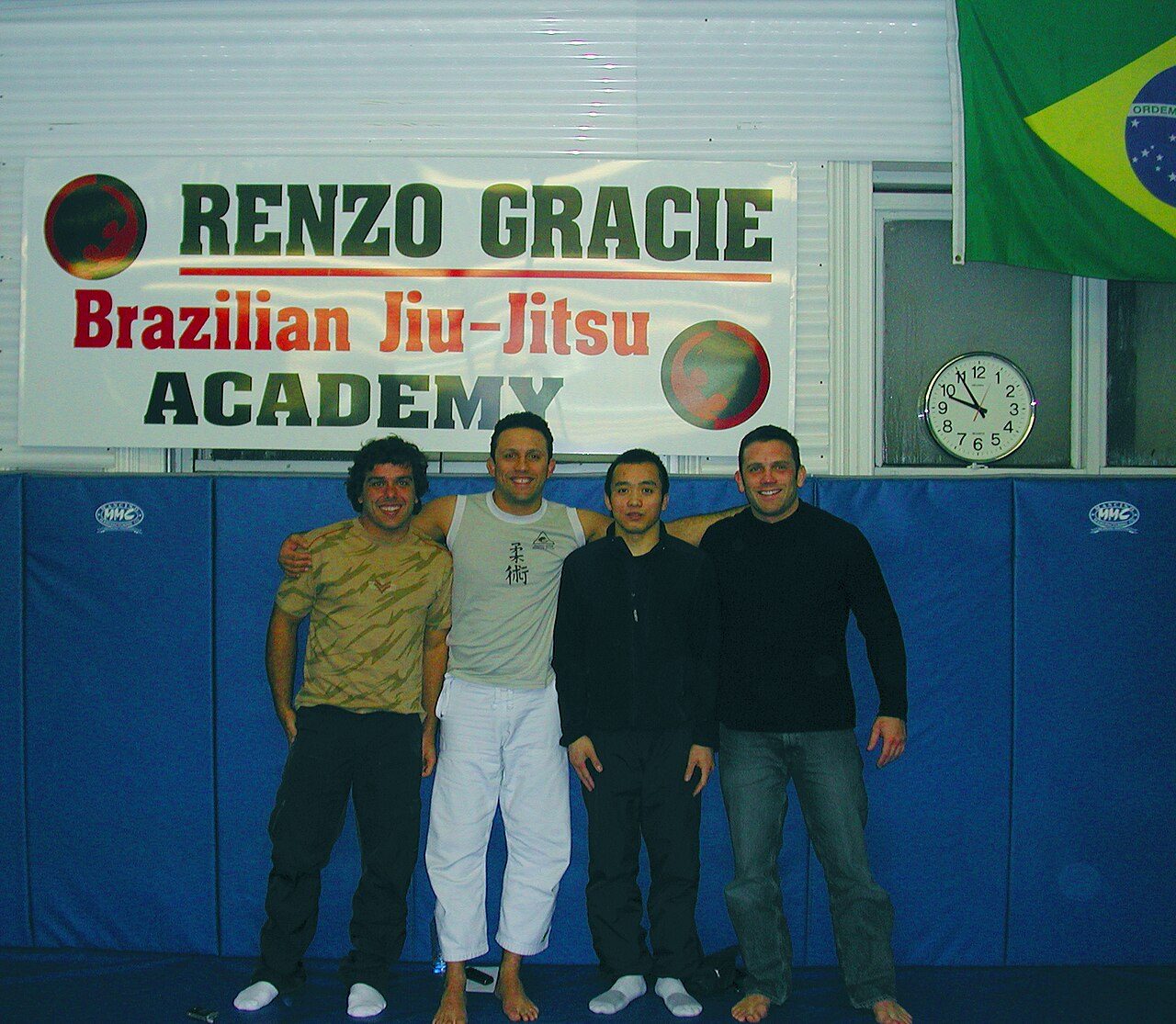
Then I moved to New York and started training at Renzo's. The Blue Basement. I was there about a year and a half.
And then nothing. For like 18 years.
I was focused on my career. I had a business at the same time, a chain of restaurants, and there just wasn't any time to train.
Then I had a kid. Not a lot of free time.
Not Getting Caught Training
I spent those years climbing the corporate ladder. Technology jobs, software jobs, all kinds of different things.
And I'll say this. In those 18 years, jiu-jitsu was almost a thing I had to hide.
I'm not going to say shame. But it's not like you go, "Hey, I'm heading to jiu-jitsu over lunch." It doesn't fit. So in my head it was, okay, I don't want to get caught training.
For some reason. That might've been my own mental thing.
I wouldn't say anything about training. This might be a self-imposed mindset, but I thought the gym, or jiu-jitsu, should be on my own time.
Any time I wasn't working, it would be considered me not being dedicated.
Running Home Crying to His Mom
About six months before I started at Gymdesk, I was just messing around with my son. I wanted to teach him some basics. That's what got me back on the mat.
It didn't go very well at first.
I tried to impose some of the things I used to do when I was teaching taekwondo to older kids. But my son was only five and not focused. Often it ended with him running home crying to his mom, and then of course I'd have to answer to my wife about that.
What changed it was when I kept teaching him, but made it fun.
I invited his friends over, and pretty soon they were automatically trying to compete and one-up each other. Along with the games and the fun, I was adding more kids to the program.
I started with classes that were about 45 minutes. By the end, the classes were almost three hours long. We would:
- Start with kicking
- Do some sparring
- Move to judo and do some standing techniques and sparring
- Move into jiu-jitsu
- Do sparring after that
I also had parents in there, which was kind of cool.
Is It Okay if I Jump Into Class?
Then I started traveling around and meeting customers, which I would've done anyway. And I'd ask, "Wait, is it okay if I jump into class?"
I was very nervous to ask, because I wasn't sure it was appropriate.
I remember when I owned a restaurant and vendors would come by. I'd be irritated when they didn't try the food, especially if they were trying to sell me something and it was lunchtime.
I figured gym owners might feel the same way. So it should be safe to ask. I'd try it and see what they thought.
And they'd say, yeah, absolutely. Everybody loved it.
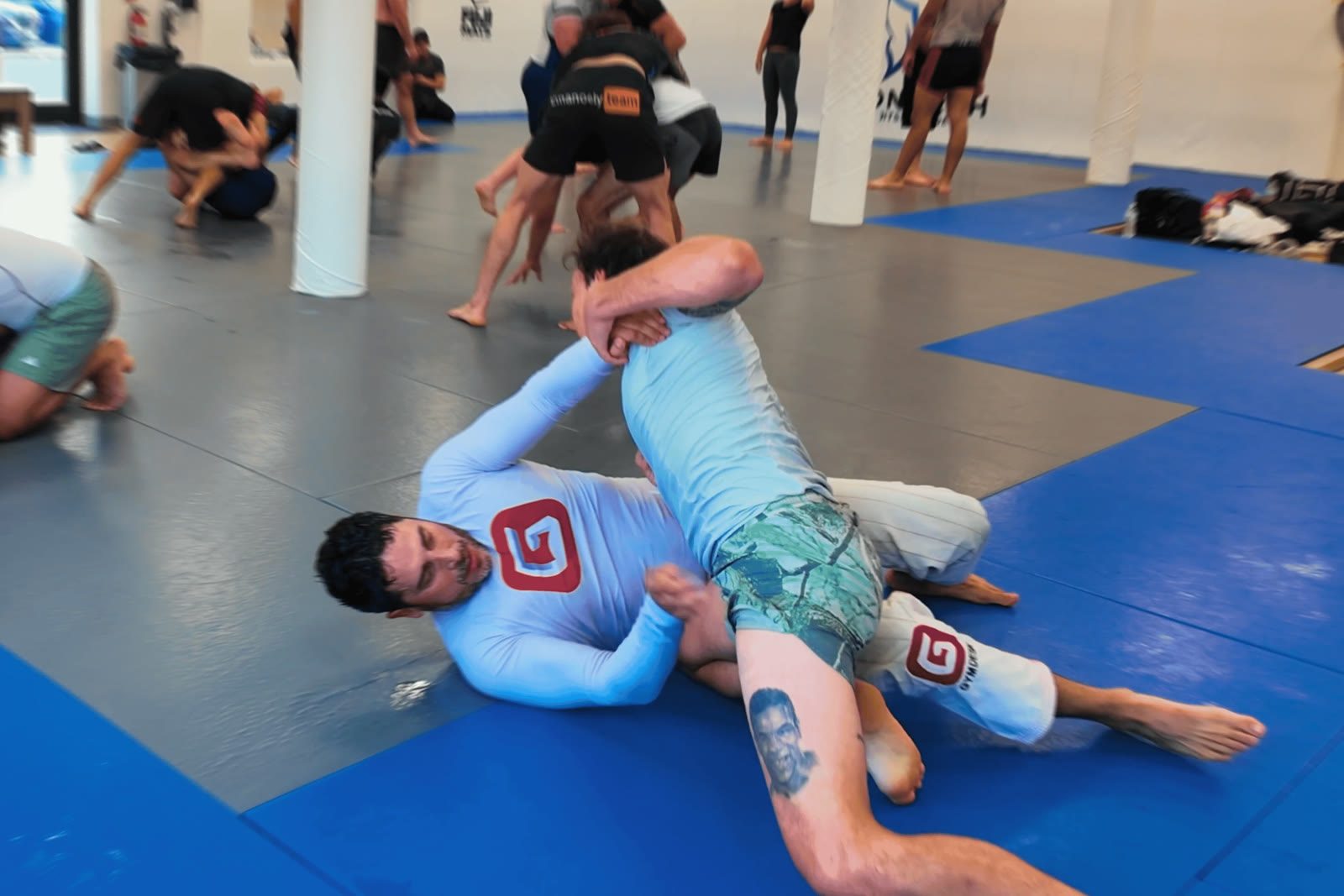
The first gym I actually trained at was Forte Jiu-Jitsu in Arizona. I'd already visited a few other customers and done some light interviews, but I hadn't been on the mats.
I'm so happy the owner welcomed me on. I enjoyed the class, and then we rolled. I didn't film that one, but I thought it would be a good idea to do it on future visits.
So now I'm really working on it. This is real. It's a passion.
And now it's like, no. This is my job. And I can do it with pride.
Once I started getting on the mat and recording more Gymdesk Originals episodes, it was clear to me that this was going to be part of my leadership. Being on the mats with customers, hearing from them how things are going, and getting ideas on how I can help the community.
Once that was established, I almost think of it as my training. It's part of my job.
I feel like I'm not doing my job now if I'm not training, whether it's at home, in my own school, or when I'm traveling to see customers.
How cool is that?
Missing Several Tools
And now I'm getting into competition.
I had my first competition. My son was there, my wife, my other kid, and a bunch of people from my work. And I'm out there on the mats, and I'm like, oh man.
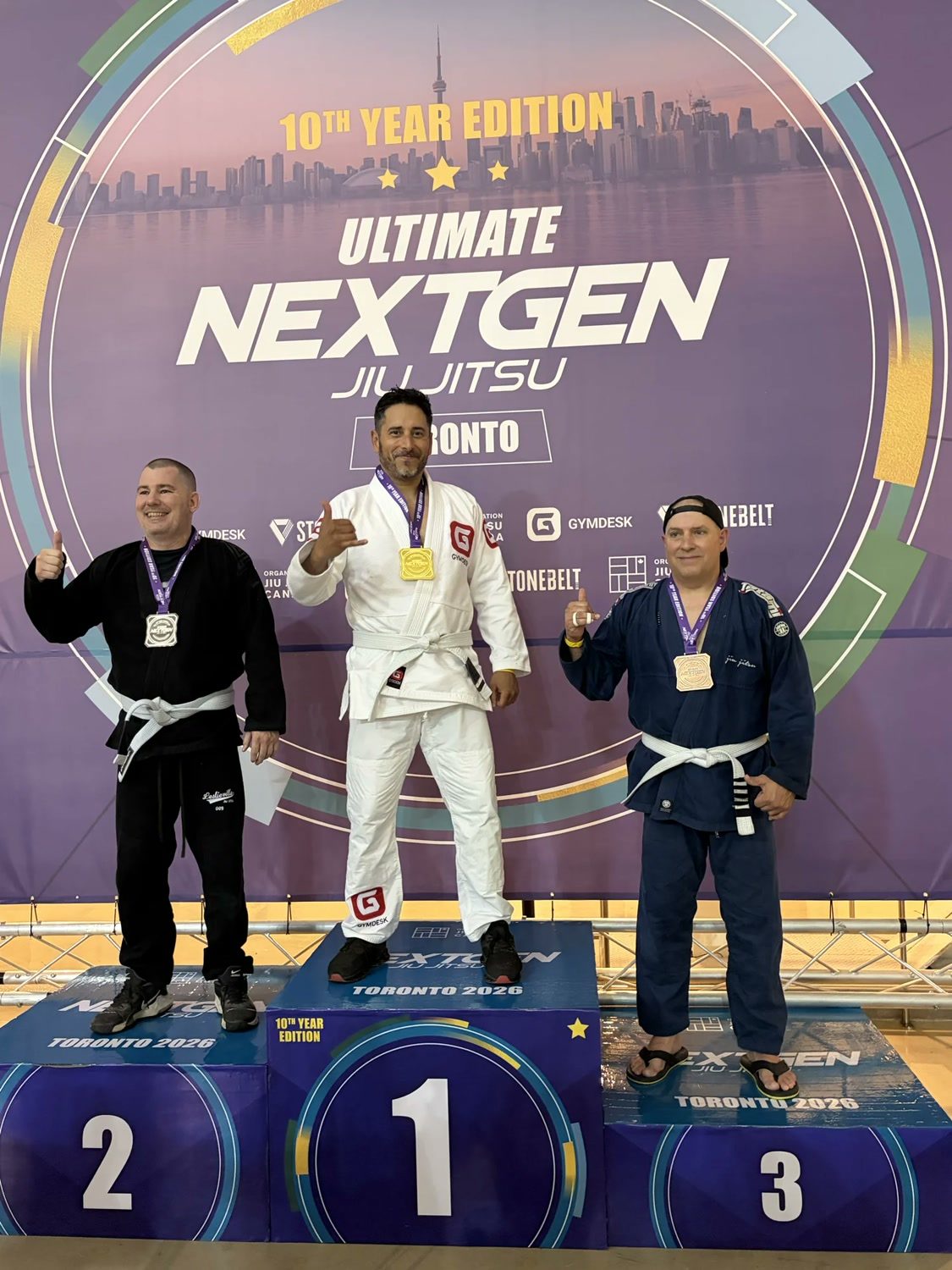
I did well, but I also learned about myself. I'm missing several tools.
Grips were one thing. I caught a kataguruma in the first round, which was great. I'd been practicing that for a while.
On the second one, the guy was hunched over. And I had nothing. I had no answer for that, because I couldn't get the grips.
So when I went back to ITC New York, I asked Danny Gutman, who runs the judo program there. Guys crunched over, super stiff, elbows in. What do I do?
"For judo players, that's a lottery ticket."
Somebody hunched over like that is doing half the work for you, he said, and they're open to overhand grips.
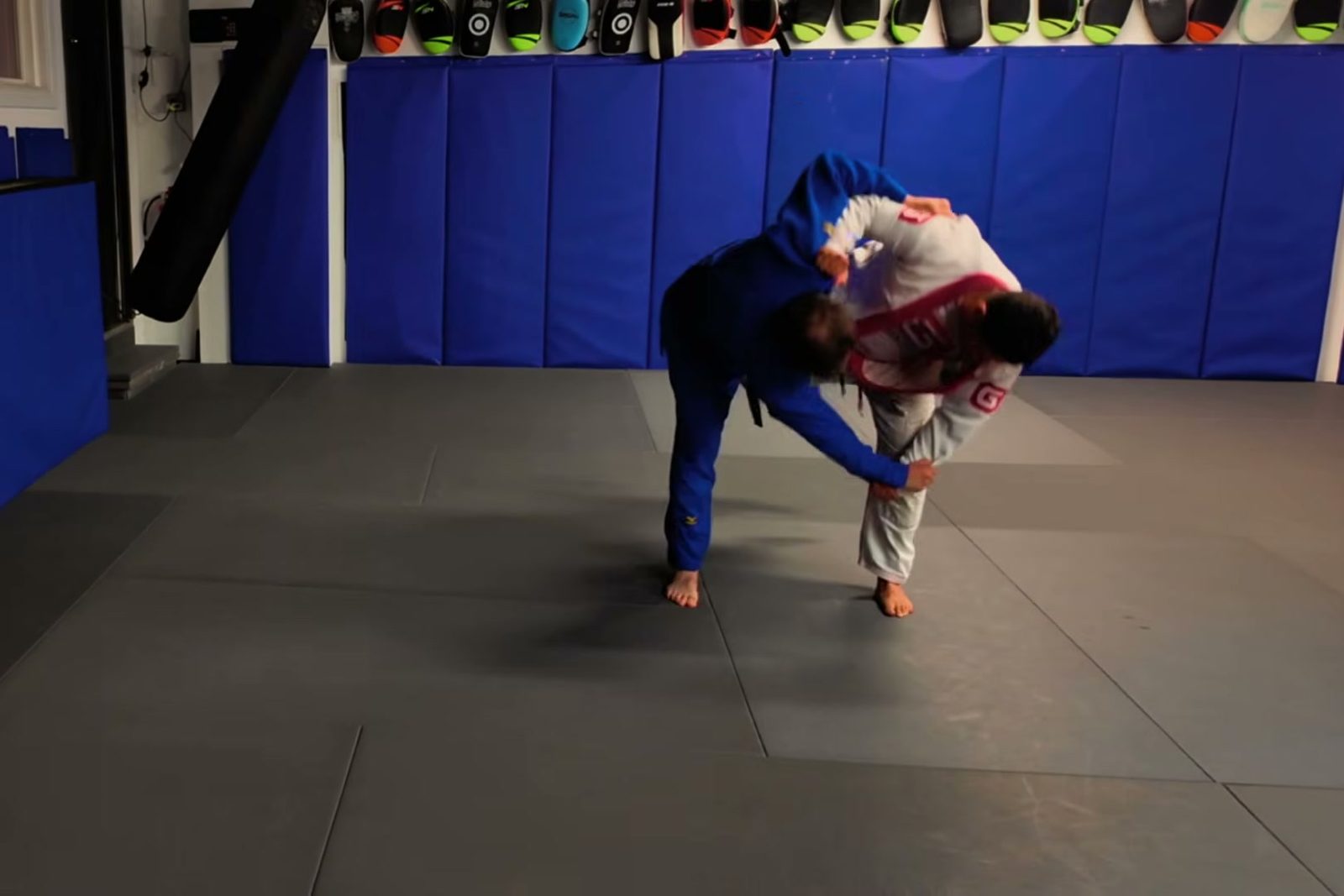
At Combat Sports Academy, I asked Lakea Vargas about the guys with the gorilla grips. If I can't rip the grip off, what happens?
Turn right into it and step into a kataguruma. I was like, oh man, you gave me two gifts today.
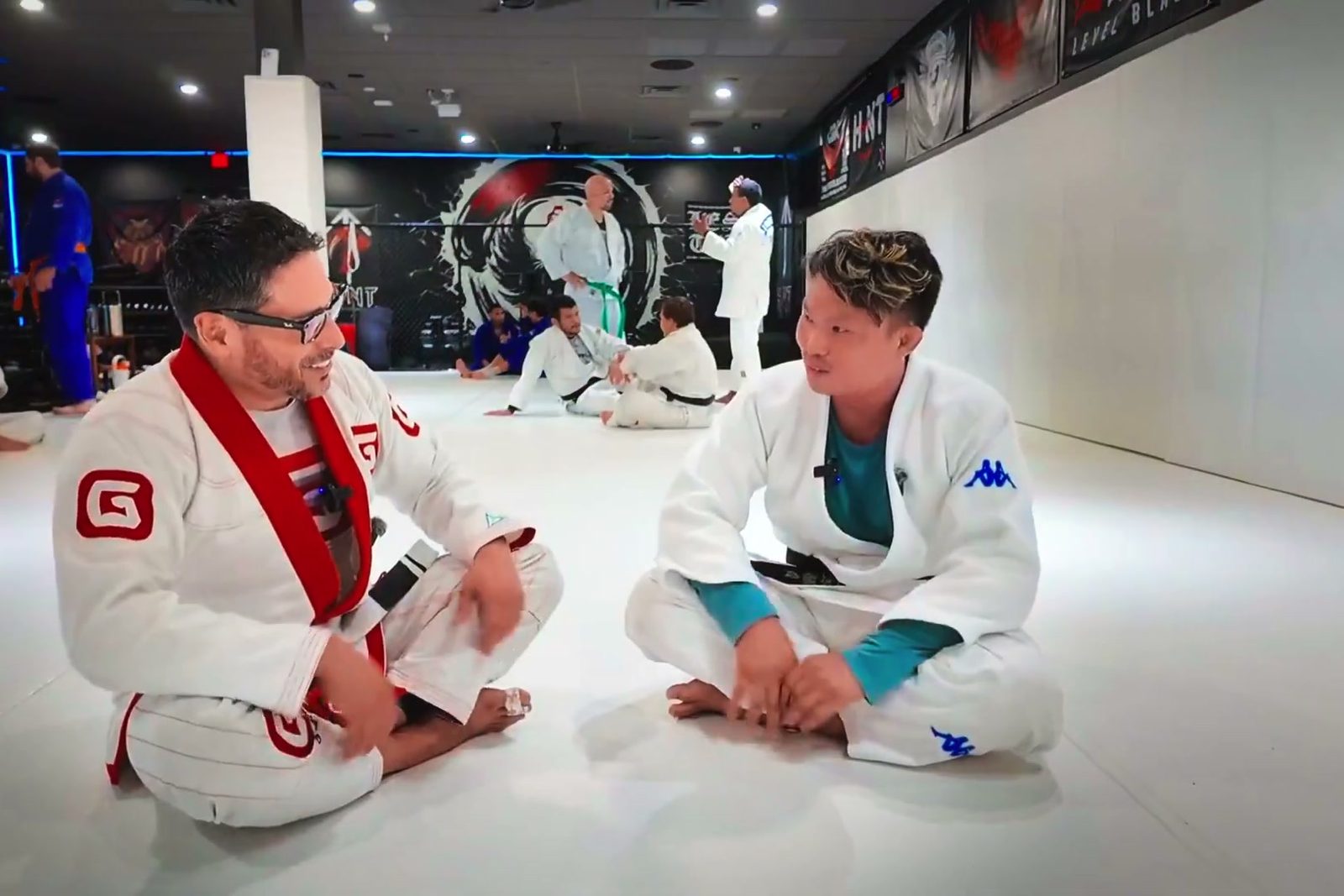
All Your Tools Are Gone
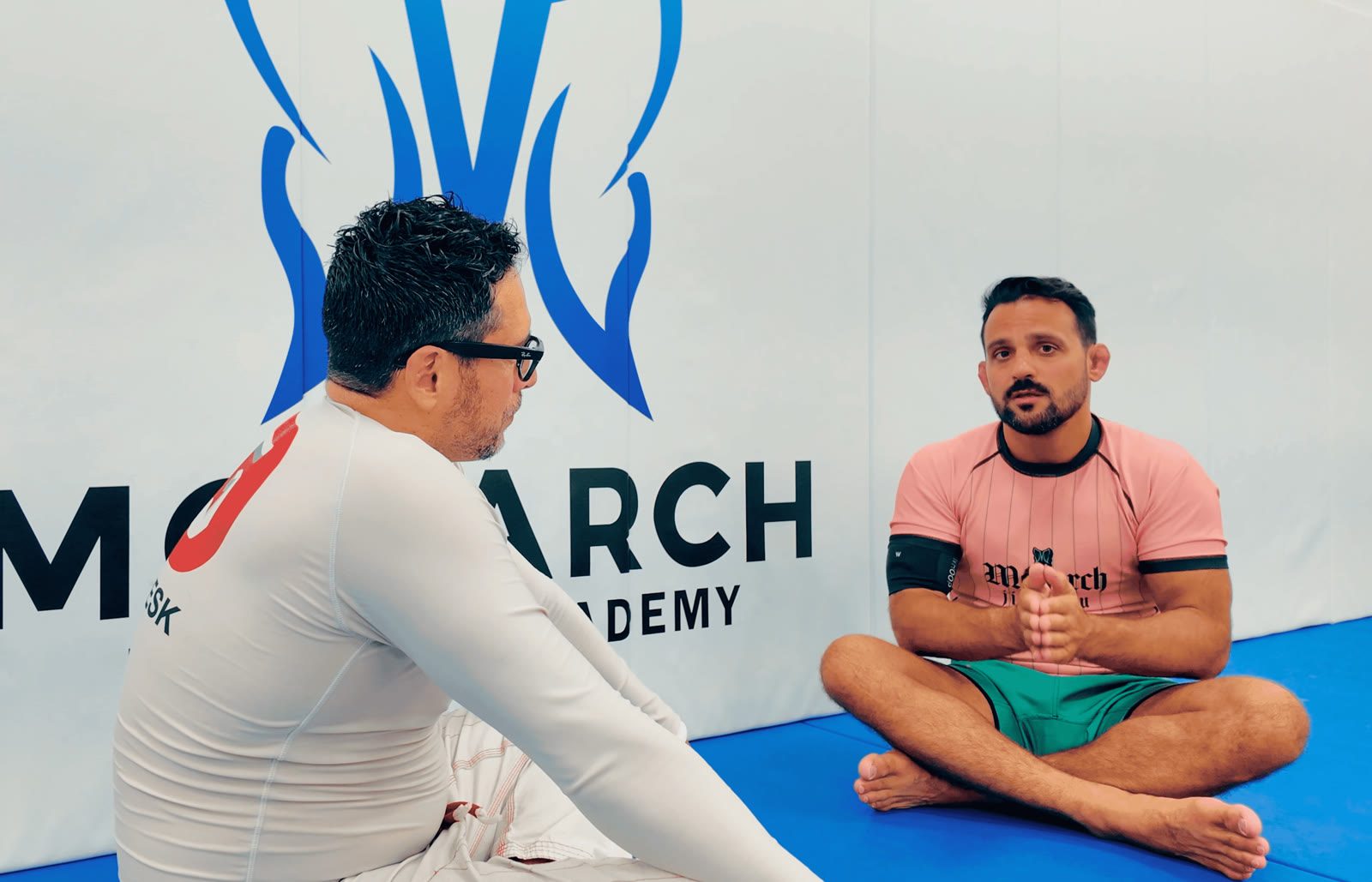
When we filmed at Monarch Jiu-Jitsu, I'd never been to Long Island.
The day before, I was doing judo. And Monarch is a no-gi dominant school, and I'm all gi. So I felt nervous walking in, just because it's not what I'm used to.
I asked Nick, the owner, about it. Do I just embrace it and go find new tools?
"You gotta embrace it… It's all the same stuff, just different."
I've got a little home gym now, too. I throw a gi over the pull-up bar and just hang on it, working on grips. I can do a pull-up with the bar, but not with the gi yet.
I'm almost 50. And there are a lot of people picking up jiu-jitsu, or any combat sport, later in life. Everybody's reasons are different.
Mine come from wanting to help my sons learn the art, and wanting to help schools run their small businesses successfully. As a former small business owner, I know how hard that can be, and I want to do whatever we can to help.
I think being on the mat and learning from our customers is the least we can do.
Gym management software that frees up your time and helps you grow.
Simplified billing, enrollment, student management, and marketing features that help you grow your gym or martial arts school.


FAQ
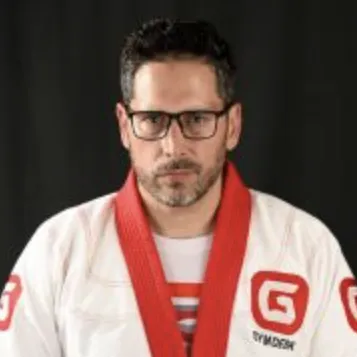
Alexは10年以上にわたり、成長段階にあるSaaS企業を率いてきました。営業チームやカスタマーサクセスチームの拡大から、CEOとしての経営全般までを担っています。GoSite、Kaseya、Yodleで経営幹部を歴任し、顧客中心の戦略を確かな売上につなげてきた実績があります。
長年武道に打ち込んできたAlexは、テコンドーの黒帯を持ち、現在もブラジリアン柔術と柔道の練習を続けています。常に学び、常に適応する「白帯の心構え」が、Gymdeskの経営や、Gymdeskを利用するジムオーナーとの関わり方の土台になっています。オフィスにいないときは、マットで練習しているか、Gymdeskのドキュメンタリー動画シリーズ「Gymdesk Originals」の撮影で北米各地のジムを訪れています。