幼児の武道:最適なクラスの選び方(と避けるべきクラスの見分け方)
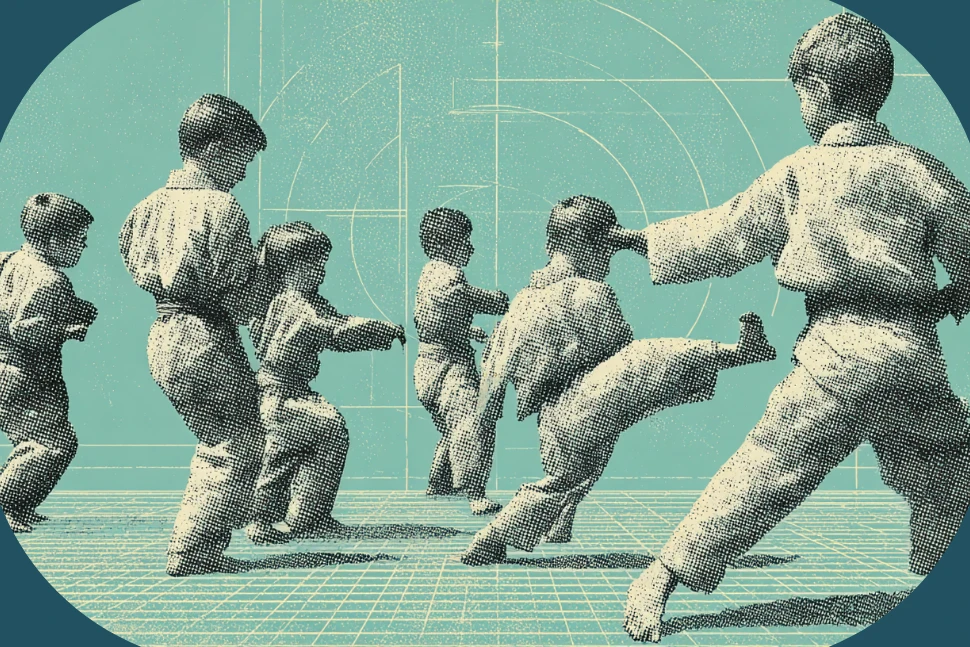
本当にうまくいくのでしょうか?ロビーで靴を脱ぎ、お子様と一緒にクラスの様子を眺めているとき、たいていの場合、反応は次の2つのどちらかになります。
お子様があなたの足にしがみついているか、あるいはジャングルジムのようにマットに向かって猛ダッシュしているかのどちらかです。
これは失敗の予兆でしょうか?
ロビーにいるすべての保護者が抱く疑問です。うちの子は武道を始める準備ができているのか?このガイドでは、その答えを明確かつ率直にお伝えし、マットに上がる際に注目すべき点をご紹介します。

幼児でも武道はできるのか?
3歳になれば、その年齢層向けに特別に設計されたプログラムであれば、ほとんどの幼児が武道に参加可能です。
すべては「武道プログラム」と「お子様自身」という2つの要素にかかっています。規律を重んじる長時間のクラスは、2歳児には一般的に負担が大きすぎます。
4歳から5歳になると選択肢は広がりますが、それでもクラスの構成に大きく左右されます。幼児の発達段階で何が起こるのかを見ていきましょう。
AGE |
DEVELOPMENTAL REALITY |
WHAT THIS MEANS FOR CLASS FORMAT |
2 |
Runs, climbs, mimics—but can't follow structured instruction yet |
Skip formal martial arts. Try parent-and-me movement classes instead. |
3 |
Short bursts of focus (3–6 min), basic imitation, limited sequencing |
30-min max, games-based, one concept per class |
4 |
Follows simple two-step directions, takes turns, basic motor control |
30–45 min, rotating activities every 5–7 min |
5 |
Better coordination, can hold a routine, early self-discipline emerging |
Up to 45 min, can handle simple sequences and light repetition |
このことは、 CDC(米国疾病予防管理センター)のマイルストーン・トラッカー の研究でも裏付けられており、片足跳び、バランス感覚、協調運動といったスキルは3歳から5歳の間に急速に発達します。
これに、 年齢×2〜5分という集中力の持続時間を考慮すれば、幼児向けのクラスが年長児向けのプログラムと大きく異なる必要がある理由が理解できるはずです。
幼児にとっての各武道の特徴
武道には明らかな違いがありますが、それ以上に重要なのは各道場の方針です。
MARTIAL ART |
BEST STARTING AGE |
BEST FOR |
KEY WATCH-OUT |
BJJ |
3+ |
High-energy, tactile kids who love rough-and-tumble play |
Confirm play-first structure—not techniques or submissions |
Karate |
3+ |
Kids who do better with structure and routine |
Quality varies wildly—vet the program carefully |
Taekwondo |
4–5 best |
Coordination-focused kids who like movement |
Limited curriculum depth at age 3–4 |
Judo |
5–6 best |
Kids who already love rough-and-tumble play |
Ask about mats, instructor ratios, fall-training progression |
Striking arts (MMA, boxing, Muay Thai) |
Not for toddlers |
N/A |
Hard pass at this age; revisit at 6–8 |
3歳〜5歳向けのブラジリアン柔術(BJJ)
ブラジリアン柔術(BJJ)は、3歳から5歳の子どもたちに驚くほど適しています。BJJのクラスは寝技が中心で体への負担が少なく、主に以下の要素に重点を置いています。 遊び。
この年齢では、技やサブミッション(関節技・絞め技)を習得することよりも、体を動かすこと、安全な転び方を身につけること、そして他の子どもたちとの関わり方を学ぶことが大切です。
Renzo Gracie Niagaraでは、フェルナンド氏が3歳から5歳の子どもたちに、冬の安全対策として受け身や顎を引く動作を教えています。BJJの技術は、遊びの中に自然と組み込まれています。
We pretend to not do BJJ… especially in Canada, we are in a very cold country. If they fall, they will not hit the back of the head.
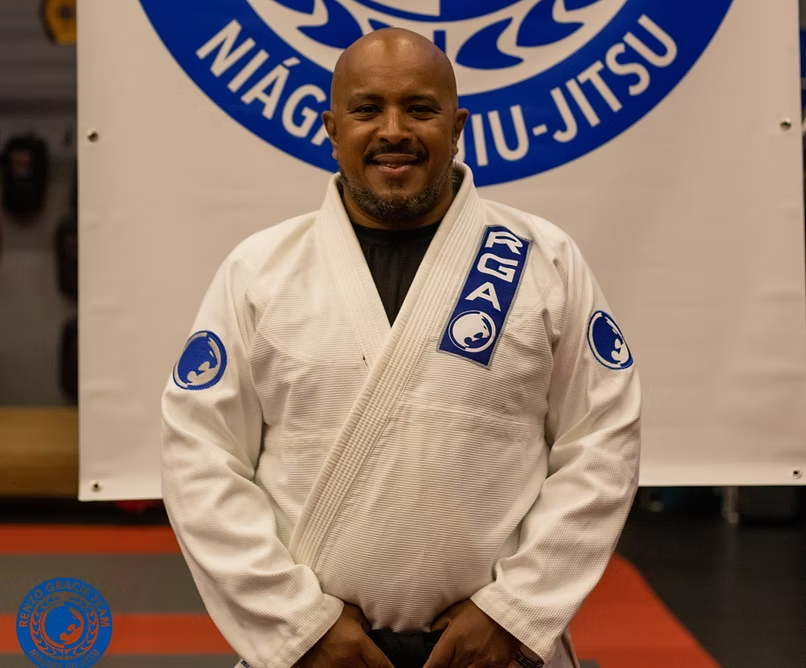
子どもたちは、クマ歩きや丸太転がり、前転、後転といった基本的な動きを学びます。クラスの大半はゲームをして過ごします。
3歳の子どもにとって、このクラスが家族以外の人たちと過ごす初めての本格的な社会体験になることも少なくありません。 Unlimited Jiu-Jitsu のジョー・ガリーノ氏は、その点を踏まえて「タイニー・Tレックス」プログラムを考案しました。
For a lot of those kids, it's their first social setting.
実際の様子は以下の通りです。
これらのクラスは、活発な動きや交流が多いため、子どもたちにとって非常に楽しい時間となります。やることがたくさんあるので、子どもたちが飽きずに集中し続けられるのです。
遊びを取り入れたアプローチの詳細については、こちらをご覧ください。 BJJを学べる15の子供向けゲーム。
3歳〜5歳向けの空手
空手は、子どもに武道を習わせたいと考えている保護者にとって、始めやすい選択肢の一つです。この年齢層のカリキュラムはシンプルで、型よりも以下の点に重点が置かれています。
- 聞く力を養う
- 指示に従うことを学ぶ
- 基本的な運動パターン
- 簡単なルーティン(礼や整列など)
幼児向けの空手プログラムは、大人の伝統的なクラスとは全く異なります。指導法そのものを変える必要があるのです。 Lion's Heart Family Martial Arts のMersina氏は、その理由を次のように説明しています。
If I taught the way I was taught growing up, I probably wouldn't have a studio. These kids would not be here.

実際の空手クラスはこのような内容です:
プログラムによっては、 幼児がスパーリングや試合を行うこともあります。恐ろしく聞こえるかもしれませんが、幼児は通常、防具を着用しており、必要に応じて審判がすぐに介入できるようになっています。
3歳から5歳向けのテコンドー
テコンドーは空手と非常によく似ており、多くの道場で幼児向けの「リル・ドラゴンズ」プログラムが提供されています。空手と同様、これらのプログラムは規律、指示に従うこと、ルーティンの構築に重点を置いています。
テコンドーは蹴り技が中心であるため、プログラムはラインドリル、動作、バランス、協調性を重視する傾向があります。実際の様子は以下の通りです:
ただし、欠点もあります。カリキュラムの深さが限られている傾向があることです。もっとも、ほとんどの幼児は本格的なカリキュラムに取り組む準備ができていないため、これは当然のことと言えます。
テコンドーの子供向けプログラムは、5歳前後で本領を発揮し始めます。
3歳から5歳向けの柔道
体重をかけて転倒することは、怪我の最大の要因の一つです。柔道には足払い、投げ技、叩きつけが含まれるため、米国ではそれほど一般的ではありません。
幼児はまだそれほど体がうまく動かせません。
指導者が安全プロトコルを整えているか、また子供の安全を確保するための柔らかいマットが用意されているかを必ず確認してください。
柔道は即座に避けるべきものではありませんが、検討している保護者は詳細を確認する必要があります。以下の点について、納得のいく回答を得るようにしましょう。
- 安全対策(具体的な内容)
- マットの品質(スプリングボードや発泡スチロールで補強されたマットが理想的です)
- 指導者と生徒の比率
柔道プログラムの多くは、5歳から6歳頃に本格的な練習に適した時期を迎えます。
幼児には向かない打撃系格闘技
キックボクシング、ボクシング、ムエタイ、総合格闘技(MMA)は、 幼児には 適していません。
幼児には、接触の多い打撃系格闘技に必要な身体の協調性、コントロール能力、感情のコントロールがまだ備わっていません。たとえプログラムが「幼児向けに調整されている」と謳っていても同様です。3歳児に対してサンドバッグやパンチングミット、グローブを使った練習を行っている教室は、避けるべきです。
幼児が頭部への蹴りを心配するような環境は望ましくありません。
とはいえ、6歳から8歳頃になれば、身体の協調性や感情のコントロールが身につき、安全に配慮した接触練習ができるようになるため、多くの打撃系格闘技が適した習い事となります。
FOR GYM OWNERS READING THIS:
When a parent walks in, they've already filtered out anything that looks unsafe. They're not choosing between BJJ and karate—they're choosing between environments.
Your trial class needs to feel calm, structured, and enjoyable inside 30 seconds, because that's how fast the decision gets made.
優れた幼児向けクラスとは
優れた幼児向けクラスは、子供の発達段階に合わせた明確な構成になっています。
これは非常に重要なポイントです。多くのスクールが、子供たちを既存の枠組みに無理やり当てはめようとします。つまり、ティーンエイジャーや大人向けのクラスと同じ内容をそのまま適用しようとするのです。。
それは良くありません。
経験豊富な指導者は、幼児の短い集中力や感情の起伏を考慮し、年齢に合わせたクラス作りを行っています。
ポール・ギルマン(Paul Gilman)氏( アーガイル柔術(韓国で6年間幼稚園教諭を務めた後、当スクールを開校)は、「リトルイーグルス」クラスを綿密なローテーションで運営しています。
Every six minutes, we are pretty much changing what we're doing. So, the kids get used to that.
概要は以下の通りです。
ELEMENT |
WHAT GOOD LOOKS LIKE |
RED FLAG |
PRIORITY |
Class length |
30 min (age 3), 45 min max (ages 4–5) |
60-minute classes |
Critical |
Activity rotation |
New activity every ~6 minutes |
One long drill that runs the whole class |
Critical |
Curriculum |
One simple concept per class |
Multiple techniques crammed into one session |
High |
Teaching style |
Games-based throughout the whole class |
"We play games at the end" |
High |
Class size |
10–20 students with assistant instructors |
One instructor for 20+ kids |
Critical |
Parent visibility |
Clear policy (watch from lobby or not) |
Vague rules, parents pulled in randomly |
Medium |
これらはすべて必須の要素です。幼児の脳の仕組みに基づいたものであり、「あるべき姿」を明確にしているかどうかが、3歳児専用に設計されたプログラムと、単に3歳児を受け入れているだけのプログラムを分ける境界線となります。
幼児向けクラスは、適切に運営されていれば常に変化し続けるものです。これは選択肢ではなく、幼児の脳の仕組みそのものです。
幼児の集中力を維持するには、 彼らの 集中力に合わせて取り組む必要があります。
FOR GYM OWNERS READING THIS:
If your toddler program loses students continually after month two, you're probably dealing with an attention or structure problem. Consistently rotating activities, teaching a single concept per class, and a 30-minute ceiling are requirements.
You can use martial arts software like Gymdesk to manage family scheduling, ensuring that classes are segmented by age.
体験クラスで保護者が注意すべき危険信号
質の低い武道プログラムとはどのようなものでしょうか。また、保護者がそれを見抜ける可能性はどれくらいあるのでしょうか。
見るべきポイントさえ押さえていれば、質の低いプログラムは30分以内(あるいはそれ以下)で見抜くことができます。
注意すべき危険信号をまとめました。
WHAT YOU SEE IN THE TRIAL CLASS |
WHAT IT ACTUALLY TELLS YOU |
A single drill that runs 20–30 minutes |
The instructor doesn't understand toddler attention spans |
Toddlers forced to hold rigid stances for long stretches |
Adult curriculum being applied to kids who can't physically sustain it |
Any form of sparring or hard contact |
Either dangerous or the instructor confuses "tough" with "good" |
Yelling or verbal abuse used as primary discipline |
Likely culture problem; will get worse over time, not better |
One instructor alone in a room of 20+ kids |
Safety issue; no way to give individual attention |
Belt promotions in the first month |
"Belt factory" school—promotions are revenue, not progress |
"Testing" of any kind on day one |
The school is selling rank, not teaching skill |
幼児クラスはブートキャンプのような場所ではありません。幼い子供たちを厳しく鍛え上げるのではなく、遊びを通じて武道に優しく、かつ大切に触れさせる場であるべきです。
クラスが収拾のつかない状態であれば問題です。では、保護者はどのようにして子供に最適なクラスを選べばよいのでしょうか。
幼児に最適なクラスの選び方
保護者のためのシンプルなアクションプランをご紹介します。これに従えば、お子様にぴったりのクラスを選ぶことができます。
- 親の期待ではなく、子供の個性に合わせる。 エネルギーに満ちた子供は、動きの多いクラス(ブラジリアン柔術など)に向いています。感受性が強かったり内向的だったりする子供は、空手やテコンドーのような体系化された環境を好む傾向があります。
- 必ず体験クラスから始める。 指導者は保護者に対し、子供を預けるというリスクを求めています。体験期間があれば、保護者はその武道プログラムが子供に適しているかどうかをじっくり見極めることができます。体験なしでの入会は避けましょう。
- 生徒の継続率について質問する。 優れた幼児向けプログラムであれば、2ヶ月目以降も生徒が継続して通うことができます。保護者の方は、この点についてインストラクターに直接尋ねてみてください。
FOR GYM OWNERS READING THIS:
Take some time to think through the logistics. Have parents in your classes enrolled two or more kids? Are they dealing with a busy schedule? Look for ways to offer sibling discounts, back-to-back class times, and simple scheduling.
Though they'd hesitate to admit it, convenience matters a lot to parents.
武道の種類よりもクラスの質が重要
お子様が3歳以上であれば、どの武道を選ぶかよりも大切なことがあります。
それは、そのプログラムが3歳児向けに作られているかどうかです。短時間のクラス、次々と切り替わるアクティビティ、1回のセッションにつき1つのコンセプト、そして遊びを通して教えるインストラクターがいるかどうかがポイントです。
たとえ「理想的ではない」武道であっても、素晴らしいプログラムであれば、「理想的」な武道の質の低いプログラムよりもはるかに高い効果を発揮します。
最適なクラスは必ず見つかります。最初の30分でその良さが実感できるはずです。
FOR GYM OWNERS READING THIS:
Toddler programs are hard to run—segmented age groups, family scheduling, parent communications, trial conversion. Gymdesk handles the operational layer so you can focus on the teaching. Free 30-day trial, no credit card.
Gym management software that frees up your time and helps you grow.
Simplified billing, enrollment, student management, and marketing features that help you grow your gym or martial arts school.