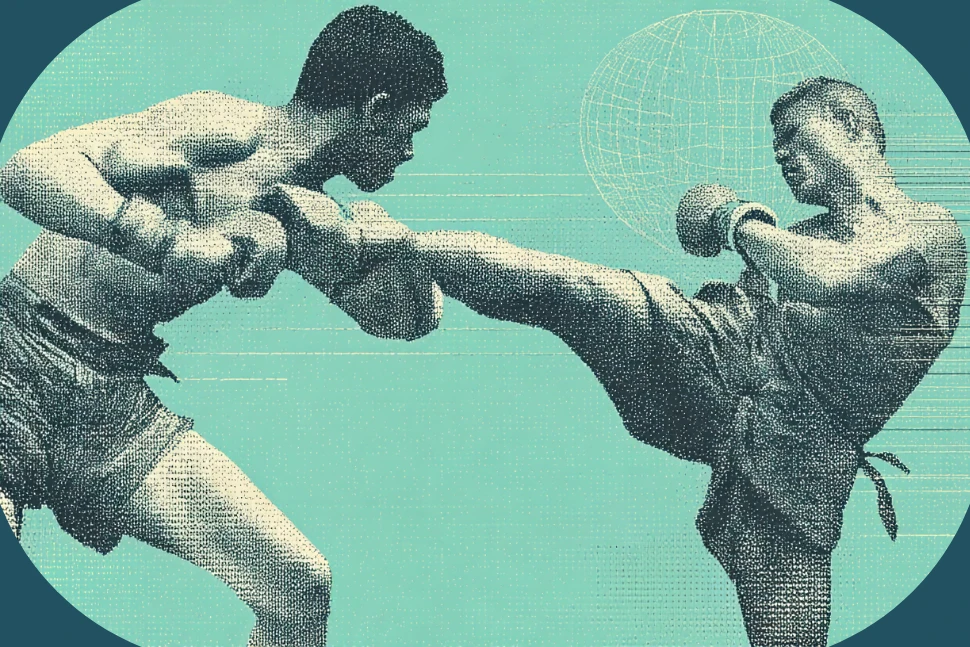
生徒がジムのクラススケジュールを見ているとします。
午後5時の枠には キックボクシング。午後6時の枠には ムエタイ。
これらのクラスは連続しており、インストラクターも料金も同じですが、生徒たちはその本当の違いを理解していません。聞きたいけれど、恥ずかしくて聞けないのです。
「知っておくべきことなのに」 と彼らは自分に言い聞かせます。
ついに勇気を出して尋ねてきました。 「キックボクシングとムエタイって何が違うんですか?」 説明しようとしますが、話がまとまらず、答えが長くなってしまうことに気づきます。本来、こんなに難しいことではないはずです。
多くの説明は単純化しすぎているか(「えーと、肘が使えるかどうか」)、あるいは誰も求めていない歴史の話で複雑にしすぎています。
今日、それを解決しましょう。
この記事を読み終える頃には、入会希望の生徒に対してキックボクシングとムエタイの違いを明確に説明できるようになっているはずです。あなたから話を聞いた後、彼らは両者の違いをはっきりと理解し、現実的な期待を持ってクラスに臨めるようになるでしょう。
クイックアンサー:キックボクシングとムエタイの比較
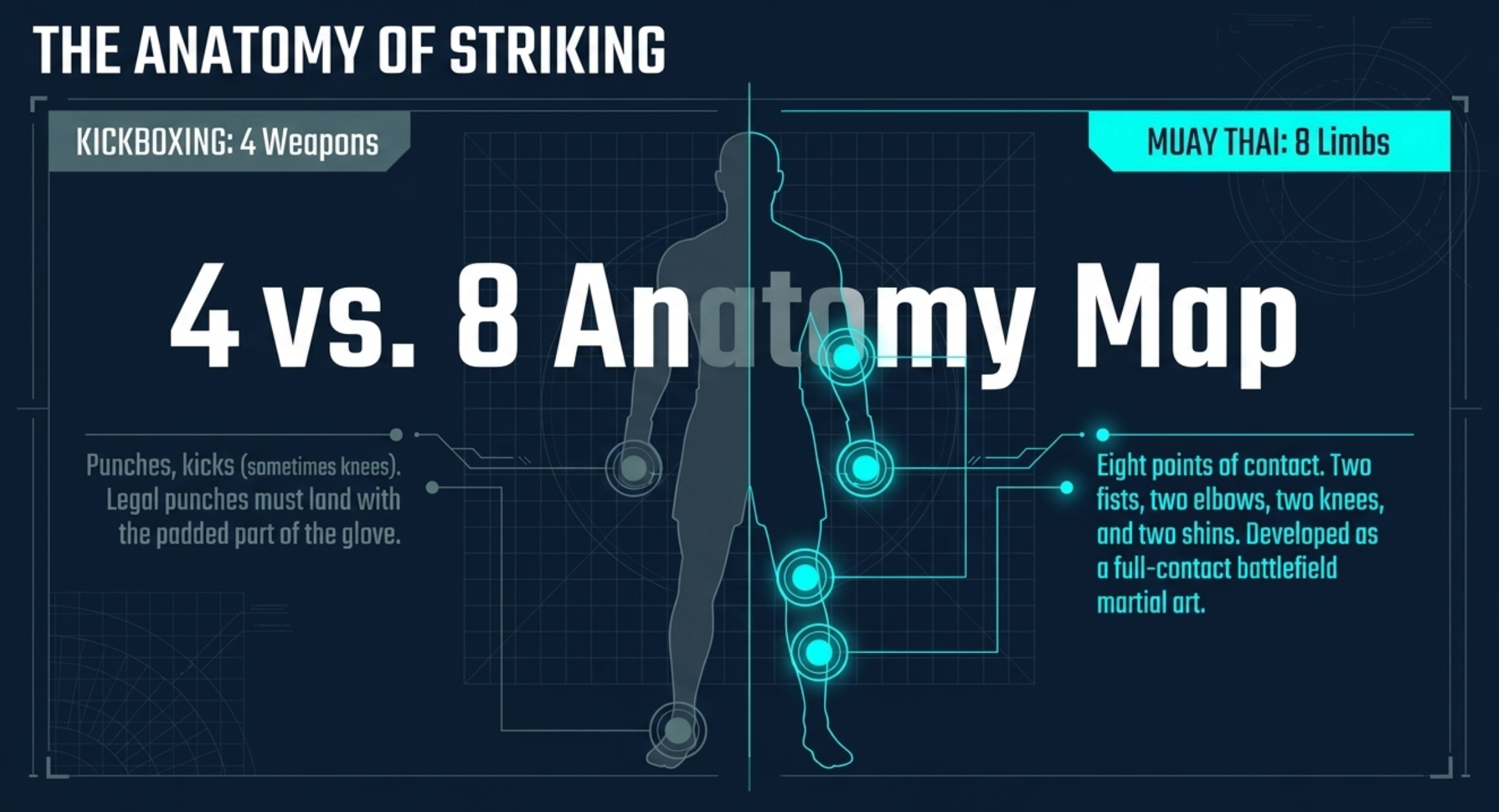
ムエタイが8つの攻撃手段を用いるのに対し、キックボクシングは4つを用います。これが最大の違いです(詳細は後述します)。
両者の簡潔で分かりやすい要約と比較をまとめました。この比較表を生徒への説明にご活用ください。
Aspect | Kickboxing | Muay Thai |
Offensive tools | Punches, kicks (sometimes knees) | Punches, kicks, elbows, knees |
Clinch | Minimal, broken quickly | Core part of fighting |
Scoring | Volume, combos, activity | Clean, powerful strikes |
Class style | Often cardio + combos | Pad work, clinch work, conditioning |
Self-defense | Strongest at distance | Strongest in close range |
Equipment | Gloves, bags, mitts | Adds Thai pads, shin guards |
Students | Broad, fitness-heavy | More committed practitioners |
この比較表は、小さなカードに印刷したり、受付に掲示したり、ウェブサイトで共有したりすることができます。
キックボクシングとは?
キックボクシングは総称です。 ジムによって、以下のような意味合いが含まれます。
- アメリカンキックボクシング は、西洋ボクシングとフルコンタクト空手を融合させたものです。パンチとキックを使用しますが、ローキック、肘打ち、膝蹴り、クリンチは禁止されています。 リック・ルーファス や ベニー・"ザ・ジェット"・ユキーデ は、アメリカンキックボクシングの伝説的な選手です。
- ダッチキックボクシング は、ムエタイ、極真カラテ、西洋ボクシングを融合させたものです。強力なボクシングのコンビネーションとローキックを多用します。 アーネスト・"ミスター・パーフェクト"・フースト や ニキー・ホルツケン は、ダッチキックボクシングの伝説的な選手です。
- K-1スタイル パンチ、キック、限定的な膝蹴りを使用し、肘打ちは禁止されています。 ミルコ・“クロコップ”・フィリポビッチ および アーネスト・“ミスター・パーフェクト”・フースト は、伝説的なK-1ファイターです。フーストは両方のスタイルで競技し、チャンピオンシップを獲得しているため、私たちのリストに2度登場しています。
キックボクシングのスタイルそのものよりも、その核となる考え方が重要です。クリーンで力強いパンチとキック、正確なフットワークと機動力、そして手数の多い打撃コンビネーションがその本質です。
ヘビー級キックボクサー2名による実際の試合の様子をご覧ください。
打撃プログラムを構築する際、キックボクシングは標準化しやすく、指導経験の異なるインストラクターであっても教えることが可能です。
また、適応性も高く、同じ キックボクシングのカリキュラム を、競技志向のトレーニングから高強度のフィットネスクラスまで、さまざまな環境で活用できます。
ムエタイとは何ですか?
ムエタイは「八肢の芸術」として知られています。ジャブ、クロス、フックといったキックボクシングの基本的な打撃に加え、肘打ちや膝蹴りを組み合わせた、破壊力抜群の強力な打撃システムです。
キックボクシングとムエタイを分かつ最大の違いは「クリンチ」です。これは、ファイターが相手の首を両手で掴む立ち技の攻防です。
このクリンチを使って、以下のことが行われます:
- 肘打ちや膝蹴りといった近距離の打撃を繰り出す、
- 相手のバランスを崩すために、足技や崩し、投げ技を用いる、そして
- 相手の体力を削り、姿勢をコントロールする。
これらの違いがよくわかる、キャッチウェイトのファイター2名による白熱したムエタイの試合をご覧ください:
ムエタイが他の打撃格闘技と一線を画す点は、クリンチワークが 推奨キックボクシングでは、選手がクリンチをするとすぐにレフェリーによって引き離されます。一方ムエタイでは、クリンチの状態から打撃を繰り出せるだけでなく、相手を転倒させるトリップやスイープ、投げ技も認められています。
ONEチャンピオンシップで見られる、ムエタイの華麗なトリップ、スイープ、投げ技の数々をご覧ください。
ムエタイはタイの文化に深く根ざしており、試合前には ワイクルー という儀式が行われます。
WHAT IS THE WAI KRU?
The Wai Kru Ram Muay is a sacred pre-fight ritual in Thai boxing. Fighters perform a ritual dance to pay their respects to their teachers (Kru), trainers, family, and their gym. It's a culturally appropriate way for fighters to show their gratitude. This ritual is believed to protect the ring against negative energy and to focus fighters before battle.
カリキュラムは標準化されておらず、指導者の流派やコーチングスタイルに大きく依存します。
これには 大きな メリットとデメリットがあります。ジム独自の強みを生み出せる一方で、生徒のスキル習得状況を管理するのは非常に困難です。
しかし、これは悪いことばかりではありません。生徒や指導者間のスキル進捗を管理する上で、詳細なスキル追跡ツールがより価値を持つようになるからです。
ムエタイの著名な選手(ムエタイ界では「ナックモエ」と呼ばれます)をいくつかご紹介します。
キックボクシングとムエタイの主な違い
どちらの打撃格闘技も一見似ていますが、その背後にあるルール、戦略、戦術は大きく異なります。
これらの決定的な違いが、トレーニング方法や試合での採点基準、そして接近戦での攻防を左右します。
キックボクシング:認められているテクニックとは?
キックボクシングで使用できる武器は、パンチ、キック、そして(ルールで認められていれば)時折繰り出される膝蹴りに限定されます。
有効なパンチは、グローブのパッド部分で当てる必要があります。
キックは脚、胴体、頭部を狙うことができます。現代の形式における目的はシンプルで、組み技による「膠着」を制限しつつ、テンポの速い打撃戦を促進することです。
ムエタイ:どのような技が認められているのか?
ムエタイは キックボクシングよりも はるかに自由度が高い格闘技です。選手は拳2つ、肘2つ、膝2つ、すね2つという「8つの武器」を駆使して戦います。
なぜこれほど寛容なのでしょうか? ムエタイは戦場での武術として発展したため、 そのルールは「フルコンタクト」を推奨しています。
つまり、空手やボクシング、キックボクシングなど他の打撃系格闘技では反則となるような打撃や複雑な組み技が認められているのです。キックボクシングではレフェリーがすぐにクリンチをブレイクしますが、ムエタイにおいてクリンチは不可欠な要素です。
ムエタイでは、以下のことが可能です:
- 打撃を繰り出すこと パンチ、キック、肘打ち、膝蹴りなどが含まれます。
- キャッチとスイープ:相手のキックをキャッチして数歩歩き、そこから打撃を加えたり、スイープ(足払い)を仕掛けたりできます。また、相手の脚を後ろに押してバランスを崩すことも可能です。相手の脚を抱えたまま軸足を払ったり、攻防の最中に「足対足」のスイープを狙うこともできます。
- 首相撲からの攻防: 選手はダブルカラータイ(両手で相手の首を抱える形)を使って、相手の姿勢を崩したりコントロールしたりできます。クリンチ状態でも、動き続けている限り、無制限に膝蹴りや肘打ちを繰り出すことが可能です。また、体重やテコの原理を利用して、クリンチから相手を転倒させたり、スイープしたり、投げ飛ばしたりすることもできます。
これらの違いが実戦でどう現れるか
どちらの格闘技のクラスに参加してみれば、ルールの違いはすぐに実感できるはずです。ペース配分や打撃の距離、そして試合でルールが適用された際に審判が何を評価するのかという点において、その違いは明確に現れます。
それぞれの特徴を並べて比較してみましょう。
Aspect | Kickboxing | Muay Thai |
Class feel | High volume, fast combos, lots of movement | Heavier shots, slower pace, heavy clinch work |
Clinch in practice | Broken quickly, used briefly | Full system for control, knees, sweeps, and dumps |
Real-world advantage | Strong at long range and in open exchanges | Strong when fights get messy, close, or tied up |
Scoring emphasis | Volume, combinations, forward pressure | Clean, powerful kicks and knees, later rounds matter |
Training focus | Output, conditioning, combination drilling | Timing, balance, posture control, impact |
採点方法について一つ注意すべき点があります。伝統的なムエタイでは、後半のラウンドがより重視されます。
第1ラウンドは様子見の時間が多く、距離を測ったり、相手の癖を見抜いたり、軽くポイントを稼いだりする程度です。勝敗が実質的に決まるのは第4、第5ラウンドです。そのため、キックボクシングのような開始直後から激しく攻めるスタイルに慣れている視聴者には、ムエタイの序盤はスローペースに見えることがあります。これは手抜きではなく、採点モデルの違いによるものです。
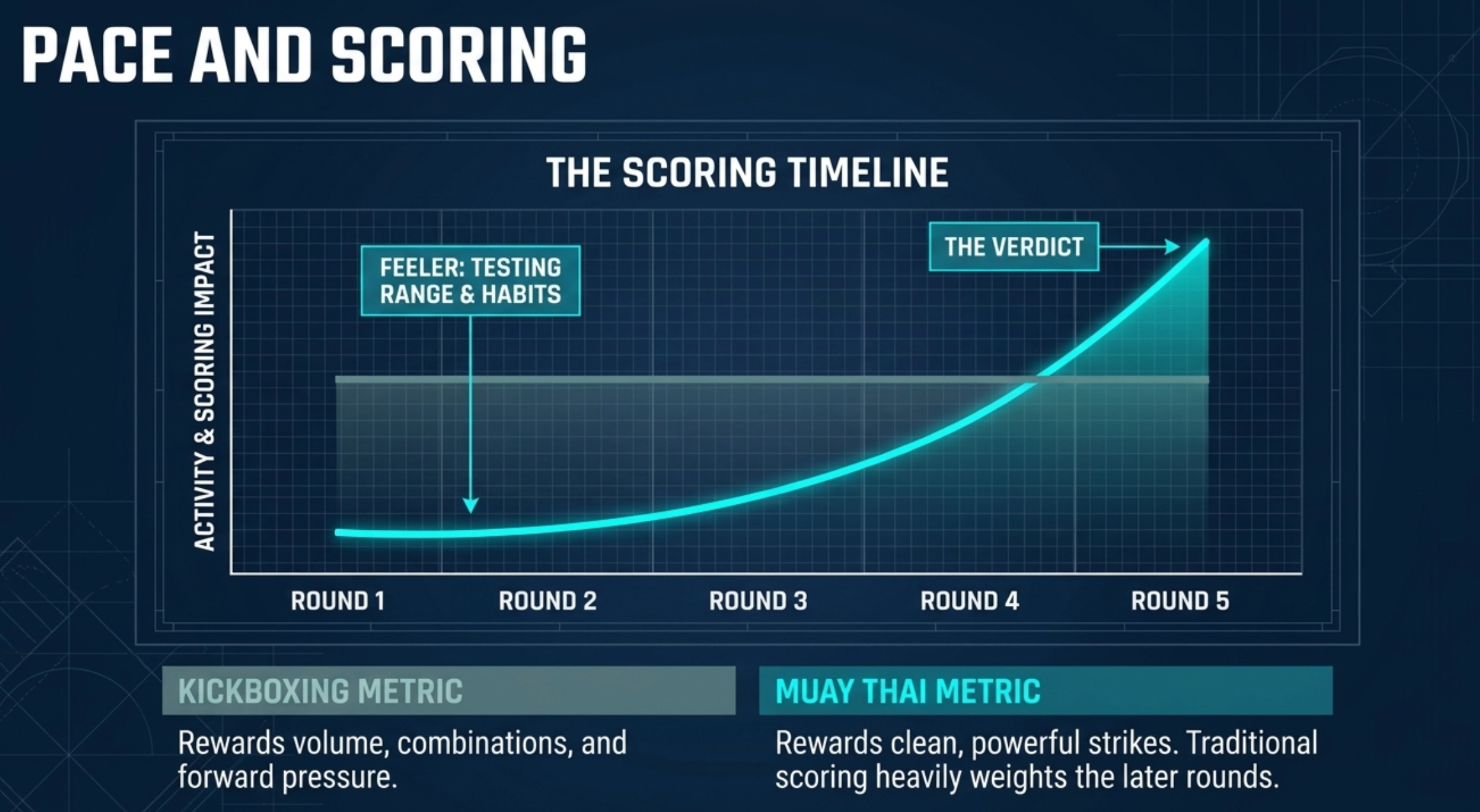
その結果、試合が激しく、混戦になり、接戦になった場合、ムエタイの選手の方がより多くの対応策を持っていると言えます。
一般的なクラスの内容
キックボクシングとムエタイの一般的なクラスは以下の通りです。
Class phase | Kickboxing | Muay Thai |
Warm-up | Cardio + shadow boxing (10-15 min) | Run/skip + shadow boxing + light stretching (15-20 min) |
Technique | Punch/kick combinations on pads | Strikes + clinch entries + elbow/knee technique on Thai pads |
Drilling | Partner combos, footwork | Pad rounds with kru, clinch sparring |
Conditioning | Bag rounds, intervals | Heavy bag, kicking drills, neck/core work |
Sparring | Light to moderate, gloves | Variable—light technical to hard clinch sparring |
キックボクシングのクラス、特に有酸素運動を目的としたものは、誰でも参加しやすく、カロリー消費を重視する傾向があります。一方、ムエタイは身体的な負荷が高く、より技術的な指導が中心となります。
ジムオーナーとしての両競技のスケジュール管理
ジムオーナーにとって、スケジュール管理は非常に重要な役割を担います。
有酸素キックボクシング、初心者向けキックボクシング、上級者向けムエタイ、そしてハイブリッドクラスなどを運営する場合、その構成が鍵となります。
ここで、 ジム管理プラットフォーム を活用して効率的にクラスをスケジュールし、出席状況を追跡することが、大きな転換点となります。
実際の活用例を見てみませんか?こちらが、 Two Bridges Muay Thaiがどのようにジムを構築したか という事例です。広告や投資家に頼ることなく、どのように成功したコミュニティを築き、ジムを成長させたのかをご紹介します。
キックボクシングとムエタイ:比較表
キックボクシングとムエタイのさまざまな側面を比較しました。
Aspect | Kickboxing | Muay Thai |
Weapons | Punches, kicks (some knees) | Punches, kicks, elbows, knees, clinch |
Clinch rules | Broken quickly | Full clinch fighting |
Stance | Upright, mobile | Square, grounded |
Scoring | Volume, activity | Clean, powerful strikes |
Forms/kata | None | Wai kru (ceremonial) |
Competition path | ||
Curriculum | Moderately standardized | Lineage-dependent |
キックボクシングは、指導者による指導の標準化が容易です。
キックボクシングは、どのスタイルであっても原則が共通しています。一方、ムエタイにはより深いコーチングの専門知識が求められます。これは流派に依存する部分も大きいですが、生徒を短期間で成長させ、より技術的な体験を提供することができます。
護身術には何が最適か?

護身において最も効果的な武道とは、あなたが実際に練習しているものです。
防犯カメラの映像を分析すると、伝統的な武道家、総合格闘家、ボクサー、キックボクサー、ムエタイ選手、グラップラーなど、あらゆるスタイルの格闘家が護身の状況で成果を上げていることがわかります。
では、打撃系や組み技系の格闘技ならどれでも良いのでしょうか?その通りです。ただし、それぞれの格闘技が持つ弱点を補うことが前提となります。
どんな武道にも弱点はあります。それは総合格闘技(MMA)であっても同じです。つまり、自分の習得している格闘技の穴を埋める努力が必要なのです。
打撃系ならテイクダウンディフェンスやピンエスケープ、立ち上がり方を練習しましょう。組み技系なら、距離の取り方、フットワーク、頭の動かし方、タイミングといった打撃の技術を磨く必要があります。
護身におけるキックボクシングとムエタイの比較
Aspect | Kickboxing | Muay Thai |
Range strengths | Strong at long range and in open exchanges | Strong in close range and clinch scenarios |
Power & volume | Fast, high-volume combinations | Heavy, fight-ending knees, kicks, and elbows |
Clinch & control | Weak in the clinch | Strong clinch, posture control, trips, and dumps |
Against grappling | Vulnerable to takedowns and ground fighting | Also vulnerable to takedowns and extended grappling |
結論:遠い間合いならキックボクシングが理想的です。クリンチの展開になればムエタイに分があります。テイクダウンや組み技への対応が必要な場合は、柔道、ブラジリアン柔術、レスリング、サンボといった格闘技を組み合わせることが不可欠です。
より詳細な分析については、こちらの包括的なガイドをご覧ください: 護身のために学ぶべき最高の武道。
ジム運営者が両方の格闘技をうまく指導するために必要なこと
キックボクシングやムエタイのクラスを開講する場合、設備、インストラクター、カリキュラムの3点を整える必要があります。
これらが不十分だと、生徒の不満が募り、クラスの質が安定せず、プログラムが成長するどころか収益を圧迫することになります。
1. 設備とスペース
打撃系格闘技の設備はどのスタイルでもほとんど共通していますが、必要なスペースの広さや床材、そしてムエタイ特有のアイテムがいくつかあるため、初期費用に影響します。
以下は、 最低限必要な設備 のリストです:
Equipment item | Purpose |
Gloves | Hand protection and a fighter's striking surface |
Hand wraps | Stabilize wrists and knuckles under the glove; non-negotiable for sparring and bagwork |
Mouthguards | Standard sparring requirement; protects teeth and reduces concussion risk |
Focus mitts | Used to develop speed, accuracy, combinations, and response |
Body protector | Protects the torso from injury. Allows fighters to throw full-power body shots with confidence |
Thigh protector | Allows fighters to throw full-power kicks to the thigh without injury |
Heavy bags | Used to develop power, condition limbs, and facilitate solo drilling |
ムエタイのクラス運営に特有の必要事項は以下の通りです:
Equipment / requirement | Purpose |
Thai pads | Better at absorbing heavy kicks, knees, and elbows than focus mitts |
Shin guards | Protects the tibia during sparring and leg-kick drills |
Clinch space | Open area to practice clinchwork, stand-up wrestling, and neck wrestling |
Mats | Springboard flooring to give fighters safe landings during sweeps and takedowns |
機材にかかる費用の大半は共通していますが、ムエタイの方が初期費用はやや高くなる傾向があります。
2. スペースの管理
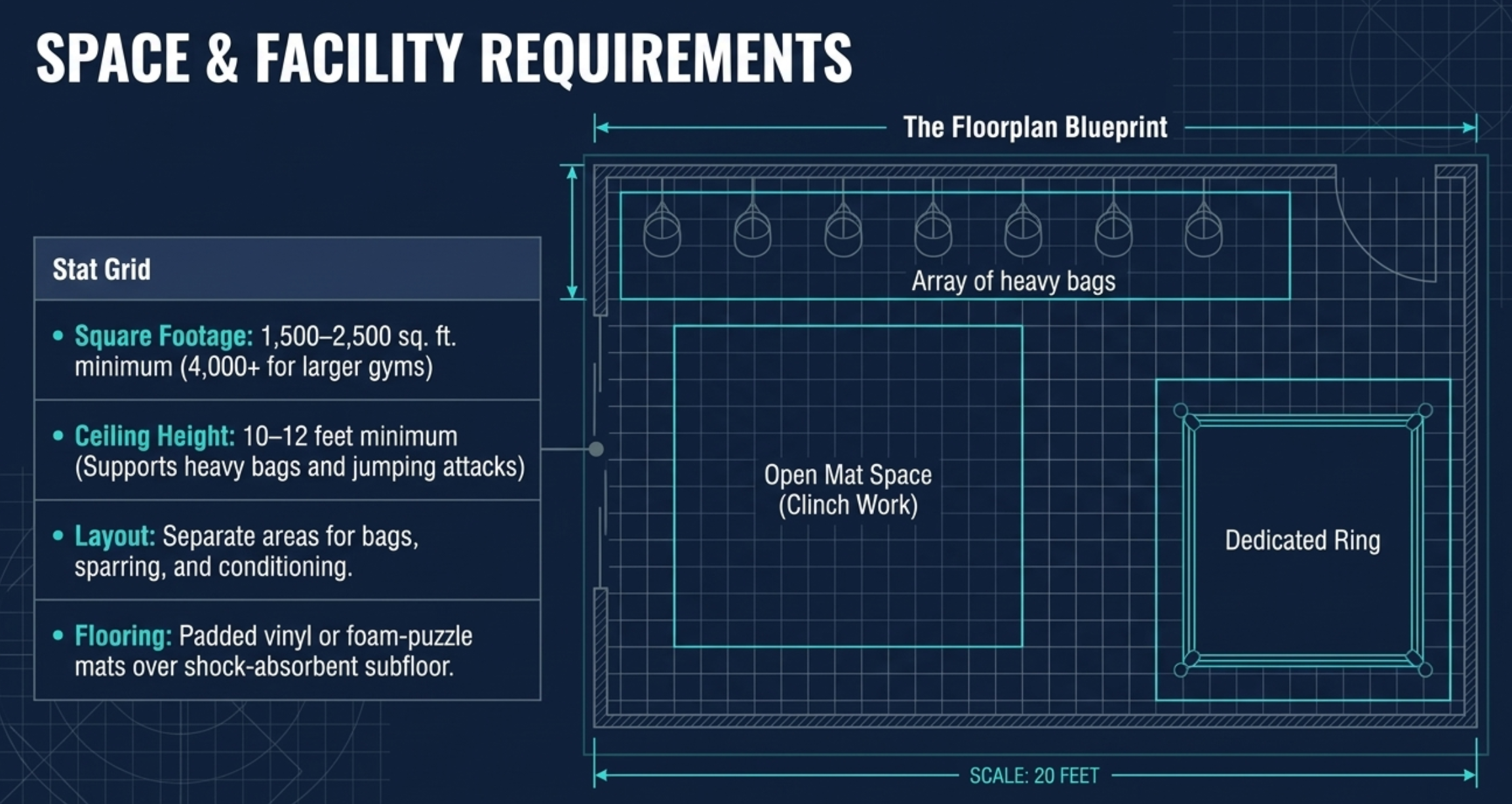
格闘家が実力を発揮するには、一定のスペースが必要です。
キックボクシングとムエタイのどちらも、動きやすさ、安全性、そして機材を多用するトレーニングに適した環境作りが求められます。
両者には確かに共通点がありますが、ムエタイジムの方が(クリンチワーク、テクニカルスパーリング、サンドバッグトレーニングのために)より広いオープンスペースを必要とする傾向があります。
Requirement | Recommendation | Why it matters |
Square footage | 1,500–2,500 sq. ft. minimum; 4,000+ for larger gyms | Adequate room for workouts, sparring, and equipment storage |
Ceiling height | 10–12 feet minimum | Supports heavy bags, kicks, jumping attacks, etc. |
Layout | Separate areas for bags, sparring, and conditioning | Improves safety and training flow. Students won't run into each other |
Flooring | Padded vinyl or foam-puzzle mats over shock-absorbent subfloor | Reduces impact and injury risk, giving students a safe landing |
Ring space | Dedicated ring (with clearance area) | Important for sparring and fight preparation; develops ring generalship |
Ventilation | Strong HVAC and industrial fans | Controls heat, humidity, and odor; this helps to minimize infections |
Storage | Wall racks and organized gear areas | Keeps equipment accessible and floors clear |
Safety access | Wide walkways and emergency exits | Improves safety and ease of movement, especially during peak hours |
スペースはジムの全体的な成功において重要な役割を果たします。当たり前のように思われがちですが、ジムの安全計画において欠かせない要素です。
3. インストラクターの資格
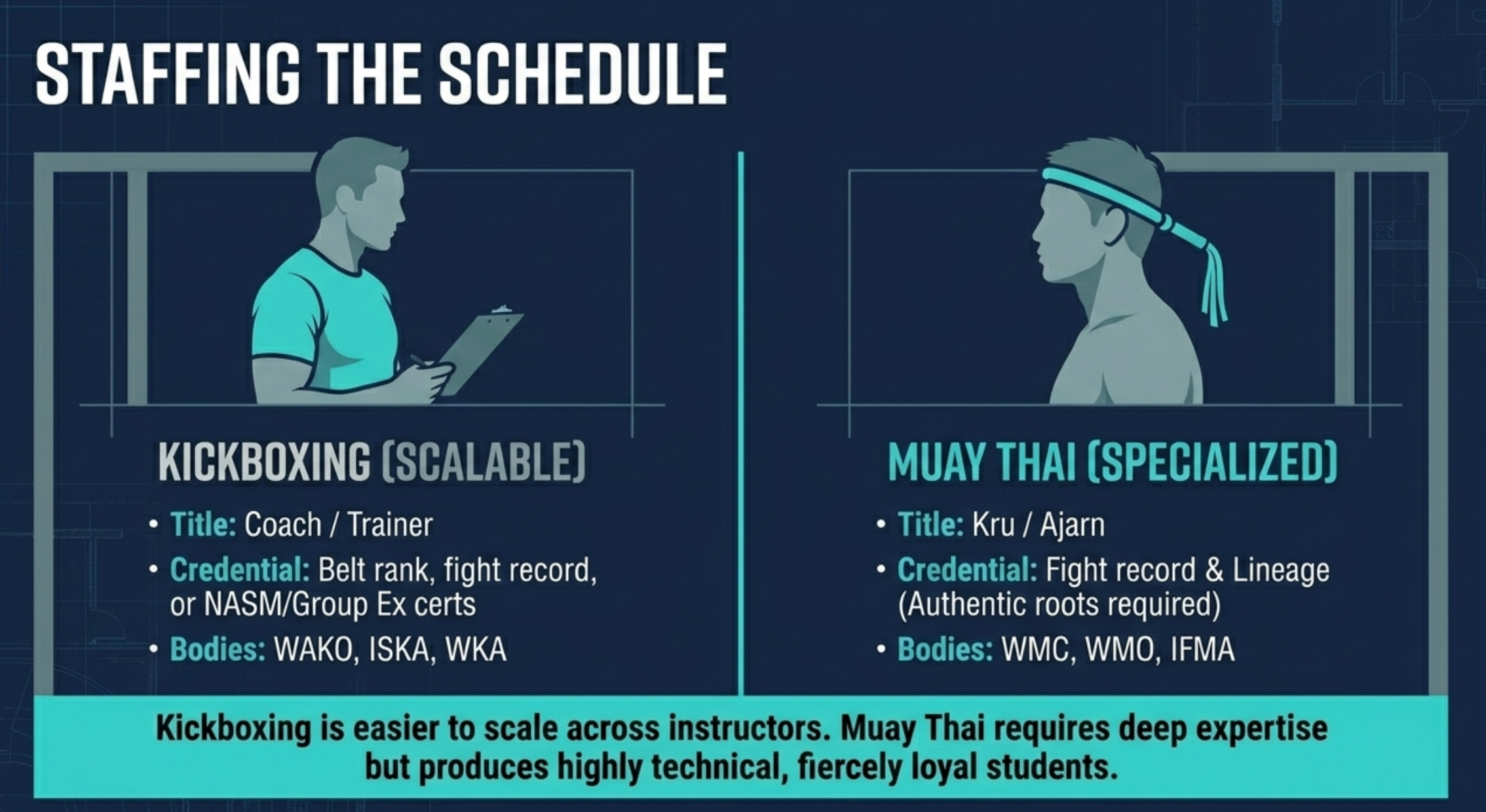
ジムのオーナーとして成長を目指すなら、いずれはインストラクターを増員する必要があります。インストラクターを採用する際、両者のスタイルには重要な違いがあります。
- キックボクシング のインストラクターは採用しやすく、人材も見つけやすい傾向にあります。ゼネラリストとしてのインストラクターが多いためです。
- ムエタイ には、クリンチやミット打ちにおいて確かな専門知識を持つ経験豊富なコーチが必要です。
インストラクターを採用する際に確認すべき資格要件を以下にまとめました。
Requirement | Kickboxing | Muay Thai |
Primary credential | Belt rank or fight record | Fight record & lineage |
Common title | Coach / Trainer | Kru / Ajarn |
Governing body | WAKO, ISKA, WKA | WMC, WMO, IFMA |
Fitness route | NASM / Group Ex certs | Generally requires "authentic" roots |
多くの場合、ジムの成長を制限する要因はスペースや機材ではなく、適切な人材を確保できるかどうかです。
4. スケジュールと生徒の管理
ジムでどちらの格闘技を導入すべきでしょうか?意外かもしれませんが、 両方 のプログラムを運営することは、ジムにとって強力な成長戦略となります。もし それらが適切に構成されていればの話ですが。.
具体的な手順は以下の通りです。
- ステップ1: 打撃技術を学びたい人への入り口として、キックボクシングを提供しましょう。まずは基礎から始め、段階的に専門的なトレーニングへと進めていきます。
- ステップ2: ムエタイは、次のステップへ進む準備ができた上級者向けのアップグレードプログラムとして位置づけます。
これを成功させるには、明確なクラス構成、出席管理、そして昇級システムが必要です。手作業による管理や事務負担を増やすことなく、複数のプログラムを運用できる半自動化されたシステムを導入しましょう。
5. ジムオーナーが両方のプログラムを導入すべきビジネス上の理由
まず、両方のプログラムを導入するには多大な労力を要しますが、それを行うべき大きなメリットがあります。
キックボクシングとムエタイの両方のクラスを提供することで、より幅広い層の会員を集めることができます。初心者から経験者、そしてプロのアスリートまで、多様なニーズに応えることが可能です。
このような多様な生徒層は、長期的に見てより多くの入会者を獲得する上で理想的です。
- キックボクシング は、より多くの生徒(主に初心者)を惹きつけるための入り口として機能します。
- ムエタイ は、より高いコミットメントと集中力を必要とする高度な格闘技として、生徒の継続率を高める役割を果たします。
キックボクシングで集客し、ムエタイで長期的な生徒を維持する。この両輪を回すモデルは、多くのジムにとって最適な戦略です。
キックボクシングとムエタイのどちらを導入すべきか迷っている場合は、以下の判断ガイドを参考にしてください。
Factor | Kickboxing | Muay Thai |
Fitness focus | Higher but still accessible | High, more technical |
Injury risk | Lower | Moderate |
Barrier to entry | Low | Higher |
Students | Broad demographic | More dedicated |
Revenue per student | Moderate | Higher retention |
Startup cost | Lower | Higher |
Hiring instructors | Easier | Harder (difficult to find) |
6. 初めての打撃系格闘技を選ぶ生徒に向けて
ここで重要になるのが教育です。潜在的な生徒に対し、自分が何を求めているのか、そして格闘技を選ぶ際に何に注目すべきかを教えることが大切です。
You want… | Start with | Why |
To learn how to hit hard, fast | Kickboxing | Faster ramp, simpler ruleset |
A complete striking system across all ranges | Muay Thai | 8 weapons + clinch covers more ground |
Cardio and conditioning, not competition | Kickboxing (cardio format) | Lower impact, group-friendly |
To eventually compete | Either, but commit to one for at least a year | Sport-specific training matters early |
Both | Start kickboxing, transition once basics are solid | Avoids confusion between rule sets |
打撃系格闘技を選ぶ際によくある間違い
ジムを選ぶ際、通いやすさだけで決めるのはやめましょう。それよりも、護身、プロ志向、仕事のためのトレーニングなど、自分の目的や動機に最も適したスクールを選ぶことが重要です。
よくある間違いをいくつか挙げます。
- UFCのハイライト映像だけで選ぶ。 実際のクラスと試合は全くの別物です。UFCのハイライトは、日々の反復練習、徹底したコンディショニング、そして緻密なスパーリングの積み重ねから生まれるものです。例えば、カポエイラは 画面上では素晴らしい ですが、実際には体操の経験や、柔軟性を高めるための努力が求められます。
- 価値観や文化を無視する。 どの打撃系格闘技にも、 独自の個性 があり、それがクラスの雰囲気を決定づけます。
- プレッシャーのかかる練習を避ける。 サンドバッグを叩いたり、 ボクササイズ でシャドーボクシングをしたりするだけでは、護身術は身につきません。競技や護身が目的なら、指導者の管理下で技術的なスパーリングを行っているジムを選びましょう。
- どちらか一方がより過酷だと決めつける。 どちらの格闘技も非常にハードですが、その厳しさの質が異なります。
- 両者を混ぜ合わせて、曖昧な「打撃クラス」にしてしまう。 これは生徒を混乱させ、フラストレーションを溜めさせるだけでなく、ポジショニングの技術を低下させます。これら二つの打撃系格闘技を「打撃」や「タイキックボクシング」といった曖昧な名称で一つのクラスにまとめることは大きな問題です。見た目は似ていても、そのメカニズムや戦略は正反対だからです。
- キックボクシングを 単なる有酸素運動とみなす. 正しく行えば、前述の伝説的なキックボクサーたちが証明しているように、立派な戦闘の基盤となります。自分自身に問いかけてみてください。あなたは有酸素運動に重点を置きたいのでしょうか、それとも格闘に重点を置きたいのでしょうか?より技術的な打撃格闘技を求めているのか、それとも運動能力、コンディショニング、そして競技性を優先するものを求めているのでしょうか?
キックボクシングとムエタイ:違いがあるからこそ、どちらも強くなれる
これが最も明白な違いですが、キックボクシングとムエタイの違いは単なる技のリストではありません。それは「経験」そのものの違いです。
見てきたように、キックボクシングは習得が早く、段階的に学びやすく、初心者にとって親しみやすい格闘技です。一方、ムエタイはより奥深く、包括的で、身体的な要求も高くなります。どちらも護身、競技、趣味のどの文脈においても非常に強力です。
生徒にはどちらを勧めればよいでしょうか?両方試してみるのが一番です。結局のところ、長く続けられるものが最良の選択肢となります。
ジム経営者の場合はどうでしょうか?最も強力なモデルは、どちらか一方を選ぶ必要がない環境を作ることです。キックボクシングとムエタイの両方を提供することで、より幅広い層にアプローチできます。格闘技の旅路のさまざまな段階にいる、より多くの生徒を惹きつけることができるのです。
だからこそ、構造化が非常に重要な役割を果たします。
もし あなたのスケジュール に、有酸素キックボクシング、初心者向けキックボクシング、上級者向けムエタイ、そしてハイブリッドクラスが含まれているなら、バランスの取れた構造が必要になります。
ここで、Gymdeskのようなジム管理プラットフォームを活用してクラスを効率的にスケジュールし、出席状況を追跡することが、状況を一変させる鍵となります。 無料でお試しください、クレジットカードは不要です。
Gym management software that frees up your time and helps you grow.
Simplified billing, enrollment, student management, and marketing features that help you grow your gym or martial arts school.