
How to Choose the Right Jiu-Jitsu Competition for Your Team

When my wife and I started what would become Swedish Open BJJ in 2006, we had a varied experience, to be diplomatic, of how tournaments were run.
So we made a very important policy: we are athlete-centered. All decisions about the event structure, any priority, and any addition get tested against "does this benefit the athlete?"
Let's say we want to add a sponsor. That makes money.
OK, good, but how does that benefit the athlete? They'll sell merch at discounted prices for the athletes. OK, checks out.
We ran Swedish Open, a jiu-jitsu competition in Stenungsund, Sweden, until 2019. At its peak it had 1,100 participants.
Later I co-founded Smoothcomp with Ricard Carneborn, who ran Nordic Open, and Martin Varghult, our head of design at Smoothcomp. We built it on what we learned running those events.
Before you sell an event to your students, a few things are worth checking. We'll go through them, and how to match the event to the athlete.
This post is for coaches who already have a competition team and want to send it to other people's events. Running your own in-house tournaments is a different job.
What a Circuit Is, and How Events Differ
A circuit is an organizer that puts on events on a regular cadence, touring from city to city.
Fuji, NAGA, Newbreed, and Grappling Industries are examples of circuits that run their events on Smoothcomp. Over the past year, an average weekend has had about 150 events on the platform, and the busiest more than 200.
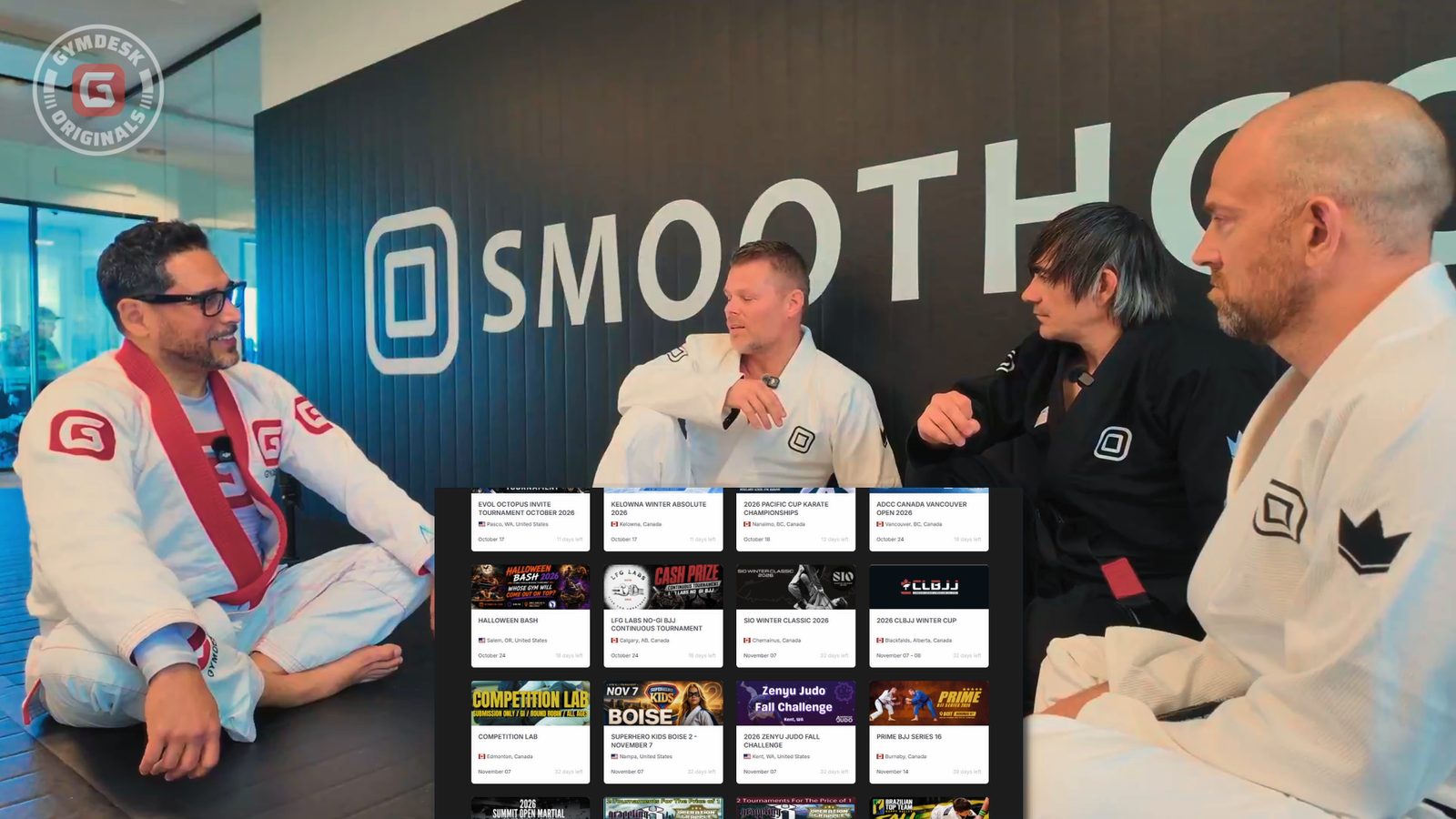
Events can differ in a few ways that matter for your athletes: the ruleset, the size, and the level of competition.
- The ruleset. Which techniques are allowed, whether it's gi or no-gi, and how the brackets run.
- The size. A small event has pros and cons compared to a large one. I go through them in the first check below.
- The level of competition. Some events draw the highest talent, and some are local tournaments. The coach knows the students and what fits best for the group of competitors they're bringing.
This might not be obvious at first glance, but it should be fairly easy to identify a suitable entry-level event.
Most local events will already be known by the academy.
When you choose between the larger circuits, look at word of mouth, general industry knowledge, and how the event is promoted.
If it feels like an event a lot of people will travel to, with prize money or world or national titles on the line, expect a higher level.
Big circuits that tour from city to city often draw a lot of local athletes at each stop. That can make them a great first event for beginners.
Three Things to Check Before You Enter
I'd assume most coaches already have an idea of what they are looking for: an organizer they know and trust, or maybe a ruleset they favor.
However, if we set that aside and you want to assess an organizer you don't know yet, here are a few tips:
- The organizer's history. How many events they've run, and how many athletes came to them.
- The ruleset. What's allowed, what athletes are required to wear, and how the brackets run.
- The practical things. The venue, how to get there, the rules meeting, food and drinks, and how long a division will take.
1. The organizer's history
Check how many events the organizer has run before.
On Smoothcomp, an infobox on the organizer's front page shows their experience level, on the right-hand side.
Then look up their previous event pages and check how many athletes attended. That'll give you an indication of what to expect on event day.
Pros. You could end up with an intimate, informal setting, which puts less stress on inexperienced competitors.
Cons. It's more likely that athletes will have a hard time finding opponents in less common divisions. Kids who are heavy or light for their age group often have this issue, and so do the old guys and girls (masters athletes).
At a normal jiu-jitsu event, if you reach well over 300 athletes, it starts to fill up.
However, this is really a sliding scale, and the more athletes there are, the fewer issues you will have finding opponents.
2. The ruleset
Make sure you're comfortable with the format.
Check the allowed and not-allowed techniques, and make sure they match your expectations and your athletes' skill set.
Does the tournament require specific competition attire? What bracket types will be used: single elimination, double elimination, or round robin?
All of this is important to know before you sell the event to your students.
3. The practical things
Where is the venue, and how do you get there? Is there a rules meeting? Is it possible to buy food and drinks?
Then estimate how long a division will take. Most jiu-jitsu tournaments run a division from start to finish on the same mat, so a small division can be over very soon.
For single elimination, there's a great rule of thumb in two steps:
- Count the matches. Eight competitors means seven or eight matches, depending on whether there's a bronze match, so the number of competitors is close enough.
- Estimate the time. Add one minute to the match length and multiply by the number of competitors. That's your guesstimate.
So with eight competitors and five-minute matches, a division takes about 48 minutes.
The good thing is that Smoothcomp will keep track of this for you once the tournament starts. Remember that the times you see in Smoothcomp are dynamic and update in real time.
Check in regularly to avoid surprises.
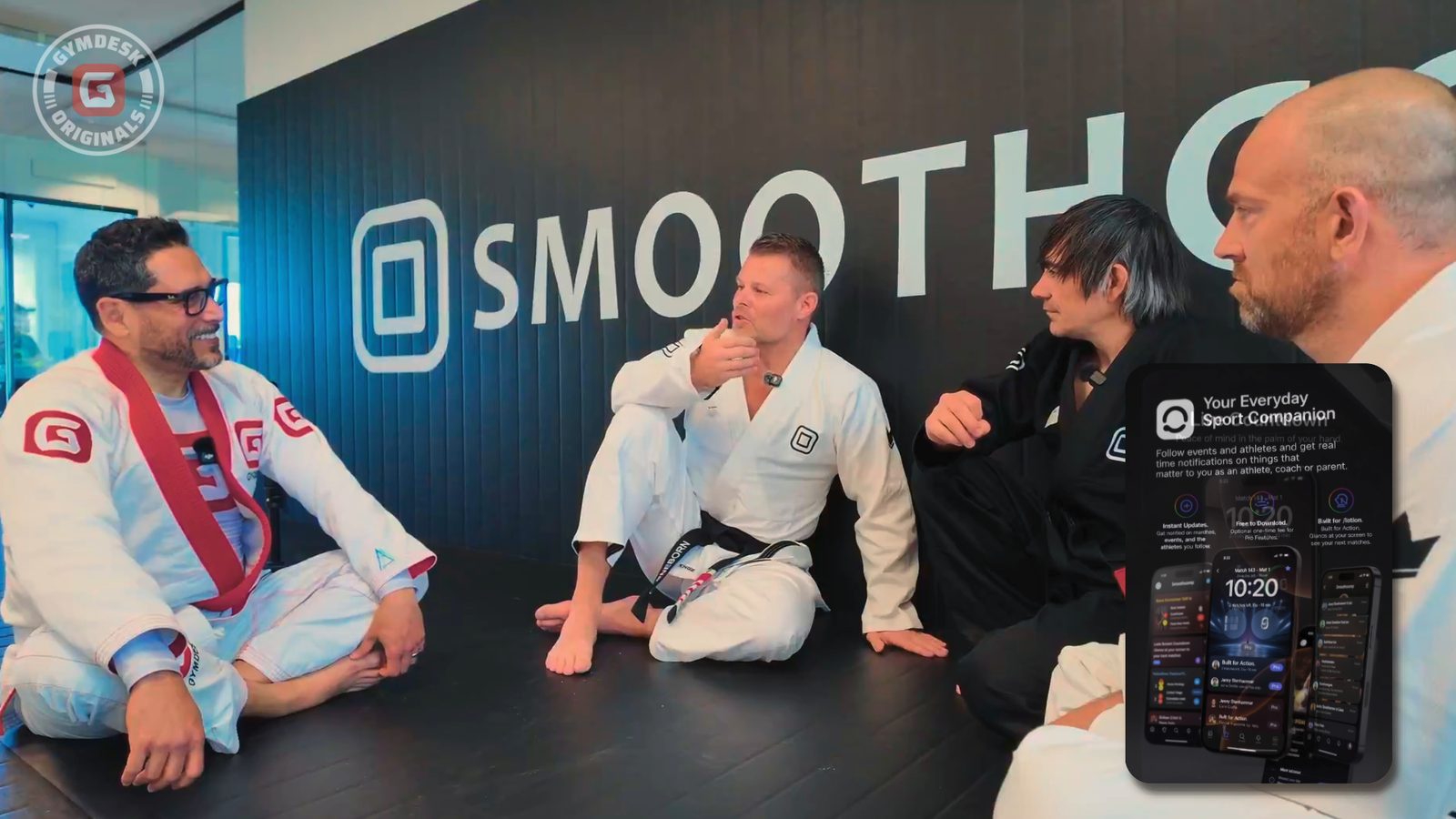
Gymdesk and Smoothcomp are now one company, so you can also see Smoothcomp events in Gymdesk. The event page there shows the organizer, the entry options and pricing tiers with their deadlines, and the venue with its distance from your gym.
For the ruleset and the athlete numbers, you still need the organizer's own pages.
What Coaches Miss on the Event Page
Make sure to pay attention to the early-bird, normal, and late fee periods.
Most organizers use them to get athletes to register early, so watching them helps you avoid unnecessary costs.
For logistics' sake, tournament organizers need time to close and prepare events. It'll be hard to convince them on a late entry.
Matching the Event to the Athlete
For first-time competitors, first make sure there are suitable beginner divisions.
Usually in gi Brazilian Jiu-Jitsu this is clearly defined, as there are white belt divisions to pick.
Sometimes other rulesets have only one skill division for all. Or there's a separate division for "beginners." Then, as a coach, you should read the specification of what makes a beginner and decide from that.
Belt rules and weight classes also vary between organizers, so check them even if you know the IBJJF belt requirements and BJJ weight divisions well.
Athletes and coaches can usually change a division up to a cutoff date, and they're responsible for being in the right one. If it still goes wrong, the organizer decides whether to move the athlete.
Help them choose a weight that isn't too hard to make.
At their first event, competing is enough. They don't need to pull off a historical weight loss too.
If my academy wants to go to an event in another city, only a fraction of the members are prepared to travel, pay for the hotel, and get ready to compete.
With an in-house tournament we get many more. They can try their wings on the competition mat with a teammate, build the confidence, and take the step onto the real competition mats.
What You Can't Learn Before You Enter
If this is your first event, you'll learn a lot of things by going to events: handling stress, celebrating wins, comforting losses, and meeting lots of like-minded people from other academies.
You can't know how the culture or atmosphere is until you've tried it. You might hear rumors about an organizer that turn out to be incorrect once you try it yourself.
The level of customer service could show itself if you reach out to the organizer with questions beforehand.
But the event itself is, of course, the real thing that will show reality.
The event list in Gymdesk has limits, too. It shows only Smoothcomp events, and coverage is strongest in jiu-jitsu and grappling, since they are sister sports.
What to Do Next
Pick two or three events for the season and run each one through the three checks. Then bring the shortlist to your team.
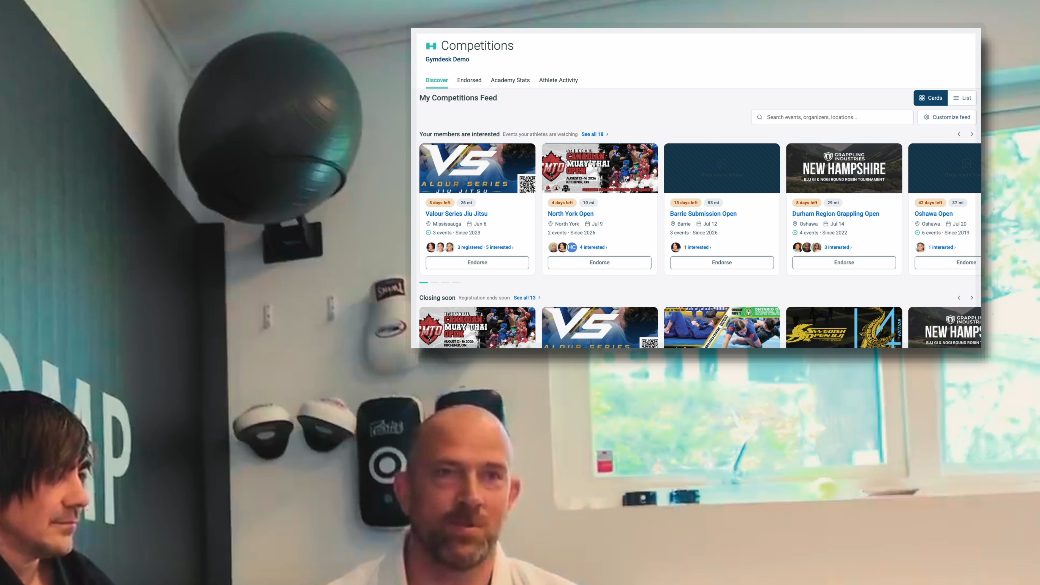
In Gymdesk, Discover lists Smoothcomp events, and you can filter by date, distance from your gym, and sport. When you endorse an event, your members see it marked Academy Approved in their own Competitions view.
Once the team is registered, the next step is to prepare athletes for the day so they get the benefits of competing.
Gym management software that frees up your time and helps you grow.
Simplified billing, enrollment, student management, and marketing features that help you grow your gym or martial arts school.


FAQ
Choosing a Tournament FAQs
Some common questions about choosing an event.