
How to Prepare Your Athletes for a BJJ Competition
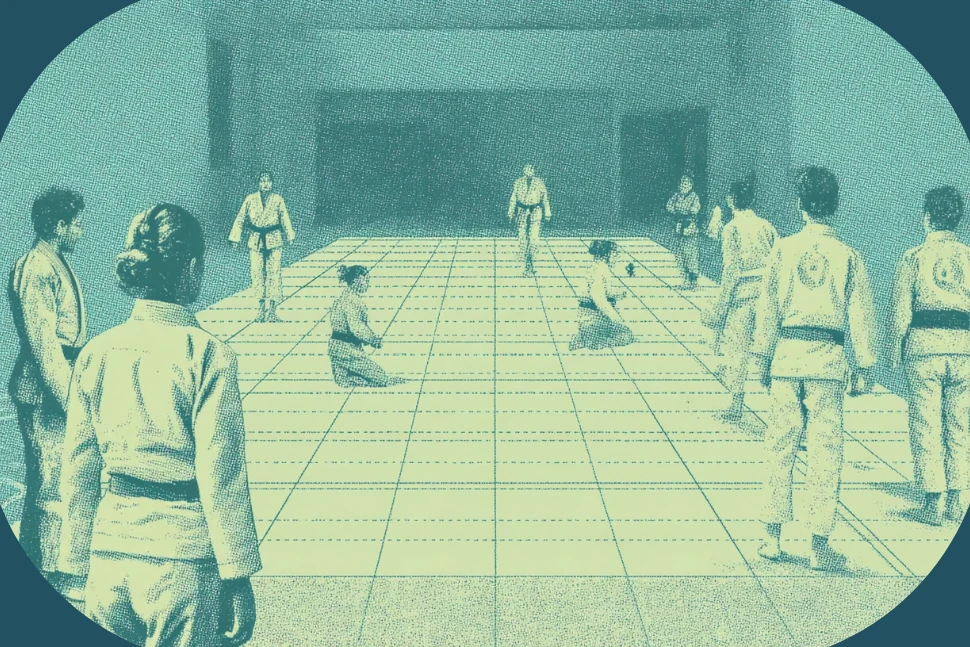
We compete all year at NEO Martial Arts. Every event still gets its own lead-up.
I co-own NEO, I compete, and I coach our competitors. My co-owner, Patrick, coached a junior national team. Between the two of us, a lot of our week is spent getting people ready for the same Saturday.
Most advice on how to prepare for a BJJ competition is written for the athlete: how to peak, what to drill the week before.
As a coach, I'm getting everyone who entered the same event ready at once, and almost nobody writes about that side of it for grappling.
So this is the coach's version. If you're still deciding whether competing is worth it for your gym, start with investing in a competition team and the benefits of competing. This post picks up after that decision.
KEY TAKEAWAYS:
- For a local tournament, the prep happens in the weekly competition class. A real training camp is for the majors, and those trips get budgeted about a year out.
- Anyone can train in the competition class. Competing is never required, but if you register for an event, putting in the work is.
- Privates are for athlete development, not tournament prep. They won't fix competition-day nerves.
- Reading who's ready starts with attendance, then how an athlete handles a bad position, then attitude.
- Once the roster grows, the read on each athlete can't live in one coach's head. A shared record lets a stand-in coach pick someone up cold.
There's No Off Switch: Comp Season vs Training Camp
For most local tournaments, the lead-up happens inside the classes we already run. We save the word "camp" for the majors. More on those in a minute.
What changes for a local event
That depends on who's competing.
Our four-to-six-year-olds treat a local tournament as a first experience, and nothing about their week changes. Some of our adult and masters competitors do it recreationally, trying one for fun.
Then there are the serious competitors, the ones who set goals around these events. For that group, the minimum we ask is that they come to our weekly competition class (more on that below).
What I do notice is that the more competitive an athlete is, the more they put in on their own. They're studying and dialing in nutrition without us building them a separate camp.
We'll keep you in the loop with fresh content, podcasts, how-to guides, tool reviews, and product exclusives.
What Changes When the Event Gets Bigger
The trips to Portugal and Florida get budgeted about a year out. Those get a real training camp.
Once we're in season for something that size, we add sessions beyond the regular schedule and bring in strength and conditioning. We also get into match study and game planning: breaking down brackets, weight divisions, and opponents.
All of that sits on top of the schedule, and only the people going do it. Most of your members will never compete (Lakea Vargas at Combat Sports Academy calls them the 99 sheep), and they keep their classes while a handful of competitors ramp up.
If you want a very different model, the Gymdesk guide to preparing CrossFit athletes builds prep around full periodization by athlete level. Here's how the two tiers compare at NEO:
Event tier | What changes in training | S&C added? | Planning horizon | Who it's for |
Local tournament | Come to the weekly competition class | No | The comp class is always running | Anyone who registers |
Major / international | Extra sessions, strength and conditioning, match study, game planning | Yes | Trip budgeted about a year out | The athletes going |
The Competition Class Is the Real Prep
Most of our prep happens in one weekly class. That's where the drills and the sparring are built for competition, whether the event is local or a major.
The one rule is no fooling around. People come to work and they come for hard rounds, and we expect your mindset and your effort to match that.
The bar for entry
Anyone can come to competition training. We used to run a touring team for our international competitors. Today the bar is simpler: if you want to compete, or you're willing to put in the work, you're welcome in the room.
We're transparent about the other side of that. If you register for an event and stop showing up to class, and the coaches can see you're not putting in the work a competition demands, we call it out directly.
We set expectations realistically, and we never make anyone compete for us. Competing isn't required at our academy.
But if you sign up, putting in the work is.
Where Privates Fit
The peewee who looks sharp in privates? He gets smashed at tournaments.
I don't think that comes down to the privates themselves. It's nerves. It's the jitters of competition day, and once things start going sideways, a young competitor can spiral fast.
That's a mental-game problem, and plenty of adults have it too.
How we sell privates
We don't run "tournament privates" as their own category at NEO. That kid would be doing privates whether or not a tournament was on the calendar, because they help his confidence and his technique either way.
We frame privates around athlete development. Athlete development is what keeps members around, and you can put a number on that with our member retention calculator.
PRO TIP:
Sell privates on confidence and technique, whether or not an event is on the calendar. Don't pitch them as a fix for competition-day nerves, and don't let them replace the competition class. Athletes should keep coming to that class alongside them.
Reading Who's Ready
By the time we walk into a venue, we already know what most of our athletes want to do, because we know our roster. Patrick puts a number on it:
The 10% are the people who registered and then didn't show up to class.
What we read for
It starts with attendance. Then it's how they handle a bad position: do they fight to survive it, or give up?
Attitude matters just as much as either one.
Patrick also sorts every competitor by what they like to do and where they break:
Once you can say that about someone, you know what to work on. For Derek, that's guard retention and wrestling up.
Ready vs prepared
I'd push back a little on the word "ready," though. I don't think anyone ever really feels ready. You just do it.
Here's how I think about it:
I never tell someone to go compete when they feel ready, because if you lose while you "felt ready," you may never feel that way again. That kind of mental toughness has to come from inside.
The Meta: How We Read Each Age Group
Patrick calls it "the meta": the shared read our coaches carry on the roster. The way we build it comes down to age.
Four-to-six, we treat it like a game. That's the whole coaching lens for that group.
Seven-to-nine, they get more personable. You can negotiate with them, give them options, debate a little, and keep it fun.
Ten-to-twelve is where it shifts. That's the age a kid can really understand the rules, and the question gets real: do you want to win or not?
Thirteen-to-fifteen, if you want to be good at this, you're training to win, unless you're strictly recreational. It only gets harder from here.
Sixteen and up, you're not a student to us anymore when it comes to competition. You're a teammate.
The System Behind Knowing Your Roster
All of this works at our current size. At one recent event, we had around sixty competitors (that's just our gym's number).
The goal is to grow to about five hundred students, and I can already see the problem coming. Picture a hundred athletes at one tournament, each expecting the personal read Patrick described.
The first thing to strain is memory. Right now the read on each athlete lives in a few people's heads: Patrick knows who pulls guard and folds when it's passed, and I know which kid spirals when things go sideways.
That's manageable at sixty. At a hundred, or on a night a coach is out, the stand-in starts from zero.
A shared record fixes the handoff. In Gymdesk, when a class has skills assigned to it, each check-in logs those skills to the member's profile along with their attendance. A coach picking up an athlete cold can open that profile and see ten classes of double-leg takedowns and none of guard retention.
That coach still does the reading on the mat, with the history already on screen.
Attendance tracking is the most boring thing in the gym right up until the day the person who remembered everything isn't there.
Prep Is Roster Management
For us, how to prepare for a BJJ competition comes down to two things. There's the weekly competition class, and there's knowing our athletes well enough that we already know what 90% of them want to do before we get to the venue.
Wherever you keep that history, martial arts software that logs attendance and skills makes the handoff between coaches a lot easier.
In Gymdesk, a check-in to a class with skills assigned logs those skills to the member's profile along with their attendance. The coach covering tonight can see what an athlete has drilled before they step on the mat.
See Martial Arts SoftwareGym management software that frees up your time and helps you grow.
Simplified billing, enrollment, student management, and marketing features that help you grow your gym or martial arts school.