How Much Does It Really Cost to Open a BJJ Academy in 2026?

Starting a BJJ academy in 2026 costs between $17.5K and $150K—but your real number is determined by three decisions.
Let’s be honest, that’s a pretty wide range.
This range doesn’t really seem all that useful until we do a quick breakdown to identify how much you’ll actually need for your academy.
You want to start a BJJ Academy, but you need to determine whether it makes dollars and cents. When you read other articles, you’ll see some wild estimates—numbers in the $100K+ range.
Are those numbers in line with reality?
Absolutely not. In fact, as you’ll soon see, it's possible to build a successful gym for less than 30K. The question isn’t really a matter of how much it costs to open a BJJ gym—it’s how much you’ll need based on your plan.
Before we dive in, here’s a quick breakdown:
Investment Level | Total Range | Profile |
Lean / Bootstrap | $17,500–$50,000 | Subleased space, used mats, minimal buildout |
Moderate Investment | $50,000–$100,000 | Dedicated lease, new mats, moderate buildout |
Major Investment | $100,000–$150,000+ | Custom facility, competition mats, full branding |
This is your starting point.
Now, let’s figure out where you’re spending your money.
$17,500 is the minimum realistic cost to launch a lean BJJ academy in 2026—far less than most estimates suggest.
Most BJJ academies take 6–18 months to break even. Strong pre-sales and consistent marketing compress that timeline significantly.
70% of failed startups cited running out of capital—making working capital the most overlooked cost in any academy launch.
One-Time Startup Costs: Where Every Dollar Goes
Here’s a rough estimate of the costs you’ll need to cover before you open your doors. These costs depend on several factors, including:
- Your ability to negotiate
- Market rates for your area
- Your budget
- Location preferences
- The terms and conditions you’re willing to accept now
These numbers come with a lot of wiggle room, but the costs are areas that you’ll have to cover regardless of how you approach the startup process.
Your space: Lease, deposit, and buildout
It’s probably no surprise, but your facility (i.e., rent/mortgage) will be the biggest expense you need to account for.
- Lease deposits (this includes first + last + security deposit): $3,000–$25,000 (this is typically determined by the square footage you need and your academy’s location, e.g., urban, rural, or suburban)
- Buildout/renovation: $5,000–$75,000+ (the cost depends on how extensive your buildout and renovations are)
So BJJ academies don’t need machinery or appliances; they need open mat space.
That’s why second-generation spaces, which were previously used as dance studios or other martial arts schools, are ideal. If you’re planning additional build-outs (e.g., showers, locker rooms, changing areas, weight room), you’ll need to adjust your budget accordingly.
Related: Here’s a detailed primer on choosing the best location for your gym and optimizing your academy design.
Mats: The expense that surprises everyone
Mats are expensive.
This is the expense category most people underestimate. At first, people approach mat shopping with some optimism.
Oftentimes, gym owners have a budget in mind they’d like to work with. They reach out to a manufacturer like Fuji or Zebra, and they’re suddenly hit with the realization that new mats will cost more than they expected.
Example: 2,500 sq ft academy, 2-inch Fuji tatami mats
Step 1: Mats:
- Mat size: 6.5 ft x 3.25 ft = 21.125 sq ft per mat
- 2,500 sq ft / 21.125 = ~120 mats
- 120 mats x $185 = $22,200
Step 2: Sub-flooring (three Fuji options):
Sub-flooring Option | Cost per Sq Ft | 2,500 Sq Ft Total |
Underlayment pad | $1.20 / sq ft | $3,000 |
Superblocks | $6.25 / sq ft | $15,625 |
Spring floor | $13.00 / sq ft | $32,500 |
Step 3 — Total (mats + sub-flooring):
Setup | Total Cost (2,500 Sq Ft Example) |
Mats + underlayment pad | $25,200 |
Mats + superblocks | $37,825 |
Mats + spring floor | $54,700 |
See what I mean?
If you’re shopping for mats, prices can vary quite substantially. You’ll have to decide how much you’d like to spend on your mats.
For example, mat thickness, sub-flooring, wall mats, fencing, and frame kits. For the example above, I’ve used Fuji to provide more realistic estimates.
If you’re feeling sticker shock, you’re not alone.
However, we’ll look at some options for getting high-quality mats at a lower cost. The important takeaway here is this: buy quality mats.
PRO TIP:
Whatever you do, avoid going cheap on your mats. Cheap mats compress, get slippery, lose their shape, and need replacing in one or two years. Buy quality mats once—you'll save money in the long run.
Equipment (it’s less than you think)
The great thing about most of the equipment on the list below is that much of it is optional and can be added later. Some of these aren’t necessary at all.
The expense is pretty minimal compared to a traditional gym.
- Must-haves: Mats, cleaning supplies, mop, first aid kit
- Optional: Heavy bags, grappling dummies, weight lifting equipment, a sound system
- Estimate for optional items: $1,000–$10,000
You can spend as much or as little as you need to spend on these additional items.
The cost shouldn’t be high—you’ll want to make sure you have plenty of budget left for the area that matters most (your marketing and advertising).
Legal, licensing, and insurance
BJJ has higher liability exposure than most fitness businesses—insurance is non-negotiable. What varies is the coverage level.
You can go as deep as you want with your legal, licensing, and insurance protection. As a general rule, the more aggressive and comprehensive your approach, the more you'll need to spend.
- Incorporation: $35–$520
- Licenses/permits: Varies by location
- Insurance: $1,200–$5,000/year
Getting quotes for gym insurance is an absolute must. It’s a good idea to get insurance quotes from multiple providers. You may be surprised to know that rates vary dramatically.
Branding, website, and launch marketing
Branding is shorthand for reputation. Your website serves as your marketing hub. Marketing and advertising bring students to you.
This means you’re going to need:
- A professional logo, gym signage
- A marketing budget for your grand opening and ongoing marketing campaigns
- Branding and marketing content for your local search and social media profiles
These are the initial costs you’ll need to jump-start your marketing and advertising campaigns.
- Branding/signage: $0–$10,000 (If you’re able to create your branding on your own, the monetary cost will be close to zero—but you’ll need to invest a lot of time, work, and effort)
- Website: $0–$10,000 there are two tracks you can take:
- DIY/free: go the DIY/free route, you can use free tools like Canva, Google Sites, or Gymdesk’s free website builder. This means your only investment would be your time and know-how. Other platforms play
- Professional: You pay a designer or agency to design your site. You create a custom website on a large platform and launch with an ad budget.
- Pre-sale marketing: $1,000–$8,000
What if you could build a professional website at a low cost?
If you’re a Gymdesk user, the website builder is included, free of charge; the cost is built into the software. These aren’t cheap Google sites.
You’re getting a customizable, mobile-optimized website and templates that are built directly into your management platform. You can create, edit, and launch a professional site—including scheduling, member registration, schedules, galleries, forms, and online stores—all without coding.
If you’re interested you can take it for a spin.
Working capital: the most ignored cost
What’s the biggest startup killer? It’s a cash flow crunch, a situation where academies can’t cover their expenses because expenses exceed revenue.
Don’t take my word for it.
CB Insights wanted to know why startups, regardless of industry, were failing. They shared their research on startup post-mortems. Here’s what they found.
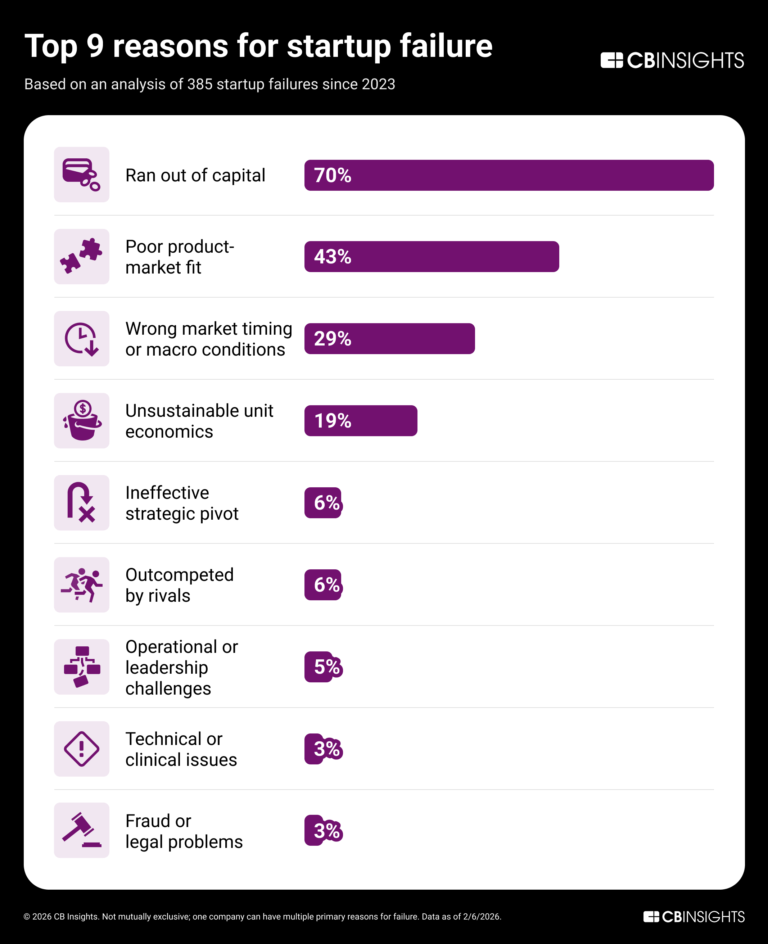
“Ran out of capital” tops the list at 70%, but it’s almost always the final cause of death, not the root problem.” What does this mean for you?
When academies run out of cash, that’s a symptom, not the root problem. While the issues above tend to play a bigger role, you still need cash to run your gym. So what do you do?
- Benchmarks: Figure out how much you need to cover your monthly expenses. This should include marketing and salaries.
- Buffer: Set aside 3–6 months of expenses or gain access to cash (e.g., working capital, line of credit) to ensure that you have the cash you need to stay afloat.
- Set a range: For startup academies, this is generally $5,000–$30,000/month, based on the financial breakdown in this guide.
A reasonable expectation for your academy? Give yourself 6–18 months to break even, so you have what you need to survive the early months. (Keep scrolling for the break-even calculator)
If you have a six-month buffer and it takes 18 months to break even, you’ll need to scramble a bit to keep things afloat.
That’s the game, right? Here’s a breakdown of the one-time costs you’ll need to prepare for.
KEY TAKEAWAY:
Set aside 3–6 months of operating expenses before you open. For most startup academies, that's $5,000–$30,000 in working capital. Plan your buffer around the longer end of the break-even window—if your pre-sales pipeline is thin, give yourself 18 months of runway, not six.
One-time startup cost estimate
Here’s a summary of the upfront costs needed to start your gym. There’s a lot of wiggle room in these estimates.
Category | Low End | High End |
Lease + Deposit | $3,000 | $25,000 |
Buildout | $5,000 | $75,000+ |
Mats / Sub-flooring | $4,000 | $54,000+ |
Shipping | $500 | $3,000 |
Wall Padding | $500 | $3,125+ |
Equipment | $1,000 | $10,000 |
Legal / Insurance | $1,200 | $5,000 |
Branding / Marketing | $0 | $10,000 |
Software Setup | $0 | $200 |
Working Capital | $5,000 | $30,000+ |
Total | $20,200 | $215,325 |
Monthly operating costs once you’re open
Here’s a breakdown of the ongoing expenses you’ll need to cover each month once you’re open. Again, these are estimates, and there’s always wiggle room here.
You’ll need to define these gym expenses:
Category | Low End / Month | High End / Month |
Rent | $1,500 | $8,000+ |
$1,000 | $8,000 | |
Utilities | $300 | $1,500 |
Insurance | $100 | $400 |
Marketing | $200 | $1,500 |
Software | $75 | $200 |
Maintenance | $100 | $500 |
Misc | $200 | $500 |
Total | $3,475 | $20,600 |
Not sure how much you need to break-even? Take a look at our break-even calculator.
Find out exactly how many members you need to cover costs and pay yourself. This gym break-even calculator uses your real expenses—rent, insurance, utilities, staffing, and more—to show the exact member count where your revenue covers everything, including your own salary.
[embed calc]
Modern tools like BJJ gym software combine billing, scheduling, attendance tracking, and website management into a single platform. This is fantastic because it reduces your monthly expenses, so you aren’t forced to pay for multiple tools.
Now, let’s take a look at a few budget options.
Three Real Startup Budgets
If you’re interested in starting a gym, you’ll need to know what you’re working with. If you have a large budget and investors backing you, great, you can afford to spend.
But what if your budget is limited?
Is starting a BJJ academy still a realistic thing? Let’s compare three budgets; we’ll look at cost-saving options for each, so you’re able to get started at a smaller scale.
| Lean $17.5K–$50K |
Mid-Range $50K–$100K |
Premium $100K–$150K+ |
|
|---|---|---|---|
| At a Glance | |||
| Space | Subleased / shared | Dedicated lease | Custom buildout |
| Mats | Used or budget | New w/ underlayment | Competition-grade custom |
| Branding | DIY | Professional logo + signage | Full creative package |
| Working Capital | 2–3 months | 3–4 months | 6 months |
| Who It's For | Instructor testing the waters | Full-time, going all in | High-profile, investor-backed |
The lean academy ($17,500–$50,000)
An instructor decides to test the waters and launch their academy. They decide to keep their job as a safety net in case things go south.
Here’s how they keep their expenses low:
- Subleased/shared space: The gym owner chooses to share their space with other up-and-coming businesses. This is done in one of two ways:
- The gym owner leases space, then subleases to other businesses.
- The gym owner looks for space that’s already equipped and ready to use. He negotiates to sublease.
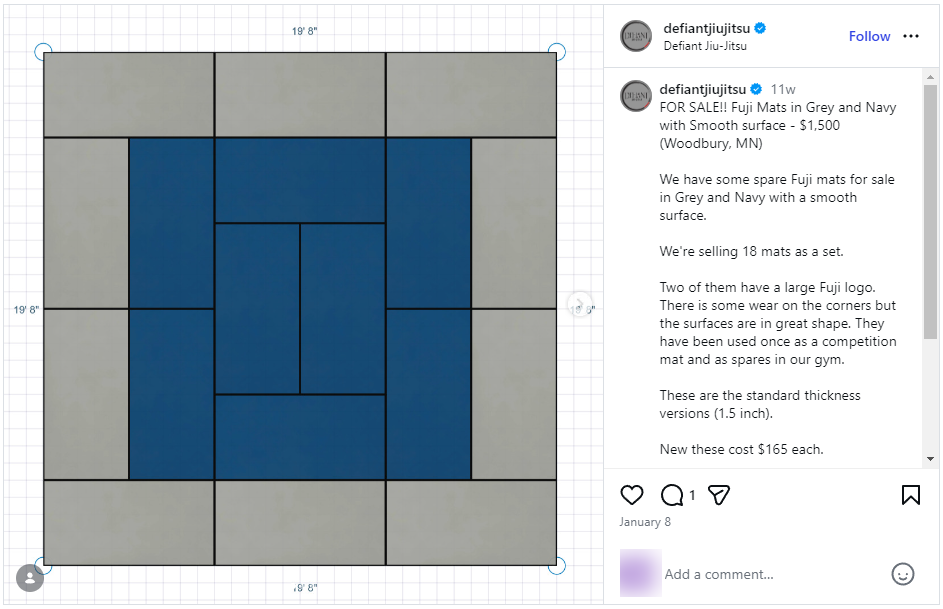
- Budget mats: You can purchase discounted mats from manufacturers or used mats from third-party sources. eBay, Defiant Jiu Jitsu, forums, and Facebook Marketplace are great places to search for high-quality mats.
- The owner teaches all classes. They focus their attention on building up the gym. Quality assurance is easy when the owner teaches all of the classes. There’s no payroll, so it’s also easy to keep expenses lean and prioritize growth.
- Organic marketing: Organic marketing channels—organic SEO, local search, content marketing, videos, seminars, demos, sponsorships, and events are all great ways to attract student attention without needing to spend a significant amount of money on advertising. The owner handles their branding and marketing—doing what they can to grow the gym on a shoestring budget.
This is the most common approach for up-and-coming athletes-turned-gym owners. What if you already have resources, but you want to stay lean?
Most successful academies start lean and scale. You can always upgrade later—it’s much harder to undo a bad lease.
The mid-sized academy ($50,000–$100,000)
These owners are going all in. They’re focused on building their own academy. These are lifers who have bigger aspirations—building an international brand or franchise.
Here’s a breakdown of their expenses:
- Dedicated lease: They’re looking for the right location; they know that choosing the right one makes their marketing and advertising easier. It's a make-or-break decision. If these gym owners are looking for ways to keep costs low, they’ll share or sublease commercial space with other gyms and then expand as student headcount grows.
- Quality mats: These gym owners are willing to spend more on their mats. They’ll purchase new mats, but they’ll opt for underlayment or foam blocks instead of the full spring floor, or find ways to get the spring floor while minimizing costs elsewhere.
- Moderate branding: Gym owners in this category start with a professional logo, gym signage, a budget for their grand opening, and ongoing marketing and advertising. They create branding and marketing content for their local search and social media profiles.
- 3–4 months' expenses: These academies start with a strong buffer in the form of savings, loans, or an available line of credit. They know it’s going to take some time to reach their break-even point, so they’ve planned for it ahead of time.
These are full-time gym owners; they’re all in and focused exclusively on growing their academy in a relatively short period of time.
The premium buildout ($100,000–$150,000+)
These are well-known grapplers with significant savings or investor backing.
They have the resources they need to build a large academy from day one. Think Craig Jones with B-Team, Gordon Ryan with Kingsway, or Keenan Cornelius with Legion.
When they launch their gyms, they:
- Have extensive buildouts: These are large renovation projects featuring premium amenities (e.g., showers, full workout areas, multiple mat areas).
- Build out a custom facility: Oftentimes, these gym owners will pay manufacturers like Fuji to customize their facility and handle the buildouts of their mats.
- Create a full branding + marketing package: These academies pay creative professionals to design their logo, branding packages, website, social media, and advertising. They launch their business with a creative
- Have six months working capital: They have investor backing, so they have access to capital, whether that’s through investors, loans, or lines of credit.
These are experienced gym owners with significant resources or investor backing.
How to Fund Your BJJ Academy
When it comes to funding your BJJ academy, there are four ways to go about it.
Pre-sales = your first revenue
This is for you if you’re a first-time gym owner. Sell the dream; focus your marketing on a single goal—20–50 members before your grand opening.
Focus your attention on:
- Use incentives (e.g., founding members get special rashguards and merch)
- founding member pricing (e.g., $80–$100/month founder rates)
- Use upsells to increase your average order values
- Use irresistible offers to close students
Test your offers aggressively to identify what works.
Bootstrapping
This is for you if you’re starting your gym with limited reserves. Most founders take the self-funding route. If you want to start with no money, you can do it. It just takes more time and creativity.
Focus your attention on:
- Subleasing space
- Aggressively negotiating terms
- Finding and buying used mats
- Teaching all of your classes
Loans and financing
This is for you if you’re looking to go full-time right away and you’re looking to hit the ground running quickly. Use SBA loans and lines of credit to cover expenses or act as a safety net while you work towards your break-even cost.
Take a look at:
- SBA microloans (<$50K)
- Average fitness loan $421K (far above most needs)
Here’s a detailed primer that covers financing options for gym owners.
Business plan
If you’re looking for outside funding, you’ll need to create a business plan that you can present to banks.
Your plan should include financial projections to provide estimates and secure funding. Use a proper business plan to map costs and runway.
How to Cut BJJ Startup Costs (Without Cutting Corners)
You have a dream.
As we’ve seen, it's completely doable to build a successful gym for less than 30K. The question isn’t really about what it costs to open a BJJ gym—it’s how much you’ll need based on your plan.
Follow these steps to keep costs low.
Big-lever moves (do these first):
- Sublease before signing your own lease
- Buy quality used mats
- Run a strong pre-sale campaign
Optimization moves (once you're running):
- Start small (1,000–1,500 sq ft)
- Negotiate free rent months
- Start with DIY branding early
- Use all-in-one software (like Gymdesk) to keep software costs low
- Skip non-essential equipment
KEY TAKEAWAY:
Start with the big-lever moves: sublease before signing your own lease, buy quality used mats, and run a strong pre-sale campaign. Once you're open, keep costs tight by starting small (1,000–1,500 sq ft), negotiating free rent months, using all-in-one software like Gymdesk, and skipping non-essential equipment until revenue supports it.
Use an all-in-one platform like Gymdesk to stay laser-focused on expenses, boost marketing performance, reduce admin costs, and prevent revenue leaks from missed billing.
Gym management software that frees up your time and helps you grow.
Simplified billing, enrollment, student management, and marketing features that help you grow your gym or martial arts school.


FAQ
BJJ Startup Cost FAQs
.webp)
Andrew McDermott is a gym owner, Brazilian Jiu Jitsu brown belt, and digital marketer. He’s on a mission to build premier, high-stakes grappling tournaments, world-class academies, and a championship team of high-level athletes.