
From Teaching to Owning: How Matthew Pollino Started His BJJ Academy with No Money

Matthew Pollino had been teaching Brazilian Jiu Jitsu for over a decade when the thought first hit him: What if I opened my own academy?
He'd started training at eight years old. By his twenties, he'd taught at multiple schools and watched hundreds of students progress through the belts.
He knew how to teach. He knew how to build community on the mats.
But opening his own place? That required money. Money Matthew didn't have.
Then came the conversation that changed everything.
The Forrest Gump Moment
"I kind of Forrest Gumped my way into this place," Matthew says with characteristic humility.
He wasn't actively hunting for funding. He was just talking to someone about the pandemic, about government programs for small businesses.
That's when he learned about EIDL loans—Economic Injury Disaster Loans through the Small Business Administration. The terms were favorable, the application straightforward, and the loan didn't require upfront capital or strong credit history.
Within weeks, he had the funding to make it real.
The decision came down to a simple question: Are you going to keep teaching in someone else's academy, or are you finally going to build the program you've been envisioning for years?
Matthew chose to build.
Building Triple Seven: More Than Just a Name
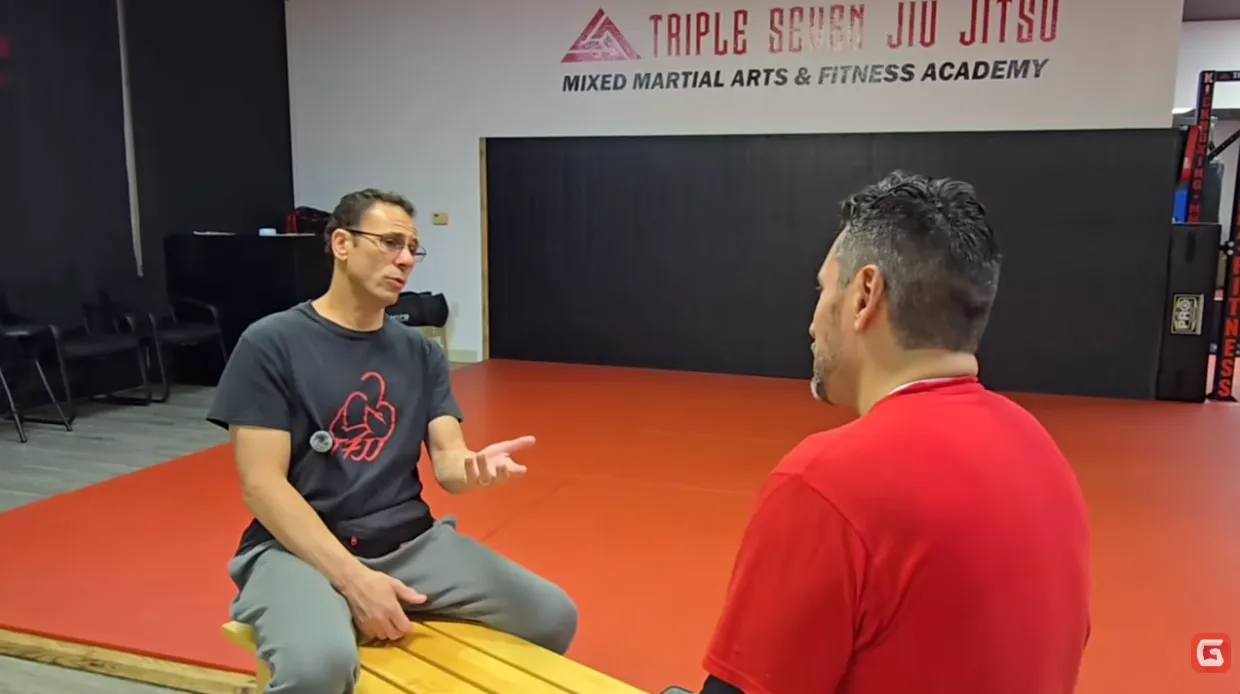
Every gym needs a name. But for Matthew, the choice of "Triple Seven Jiu-Jitsu" carried weight beyond marketing.
"The three sevens make a triangle, which is the symbol for Jiu Jitsu," he explains. "And seven is God's number. It represents completion, perfection in the spiritual sense."
The symbolism mattered.
This wasn't just going to be another spot to drill submissions and roll. Matthew wanted to build something that honored the deeper principles he'd been teaching for years—discipline, respect, leadership, friendship, honor.
Those principles would become the foundation of everything at Triple Seven.
Not just the technique. Not just the conditioning. The character development that happens when you commit to showing up, putting in the work, and pushing through difficulty alongside your training partners.
But first, Matthew had to get the doors open.
The Reality Check—It's All on You
Here's what Matthew learned immediately: teaching great jiu-jitsu and running a successful academy are two completely different skill sets.
"When it's yours, and you have to figure it all out," Matthew says, "that's when you realize how different this is."
He'd been an instructor at other schools. He'd run classes, managed curriculum, even helped with operational tasks.
But he'd never been responsible for everything—the lease negotiations, insurance policies, billing systems, marketing strategy, cleaning schedule, student conflicts, staff management.
All of it landed on him.
"It's not as easy as people think it is," he admits. "People see a successful gym and think, I could do that. They don't see the chaos behind the scenes when you're starting out."
The first 90 days were the hardest.
Every new academy owner talks about those early months. The financial pressure of covering rent before you break even. The exhaustion of teaching six classes a day while handling admin work. The constant uncertainty about whether you made the right call.
Matthew survived it by focusing on one principle: good is better than perfect.
The Anti-Perfectionism Philosophy
"Don't let perfection be the enemy of good," Matthew says. It's become his mantra for new gym owners.
In the early days, he could have spent weeks fine-tuning the curriculum. Months perfecting the website. Endless hours obsessing over class schedules.
Instead, he launched with a solid but simple program and improved it as he went.
The mats weren't perfect. The front desk setup was basic. The class structure evolved based on what students actually needed.
This philosophy saved him from the paralysis that kills so many new businesses before they even open. He got started. He adjusted. He improved.
But the one thing he refused to compromise on? Vision and direction.
"You have to know where you're going," Matthew emphasizes. "Without clear vision and direction, you get chaos, confusion, and carnage."
He'd seen it happen to other gym owners—talented instructors who opened without a real plan. Without a clear sense of who they were serving or how they'd build something sustainable.
Some lasted six months. Some made it a year. Very few made it to year three without that foundational clarity.
Matthew knew what Triple Seven was going to be: a place where kids and adults alike would learn not just jiu-jitsu technique, but the character traits that make you better at life.
Leadership. Discipline. Resilience. Community.
That vision shaped every decision.
The Youth Programs That Changed Everything
Early on, Matthew made a bet that many new academy owners overlook: he went all-in on youth programs.
It wasn't just about the income (though children's programs remain the foundation of most profitable martial arts studios). It was about building a community that families actually wanted to be part of.
"We focus on leadership and friendship and honor and respect and discipline," Matthew explains. "Not just technique."
The results speak for themselves.
There's the eight-year-old who walked in shy and uncertain, barely making eye contact. Three years later, he's leading warmups and helping newer students.
His parents say it transformed how he shows up at school.
There's the group of teenagers who started together as white belts and are now working toward blue. Showing up multiple times a week. Holding each other accountable. Building friendships that'll last long after they stop training.
And there are the adults—the 50- and 60-year-olds who thought they were "too old" to start. They've lost weight, gained confidence, and proven age is just a number with the right environment.
These transformations don't happen by accident.
They happen because Matthew built a culture that values growth over perfection, community over competition, and long-term development over quick wins.
Three Years Later: What Success Actually Looks Like
Today, Triple Seven Jiu Jitsu serves students ranging from 8 to 60+ years old.
Some train casually for fitness and stress relief. Others compete regularly and chase the next belt promotion. The academy has become a true community hub—the kind of place where members show up even on their off days just to watch class and connect with training partners.
Matthew sees the impact in unexpected moments. Former students who moved away for college stay in touch, updating him on their lives and thanking him for the foundation he helped build. Current students hit milestones they never thought possible—first tournament win, first submission in live rolling, first belt promotion after months of grinding.
The business itself has stabilized. Revenue is steady. The schedule is full. The admin work—billing, scheduling, attendance tracking—runs smoothly enough that Matthew can focus on teaching instead of drowning in paperwork.
But he's honest about the journey: "If I'd known how hard it would be, I might not have done it. But now that I'm here? I wouldn't trade it for anything."
Watch Matthew tell his story: Hear the full conversation about building Triple Seven, the challenges he faced, and his advice for aspiring gym owners in our Gymdesk Originals episode.
What Matthew Wants You to Know If You're Thinking About It
If you're a black belt or high-level brown belt teaching at someone else's academy and dreaming of opening your own place, Matthew has advice:
1. You don't need a huge pile of savings to start
Matthew didn't have traditional startup capital.
He used an EIDL loan and bootstrapped the rest. There are paths forward even if you're not sitting on $50,000 in cash.
2. Get clear on your vision before you open
"Chaos, confusion, and carnage" happen when you don't know who you're serving and why. Nail down your purpose, your target audience, and your core values before you sign the lease.
3. Good is better than perfect
Launch with a solid program and improve it as you go. Perfectionism is the enemy of progress.
You'll learn more in your first 90 days of operation than you will in six months of planning.
4. Build systems early
The administrative side of running an academy will consume you if you let it.
Set up automated billing, scheduling, and lead follow-up from day one. The time you save on admin work is time you can spend teaching and building relationships.
5. Focus on more than just technique
Great jiu-jitsu will get people in the door. Community, character development, and genuine care will keep them around for years.
Matthew's focus on youth development and leadership training has built a culture that students (and parents) value beyond the technical instruction.
6. Expect the first 90 days to be brutal
You'll question your decision. You'll be exhausted. You'll wonder if you made a mistake.
Push through it. The academies that survive those first three months have a real shot at long-term success.
The Triple Seven Story Continues
Matthew Pollino didn't start with money, connections, or a detailed five-year business plan. He started with a clear vision, a loan, and the willingness to figure it out as he went.
Three years later, Triple Seven Jiu Jitsu is proof that you don't need perfect conditions to build something meaningful.
You need clarity, resilience, and the courage to take the first step even when you're not completely ready.
If you're thinking about opening your own academy, Matthew's advice is simple: "Don't wait for perfect. Start with good, and build from there."
Watch the full conversation: Check out our Gymdesk Originals episode with Matthew Pollino to hear more about his journey, philosophy, and lessons learned.
About Gymdesk Originals: We travel the country interviewing gym owners who are building something worth talking about. Their stories, their lessons, their honest takes on what it really takes to run a successful martial arts academy. Watch more episodes.
Running a successful BJJ academy also comes down to systems that scale. Gymdesk scales with you, so you can grow without worrying about the little admin details. Try it free for 30 days to see for yourself!
Gym management software that frees up your time and helps you grow.
Simplified billing, enrollment, student management, and marketing features that help you grow your gym or martial arts school.


FAQ

Sean has spent the last decade creating content that helps businesses—small and not so small—grow smarter to allow operators to do more of what they love. You know, the fun stuff.
From shipping and international logistics to web development and marketing, he's done the work (not just the words) to scale retail and service businesses efficiently.
You can find his work at Sendle, Shogun, The Retail Exec, Gymdesk, and more.