
2026年のジムに最適な禅プランナーの代替品5選

ジムのオーナーに最適なZen Plannerの代替品は、ジムデスク、プッシュプレス、マインドボディ、キックサイト、ABC Glofoxです。
請求、スケジュール、メンバー管理の処理方法はそれぞれ異なります。そのため、適切な選択は、ジムの規模、教える内容、費やしたい金額によって異なります。
Zen Plannerは、「月額99ドルから」のプランを宣伝しています。しかし、ほとんどのジムオーナーは、マーケティングモジュール、ブランドアプリ、支払い処理手数料を追加すると、最終的に350ドルから500ドル以上を支払うことになります。
広告価格と実際の費用のギャップが、所有者が他の場所を探し始める主な理由です。
カバー付き 米国には115,000のジム そしてフィットネス業界 2032年までに年平均成長率 9.30% で成長、あなたの注意を引くために競合するソフトウェアには事欠きません。各オプションの実際の費用と効果は次のとおりです。
KEY TAKEAWAYS:
Gymdesk ranks as the top Zen Planner alternative for 2026, offering a clean interface, martial arts focus, and pricing starting at $75/month for micro gyms.
Common reasons gym owners switch from Zen Planner include pricing concerns, missing features, integration gaps, and interfaces that feel outdated or unintuitive.
Kicksite specializes in martial arts schools with dojo-specific tools like belt testing and curriculum management, while Mindbody suits studios needing live streaming despite its steeper learning curve.
Gymdesk and Mindbody both provide mobile apps for member scheduling and account management, giving gyms flexibility in how members interact with their software.
Zen プランナーの代替案:比較表
Software |
Starting Price |
Best For |
G2 |
GetApp |
Gymdesk |
$75/month |
Martial arts, small–mid gyms |
4.8 |
4.9 |
PushPress |
Free (paid from $159/month) |
CrossFit, growing gyms |
4.4 |
4.5 |
Mindbody |
$99/month |
Studios, spas, multi-location |
3.6 |
4.0 |
Kicksite |
$49/month |
Martial arts schools (small) |
4.8 |
4.8 |
ABC Glofox |
Contact for pricing |
Boutique studios, franchises |
4.5 |
4.4 |
Zen プランナーの実際の費用
ジムのオーナーがZen Plannerから切り替える #1 理由は?費用。
Zen Plannerの価格設定は、表面上はわかりやすいように見えます。
- 最大45人のメンバー:月額99ドル
- 46~100人のメンバー:月額149ドル
- 101~250人のメンバー:月額199ドル
- 251人以上のメンバー:月額267ドル
しかし、それは基本計画に過ぎません。ほとんどのジムでは、実際に事業を運営するためにはアドオンモジュールが必要です。
- マーケティングオートメーション (エンゲージCRM): 約249ドル/月
- ブランドモバイルアプリ: 約99ドル/月
- カスタム Web サイト: 約99ドル/月
- 支払い処理: トランザクションあたり2.9%+ 0.30ドル
それらを合計すると、200人の会員からなるジムが表示されます 546ドル+/月—価格ページに表示されていた199ドルではありません。
それは怪しいことじゃない。これがモジュラー価格設定の仕組みです。ただし、Zen Plannerを他のプランと比較する場合は、基本プランだけでなく、全額を比較してください。
ジムのオーナーが切り替えるその他の理由
価格設定以外にも、次のようなパターンがあります 引っ越しをしたジムのオーナー:
- インターフェースは時代遅れに感じます。 ゼンプランナーは2006年に発売されました。このデザインは古く、毎日のタスクには必要以上にクリック数がかかっています。
- 毎日必要な機能が不足しています。 たぶんそれは 特定の機能 ご利用のジムのロックを解除するには高価なアドオンが必要な機能や、ご利用のジムの機能が不可欠です。
- 統合ギャップ。 他のツールがZen Plannerに接続できない場合、手動による回避策で行き詰まります。
- サポートの応答時間。 複数のレビューでは、正午に問題が発生したときのフラストレーションとして、サポートが遅いことが挙げられています。
- ただ合わないだけです。 3年前はソフトウェアが正しかったのに、ジムでは使い物にならなくなることもありました。
Zen プランナーの代替案トップ5
難しい話は抜きにして、ジム、フィットネススタジオ、ヨガスタジオ、武道学校、ダンススクールを支援するのに役立つZen Plannerの代替案トップ5を見てみましょう。
1。ジムデスク

ジムデスク は、ジムオーナーの苦痛を理解しているブラジリアン柔術ブラックベルトによって構築されたジム管理ソフトウェアです。その背景が製品にも表れています。ジムのオーナーが実際に対処している問題を中心に設計されているのです。
2016年に設立されたGymdeskは、武道学校、ヨガスタジオ、フィットネスジムにサービスを提供しています。コンセプトはシンプルです。すべての機能があらゆる価格帯に含まれ、アドオンモジュールやサプライズ料金はありません。メンバー数に基づいてプランを選べば、すべてを利用できます。
GymdeskがZen Plannerと一線を画しているのは、価格設定の透明性と格闘技機能です。ベルトトラッキング、スキルアップ、出席に基づく昇進要件、カリキュラム管理はすべて組み込まれており、追加機能として追加されたものではありません。
機能の概要
- メンバー管理: デジタル記録、家族会計、出席、トレーニングの進捗状況
- 自動請求: 支払い失敗時の定期支払い再試行と実行管理
- 出席トラッキング: モバイルチェックイン、キオスクモード、クラス全体の一括チェックイン
- POSシステム: 在庫追跡機能付きでフロントデスクでギアを販売
- マーケティングツール: リードトラッキング、治験管理、自動化シーケンス
- レポーティング: 収益グラフ、成長レポート、会計台帳
- メンバーモバイルアプリ: iOS と Android — メンバーによるクラスの予約、チェックイン、支払いの管理
- ランク進行トラッキング: スキルライブラリ、ベルト進行バー、出席状況に応じた昇格要件
- 無料のジムのウェブサイト: モバイル向けに最適化されたドラッグアンドドロップビルダー、すべての階層に含まれています
- インテグレーション: ストライプ、スクエア、Authorize.net、GoCardless、ジムデスクペイメント、Zapier
- アクセス制御: 会員ステータスと連動したキーフォブまたはスマートフォンでの入場
- 自動化エンジン: 分割パス、タスク作成、Webhook、ドキュメント送信を備えたマルチステップシーケンス
長所と短所
長所:
- すべての機能をすべての階層に搭載。ロック解除するモジュールは不要
- スタッフがすぐに使いこなせるすっきりとした高速なインターフェース
- コアに組み込まれた格闘技機能(ベルトトラッキング、カリキュラム、ファミリーアカウント)
- 5 種類の支払い処理オプション (1 つだけではない)
- レスポンシブサポートチーム
短所:
- Mindbodyのようなエンタープライズプラットフォームよりも統合が少ない
- SMSは有料のアドオンです(セットアップで最大20ドル+テキストあたりTelnyx経由)
- ウェブサイトビルダーは機能的だが基本的なものだが、改良が計画されている
価格設定
- マイクロジム (メンバー50人まで): 月額75ドル
- スモールジム(51-100人のメンバー):月額100ドル
- ミディアムジム(101〜200人のメンバー):月額150ドル
- ラージジム (会員数201~400人): 月額200ドル
- エンタープライズ (400 人以上のメンバー): カスタム価格設定
隠れた手数料はありません。アドオンモジュールなし。30 日間無料トライアル、クレジットカード不要。
レビュー
2グラム: 4.8
アプリを取得: 4.9
ソフトウェアに関するアドバイス: 4.85
2。プッシュプレス
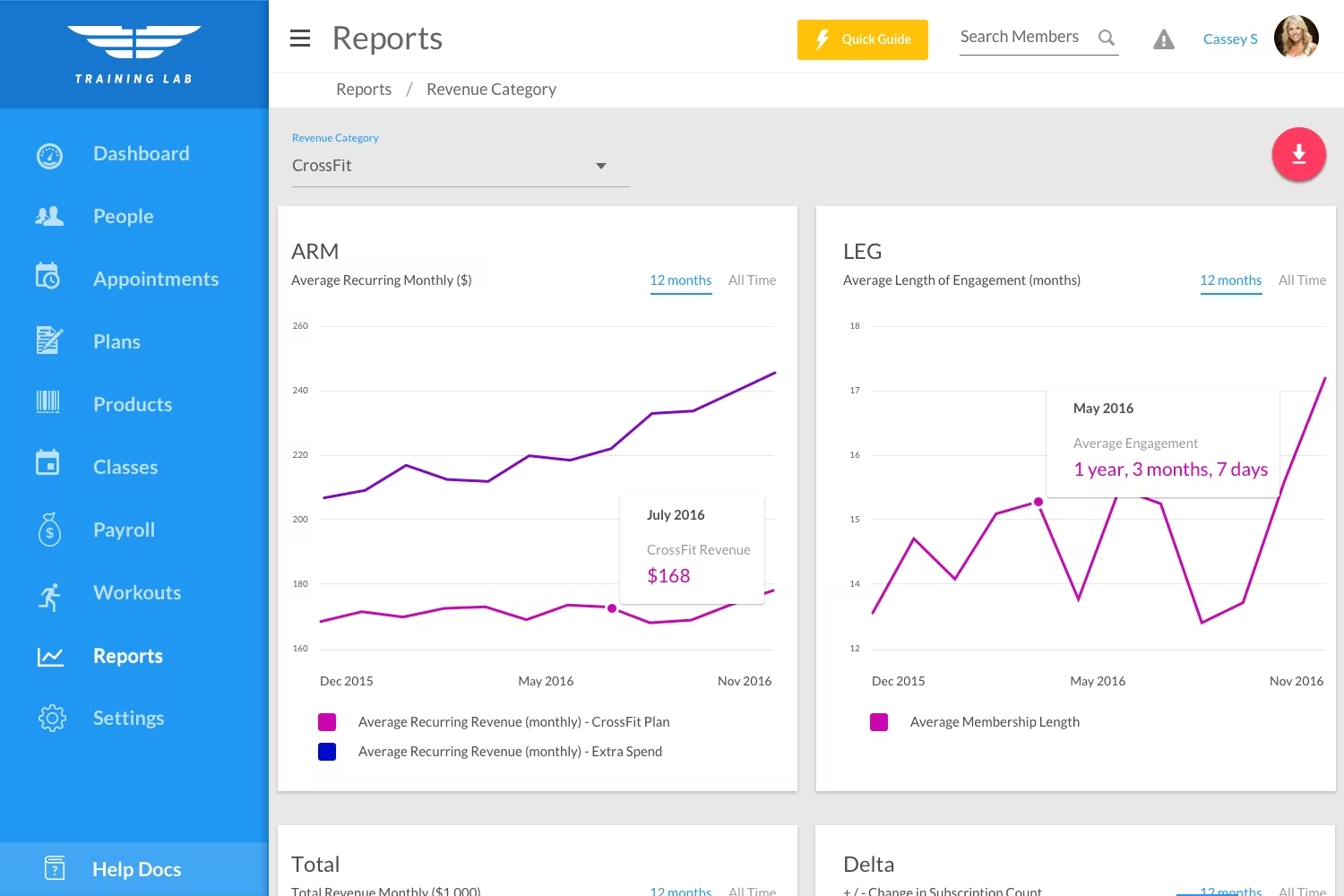
プッシュプレス CrossFitの世界でスタートし、2024年から格闘技と一般的なフィットネスに拡大しています。46か国の5,000以上のジムで使用されており、2024年後半に2,000万ドルのシリーズBを開催したことで、新しい業種に参入するためのランウェイが開かれました。
このプラットフォームには無料利用枠がありますが、これはこのカテゴリでは珍しいことです。ただし、トレードオフは、すべての取引で 4.19% の支払い処理手数料が発生し、合計するとあっという間です。マーケティング、ワークアウトトラッキング、ブランドアプリを含むプラットフォーム一式は、月額559ドル以上です。
PushPressは2025年4月に格闘技のランクトラッキングを追加したため、これらの機能はまだ1年足らずです。クロスフィットボックスや筋力重視のジムなら、フィット感がより強くなります。格闘技学校にとっては、まだ追いつきつつあります。
機能の概要
- メンバー管理: プロフィール、出席、エンゲージメントトラッキング
- 請求と支払い: 段階的な手数料レートによる Stripe のみの処理
- クラススケジュール: オンライン予約によるカレンダー管理
- チェックインシステム: ネームタップチェックインとキオスクモード (プロレベル以上)
- 拡張モジュール ($329/月): 電話移植、発信者IDマスキング、双方向SMS、自動マーケティングファネルを備えたフルCRM
- 鉄道モジュール (月額79ドル以上): ワークアウトのプログラミングとトラッキング
- ブランドアプリ (月額81~97ドル+年額99ドル/年額Apple開発費): ホワイトラベルのモバイルアプリ
- AI サポートチャットボット: 最大 60% のサポート会話を処理
長所と短所
長所:
- 始めたばかりのジムの無料利用枠
- 完全な CRM とマーケティングスイート (Grow アドオン付き)
- AI 支援サポート文書
- ビジネスを理解しているジムのオーナーによって建てられました
短所:
- 無料利用枠では、すべての支払いに 4.19% の手数料がかかります
- プラットフォーム全体のコストは、すべてのモジュールで月額559ドル以上
- Stripe のみ-代替支払い処理業者は存在しない
- 格闘技機能は新しく(2025年4月発売)、まだ成熟段階にある
- 一部のユーザーから報告された請求の信頼性に関する問題
- Eメールの配信問題 (請求書とパスワードのリセットがメンバーに届かない)
価格設定
- 無料:1 か月あたり 0 ドル (1 回の取引につき 4.19% + 0.30 ドル)
- プロ:159ドル (2.89% + 0.30ドル)
- 最大:月額229ドル (2.75% + 0.30ドル)
- 成長 (CRM/マーケティング): 月額329ドル
- トレーニング(ワークアウト):月額79ドルから
- ブランドアプリ:月額81~97ドル+年額99ドル
すべてが揃ったフルスタック:月額559ドル以上。
レビュー
2グラム: 4.4
アプリを取得: 4.5
ソフトウェアに関するアドバイス: 4.5
3。マインドボディ
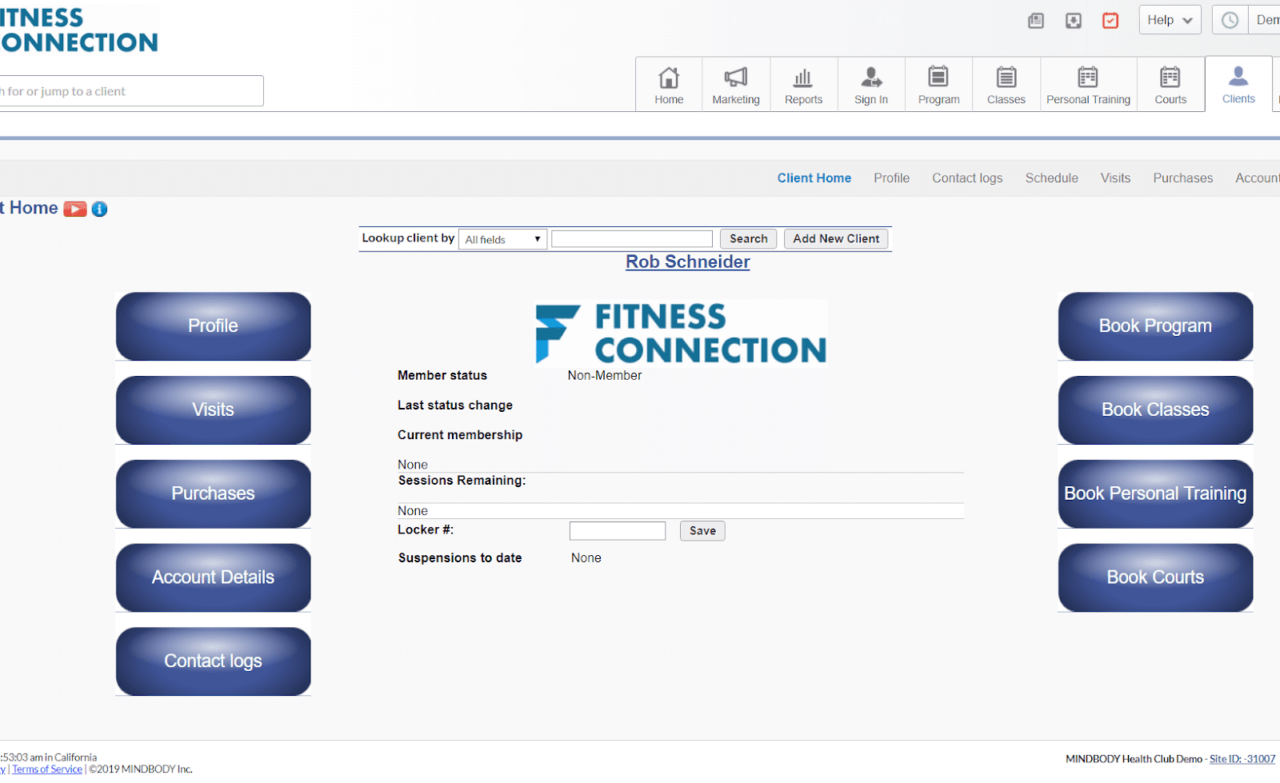
マインドボディ 2000年代初頭から存在しており、おそらくジム管理ソフトウェアで最も有名な名前です。フィットネススタジオ、スパ、サロン、ウェルネス事業にサービスを提供していますが、これが強みでもあり短所でもあります。このプラットフォームは多くの機能を備えていますが、ジムや武道学校専用に作られたものではありません。
魅力はマインドボディのマーケットプレイスです。300万人以上のユーザーが近くのクラスやスタジオを探してアプリを閲覧しています。発見と新規メンバーの獲得があなたにとって重要だとしたら、その露出は他のどこにも匹敵しません。
欠点は?高価で複雑で、インターフェイスは10年前に構築されたような感じがします。あれはそうだった。 これが私たちのマインドボディレビュー全文です。
機能の概要
- クラスと予約のスケジュール: カレンダー管理による予約、キャンセル、再スケジュール
- クライアント管理: プロファイルと通信履歴を含むCRM
- POS システム: 在庫追跡による対面およびオンライン支払い処理
- レポートと分析: 収益、出席、リテンションデータ
- マーケティングツール: メールキャンペーン、プロモーション、ソーシャルメディア統合 (アルティメットレベル)
- スタッフ管理: スケジューリング、時間追跡、パフォーマンスモニタリング
- マインドボディアプリのリスト: クラスを検索している300万人以上のユーザーへの露出
- ブランドモバイルアプリ: アドオンとして利用可能
- ライブストリーミング: オンデマンドビデオによるバーチャルクラス配信
- インテグレーション: Mailchimp、Google カレンダー、Xero、アクティブキャンペーンを含む100以上
長所と短所
長所:
- 300万人以上のユーザーがメンバーを検索できるマーケットプレイス
- 100以上のインテグレーション
- ライブストリーミングとバーチャルクラスのサポート
- 年中無休のカスタマーサポート
短所:
- 学習曲線は険しく、オンボーディングは複雑
- アドオン (ブランドアプリ、AI チャットボット、コンサルティング) を使用すると価格があっという間に上がる
- インターフェースは時代遅れに感じる
- 格闘技の機能が弱い。ほとんどのユーザーにとって、ベルトトラッキングは基本的なものか紙ベースのものしかない
- PE所有(ビスタ・エクイティ)—価格圧力は一方向に向かう傾向がある
価格設定
マインドボディは最近、次の3つの階層に簡素化されました。
- スターター:エントリープラン(価格は非公開。プランは1拠点あたり月額79ドルから)
- 加速:ミッドティア (価格は非公開)
- アルティメット:トップティア (価格は非公開)
アドオンには、ブランドモバイルアプリ、メッセンジャー [ai] チャットボット、コンサルティング、マインドボディキャピタルが含まれます。実際の月額費用は、どのアドオンが必要かによって大きく異なります。
第三者の報告では、Starterが1拠点あたり月額約99〜159ドル、Ultimateが月額499ドル以上ですが、MindbodyはWebサイトにどのプランの価格も掲載していません。
レビュー
2グラム: 3.6
アプリを取得: 4.0
ソフトウェアに関するアドバイス: 4.0
4。キックサイト
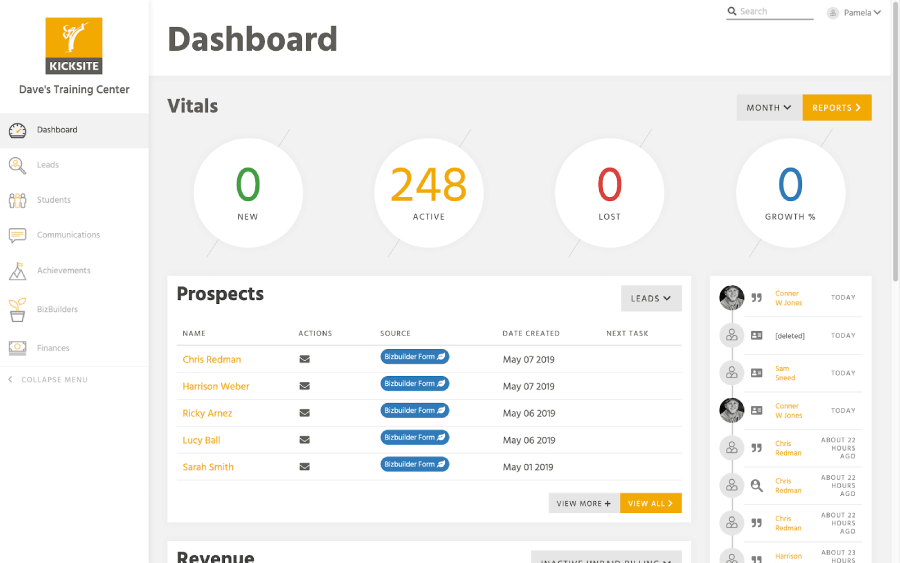
キックサイト は、テコンドーのインストラクターによって構築された武道専用ソフトウェアです。22か国の2,000以上の学校にサービスを提供しており、20年近く運営されています。ブラジリアン柔術、空手、総合格闘技、テコンドーの学校を運営している場合、Kicksiteは皆さんの世界に合わせて特別に設計されました。
このプラットフォームは、ベルトトラッキング、カリキュラム管理、および学生の進歩を処理します。家族経営の独立系プラットフォームで、格闘技に重点を置いています。彼らは、業界を理解していない多業種競技者を「金儲け」と呼んでいます。
最大のギャップは?ネイティブモバイルアプリはありません。メンバーはモバイルウェブブラウザのブックマークを通じてプラットフォームにアクセスしますが、これは複数のユーザーから大きな問題だと指摘されています。
機能の概要
- 学生管理: 連絡先、ベルトランク、出席、進捗状況を含むプロフィール
- ベルトトラッキングとカリキュラム: ランク進行とテストスケジュールの管理
- 出席追跡: 手動入力またはバーコードスキャン
- コミュニケーション: 双方向SMS(無料含む)、アプリ内メッセージング、電子メール
- 請求と支払い: Basys (米国/カナダ) または Stripe (海外) を通じた請求書と定期請求
- イベント管理: ベルトテスト、トーナメント、セミナー
- 自動コミュニケーション: セッションリマインダー、キャンセル通知、ドリップシーケンス
- 報告: 出席追跡とビジネスパフォーマンスレポート
- 専用オンボーディング: 60 日間のオンボーディングスペシャリストと無制限のトレーニング
長所と短所
長所:
- 武道に特化した設計 — 道場の運営に対する深い理解
- 無制限のテキストメッセージが無料で付属(認証済みの場合、実質的にお金の節約になります)
- ハンズオンセットアップによる60日間の専用オンボーディング
- 20年近くにわたる格闘技に特化した開発
- 小規模学校向けの手頃なエントリーポイント
短所:
- ネイティブモバイルアプリはありません。メンバーはブラウザのブックマークを使用します
- 支払い処理はBasysまたはStripeに限定されます(Basysは月額29ドルのゲートウェイ料金+ 2.9%+ 0.25ドル/トランザクションを請求します)
- 限定的な統合 (文書化されているのは2~3つ)
- POS システムなし-代わりにランディングページを使用
- 一部の構成では、自動化は見込み客専用フローに限定されています
- アクセス制御やドアの統合なし
価格設定
学生数別のキックサイト料金:
- 0~50人の学生:月額49ドル
- 51~100人の学生:月額99ドル
- 100人以上の学生:月額149ドル
注:これらは最近公開された階層です。Kicksiteの価格ページでは、現在の数字を確認するにはログインが必要です。決定する前に直接確認してください。これまで、マネージドウェブサイトサービスは月額約199ドルで別途料金がかかっていました。
レビュー
2グラム: 5.0 (限定レビュー—サンプルサイズが小さい)
アプリを取得: 4.8
ソフトウェアに関するアドバイス: 4.8
カプテラ:4.8 (126 件のレビュー—1つ星または2つ星はゼロ)
5。ABC グローフォックス
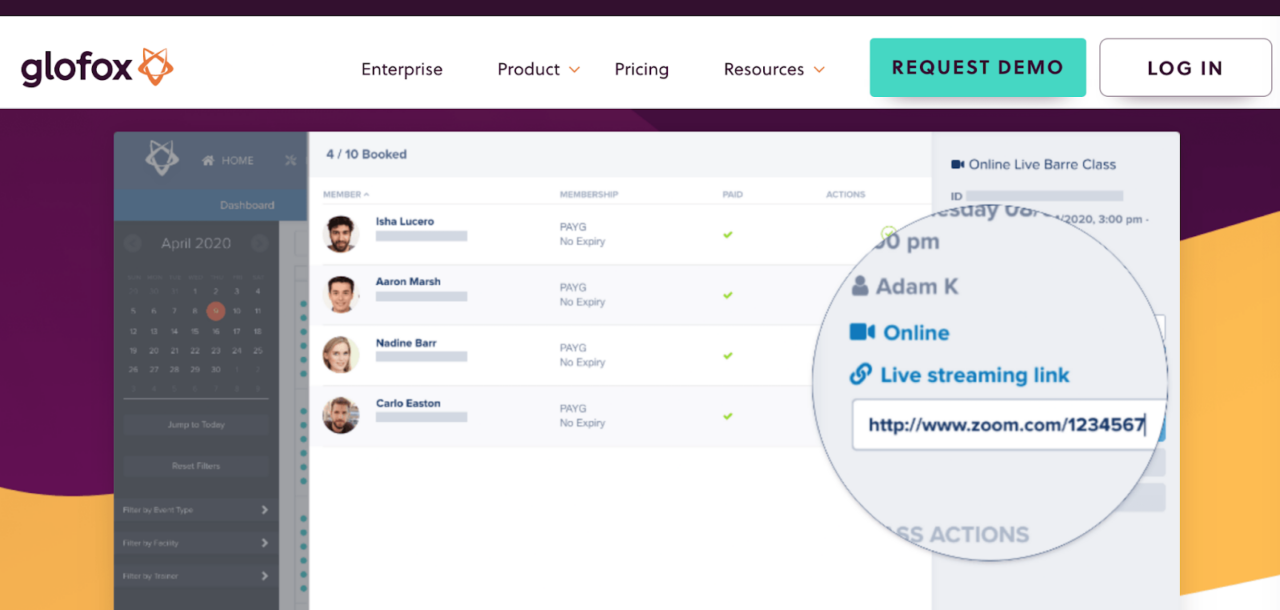
Glofox(ABC Fitness Solutionsに買収され、現在はABC Glofoxになっています)は、ジム、ヨガスタジオ、HIITスタジオ、ブティックフィットネスセンターにサービスを提供しています。F45、スナップフィットネス、UFC ジムなどのロゴが特徴で、80か国以上で30,000人以上の顧客を獲得しています。
プラットフォームは良さそうです。インターフェースはモダンで、ブランドアプリは洗練されており、オンボーディングプロセスは高く評価されています。しかし、最近のレビューには知っておく価値のあるパターンがあります。
ABC Fitnessの買収後、サポートの質は低下しました。レビューのパターンは一貫しています。顧客を獲得する前に優れたエクスペリエンスを提供しても、サポートが応答しなくなり、価格が急騰し、機能のリクエストが行き詰まります。3つの拠点を持つあるオーナーは、合併後の「絶対的かつ完全な災害」と表現しました。すべてのユーザーがこのような経験をしているわけではありませんが、Trustpilotのレビューの 20% は1つ星で、そのほとんどは最近のものです。
機能の概要
- メンバー管理: プロフィール、出席履歴、会員追跡
- クラスのスケジュールと予約: 時刻表、キャパシティトラッキング、オンライン予約
- 請求と支払い: 自動請求書発行と支払い回収
- CRM: リード管理とオンボーディングワークフロー (ブーストレベル以上)
- マーケティングツール: メールキャンペーン、プッシュ通知、ソーシャルメディア統合
- ブランドモバイルアプリ: ジムのロゴと色を使ったカスタムブランド
- アクセス制御: 会員制施設へのアクセス
- 1 か月あたり 500 SMS クレジットが含まれています 計画では
- インテグレーション: パークビル、ジムパス、メールチンプ、メタピクセル、その他
長所と短所
長所:
- すっきりとしたモダンなインターフェース
- ブランドアプリはよくデザインされています
- 毎月500件の SMS クレジットが付属
- リード管理機能付き CRM (上位層)
短所:
- 価格は隠されている。数字を聞くには営業担当に問い合わせる必要がある
- 現地報告による価格設定:米国市場では月額250~360ドル
- 上位層向けの主要機能(リードキャプチャ、アドバンストレポーティング、POS、電子契約)
- 買収後のサポートに関する苦情は広範囲にわたり、一貫している
- メンバーシップ価格を変更すると、そのプランに加入しているすべてのメンバーに影響が出るため、重複した価格を設定する必要があります。
- きめ細かなスタッフ権限はない。コーチはすべてを見るか、メンバーをオンボーディングできない
- 格闘技のベルトトラッキングはせいぜい表面レベルです
価格設定
ABC Glofoxは価格を公表していません。見積もりを受けるにはデモをリクエストする必要があります。
ジムオーナーからのフィールドレポート(2025—2026)に基づくと、次のことが予想されます。
- 米国市場:月額250~360ドル
- 買収後に価格が高くなった。一部のオーナーは、追加機能なしで 70% の値上げを報告している
- 機能はティア(エッセンシャル、ブースト、エリート)によって決まります
レビュー
2グラム: 4.5
アプリを取得: 4.4
ソフトウェアに関するアドバイス: 4.4
トラストパイロット: 3.5 (374 件のレビュー—非常に二極化)
機能の比較:Zen プランナーと代替案
毎日使う機能を並べてご紹介します。
Feature |
Gymdesk |
PushPress |
Mindbody |
Kicksite |
ABC Glofox |
All features included |
Yes |
No (modular) |
No (tiered) |
Yes |
No (tiered) |
Native mobile app |
Yes |
Yes |
Yes |
No |
Yes |
Belt/rank tracking |
Yes (mature) |
Yes (new, April 2025) |
Basic |
Yes (mature) |
Basic |
Family accounts |
Yes |
Limited |
Yes |
Yes |
Limited |
Automated billing |
Yes |
Yes |
Yes |
Yes |
Yes |
Payment processors |
5 options |
Stripe only |
Mindbody Payments |
Basys or Stripe |
Glofox Payments |
Free website included |
Yes |
No (Grow add-on) |
No |
No (paid add-on) |
No |
SMS included |
No (paid add-on) |
No (Grow add-on) |
Tier-dependent |
Yes (free) |
500/month included |
Access control |
Yes (add-on) |
Limited |
Yes |
No |
Yes |
Starting price |
$75/month |
$0 (4.19% processing) |
$99/month |
$49/month |
~$250/month |
あなたのジムに合う代替手段はどれですか?
あなたの状況にスキップしてください:
あなたは武道学校を経営していて、最高の価値を求めています。 ジムデスク。ブラジリアン柔術の黒帯、大人向けのベルトトラッキングとカリキュラム管理、子供のメンバーシップを管理する保護者用ファミリーアカウント、すべての機能が、サイズに応じて月額75ドルから200ドルで利用できます。 無料トライアルを始める 実際のジムでテストしてください。
あなたは厳しい予算で武道学校を運営しています。 キックサイト。最大50人の学生で月額49ドルで、道場で最も安いエントリーポイントです。ただし、モバイルアプリがないこと、支払い処理手段の選択肢が限られていること、統合が少ないことなど、トレードオフは知っておいてください。
あなたはクロスフィットボックスまたは筋力ジムを運営しています。 プッシュプレス。その世界のために作られ、マット・フレイザーとのパートナーシップを含め、CrossFitコミュニティに深く根ざしています。無料利用枠は、ユーザーが 4.19% の処理手数料を負担できるほど小規模な場合に利用できます。
新しいメンバーを見つけるにはマーケットプレイスが必要です。 マインドボディ。300万人を超えるユーザーアプリは、特に競争の激しい都市市場のヨガスタジオ、ピラティス、ウェルネスビジネスにとって、真の獲得チャネルです。
あなたはデザインとブランディングに焦点を当てたブティックスタジオです。 ABC Glofoxブランドアプリは洗練されており、インターフェースはモダンです。買収後のサポートと価格の透明性については、目を空けて考えてみてください。
特に武道学校向け
武道アカデミーを運営している場合、ベルトトラッキング、カリキュラムの進行、家族への請求、出席に基づく昇進要件など、ほとんどのジムプラットフォームでは無視されていることをソフトウェアが処理する必要があります。
このリストで格闘技を主眼として構築されたプラットフォームは2つだけです。
- ジムデスク —ブラジリアン柔術黒帯によって設立されました。スキルトラッキング、出席率に関連する昇進要件、ファミリーアカウント、 ランク進行 コア機能であって、後から考えたものではありません。
- キックサイト —テコンドーのインストラクターによって設立されました。20年近く武道のみの開発を続けてきました。堅実なベルトトラッキングだが、モバイルアプリがなく、統合も限られている。
Zen Plannerには格闘技の機能もあります。武道学校のオーナーによって設立されました。しかし、ダックスコが2017年に買収して以来、プラットフォームは停滞しています。機能の開発は鈍化しており、価格もモジュール化されているため、武道ツールはアドオンにお金を払わなければならないことが多い。
IMPORTANT:
Before switching platforms, export your data from Zen Planner (CSV or Excel) and verify it's complete. Most modern gym management tools—including Gymdesk—handle data migration as part of onboarding, so you won't lose member profiles, billing history, or attendance logs.
Zen プランナーからの切り替え方法
ほとんどのジムオーナーはこの部分を恐れています。通常は予想以上に簡単です。その仕組みは次のとおりです。
1。データをエクスポートする。 Zen Plannerでは、メンバーレコード、請求履歴、出席ログをCSVファイルとしてエクスポートできます。何かをキャンセルする前にこの作業を行ってください。
2。代替案を選び、サポートチームに相談してください。 GymDeskを含むほとんどのプラットフォームでは、データのインポート手順が説明されています。一人でそれを理解しようとしないでください。
3。両方のシステムを 1 週間並行して実行します。 切り替える前に、新しいプラットフォームをセットアップし、データをインポートし、請求とスケジュールをテストしてください。
4。スタッフをトレーニングしましょう。 新しいプラットフォームがシンプルになればなるほど、必要なトレーニングは少なくなります。Gymdesk のセットアップは数分で完了します。マインドボディには数日かかります。
5。メンバーに伝えてください。 変更内容と必要なことを説明するメールを送信します (通常は、新しいアプリをダウンロードするか、ログイン情報を更新します)。
6。Zen プランナーをキャンセルします。 少なくとも 30 日前までにキャンセルリクエストフォームを送信してください。キャンセル日までキャンセル料を支払う必要があります。
注意すべき点が1つあります。Zen Plannerの統合支払い処理を使用する場合、支払いトークンの移行には調整が必要な場合があります。開始する前に、新しいプラットフォームのサポートチームにこの点について問い合わせてください。
今すぐ最適な代替品を見つけましょう
結局のところ、Zen Plannerは「悪い」ソフトウェアではありません。実際の価格設定、アドオン、ジムの方向性を考慮すると、常に最適なソフトウェアであるとは限りません。
格闘技学校や小規模なジムの運営方法に実際にマッチするツールが欲しいなら、まずはGymdeskがお勧めです。各階層のすべての機能、ビルトインのベルトとカリキュラムトラッキング、メンバーアプリ、自動化、無料のウェブサイトなど、モジュールで「実際の価格を当てる」必要はありません。
そこから、今日実際に支払っている金額を計算し、なくてはならない機能をリストアップし、2つか3つのオプションを1週間並行してテストします。
適切なソフトウェアは、コーチングや販売、成長の間、バックグラウンドで静かに実行されるべきであり、料金や管理時間を無駄にするのではなく、バックグラウンドで静かに実行する必要があります。
Zen Plannerが目指しているもの、つまり透明な価格設定、格闘技優先の機能、ニッケルや減衰のない、「オールインワン」バージョンの準備ができたら—Gymdeskの30日間無料トライアルを開始する そして、ソフトウェアがついに邪魔にならなくなったときの気持ちを見てみましょう。
Gym management software that frees up your time and helps you grow.
Simplified billing, enrollment, student management, and marketing features that help you grow your gym or martial arts school.