
ベストジム管理ソフトウェア (2026):競合他社による正直な比較

夜11時。あなたは8つのブラウザタブを開き、ジム管理ソフトウェアを比較しています。
クリックするどの記事も、その記事を書いた会社を1位にランク付けし、自社プラットフォームについて熱心に書き立て、その後に「他の選択肢もあるにはある、たぶんね」といった記述が続きます。
お気づきでしょう。
そこで、私たちは異なるアプローチを取ります。 私たちはGymdeskを開発しています。 このことは、脚注ではなく冒頭で明記しておきます。また、私たちは8年以上にわたりこの市場で開発を行い、競合に案件を奪われたり、ジムオーナーから各プラットフォームの良い点・悪い点を聞いたりしてきました。
競合他社については意見があります。私たち自身についても、正直な意見を持っています。
この比較では、実際の価格(2026年4月確認済み)、第三者レビューデータ、そして実際のメリット・デメリットを使用しています。Gymdeskが適切でない場合は、その旨を明記します。
現在のシステムが実際にどれくらいの時間を費やしているか、よくわかりませんか?ぜひお試しください。 ジム管理時間計算ツール 比較する前に。
このガイドの使い方: 以下のクイックマッチ表に移動し、あなたのジムのタイプを見つけ、詳細な分析をお読みください。特定の質問については、下部のFAQをご覧ください。
もし気になるプラットフォームがあれば、営業担当者と話す前に、無料トライアルに登録してください。デモ通話よりも、実際に1週間使ってみる方が多くのことを学べます。
このリストの作成方法
10のプラットフォームが選定されました。
PerfectMind(買収され、ほぼ停滞)とClubwise(北米での展開が限定的)は対象から外しました。G2で高い評価を得ており、ユーザーベースが拡大しているWellnessLivingを追加し、ブティックスタジオのコミュニティでMindbodyの適切な代替として常に挙げられるTeamUpは引き続き対象としました。
料金データは、公開されている場合は各ベンダーの料金ページ(2026年4月時点)から取得しました。料金が公開されていない場合は、ジムオーナーのコミュニティからの報告範囲や、確認済みの営業担当者との会話を参考にしました。第三者評価はG2とCapterraから得ています。
これらの企業から掲載料を受け取っているわけではありません。中には弊社と積極的に競合している企業もありますが、それは問題ありません。
早見比較表
Platform | Best For | Starting Price | Free Trial | Standout Feature | Where It Falls Short |
Gymdesk | Martial arts schools & BJJ gyms | $75/mo | 30 days | Belt/rank tracking + native curriculum | Fewer third-party integrations |
Mindbody | Large multi-service facilities | $79/mo | No | Marketplace for member acquisition | Expensive add-ons, dated interface |
Glofox | Boutique fitness studios | ~$110/mo | No | Branded member app | Opaque pricing, ABC Fitness acquisition uncertainty |
Wodify | CrossFit boxes & functional fitness | $99/mo | No | WOD tracking + performance leaderboards | Less suited to non-CrossFit gyms |
PushPress | New gyms starting from zero | Free | Free tier | Free Core plan to start | “Free” has real embedded costs |
TeamUp | Budget-conscious yoga & pilates studios | ~$59/mo | Yes | Clean scheduling, fair pricing | No payroll, limited integrations |
WellnessLiving | Gyms wanting marketing automation built in | ~$89/mo | Yes | Loyalty rewards + email campaigns | Cluttered interface, steeper learning curve |
Zen Planner | Mid-market martial arts schools | $117/mo | Yes | Digital belt tracking, automation | Owned by Daxko, maturing platform |
Kicksite | Small martial arts schools | $85/mo | Yes | Dedicated martial arts focus, strong support | No mobile app |
GymMaster | Traditional gyms with access control needs | $89/mo | Yes | Built-in 24/7 Bluetooth door access | Less suited to class-based studios |
ジムソフトウェアを選ぶ際に本当に大切なこと
比較検討を始める前に、尋ねておくべき5つの質問です。
1. 請求処理を意識せずとも自動で対応してくれますか?
決済失敗時の再試行、自動督促、自動で継続される定期課金。これらはジムオーナーにとって最大の時間浪費であり、ソフトウェアの品質に最も差が出る部分です。
その 請求漏れ計算ツール を使えば、手動での請求処理の不備によって現在どれだけの損失が出ているかを確認できます。
2. 会員はあなたに連絡することなく予約やチェックインができますか?
セルフサービス予約、会員アプリ、キオスクでのチェックイン。会員があらゆる段階であなたを必要とするようでは、電話が鳴り止まないでしょう。
3. スタッフは実際にそれを使ってくれますか?
オンボーディングに3ヶ月もかかるようでは、それは間違ったツールです。複雑さは、ジムオーナーがせっかくお金を払って導入したソフトウェアを放棄する最大の理由です。
4. あなたの成長に合わせて対応してくれますか、それとも不当に高額な料金を請求されますか?
請求処理や会員アプリといった基本機能が高額プランの裏に隠されている料金体系には注意が必要です。このリストにあるいくつかのプラットフォームでは、『$Xから』と『実際に支払う$X』は異なる数字になっています。 全費用内訳を見る アドオンや処理費用を含めた後で、各プラットフォームが実際にいくらかかるかの
5. あなたのジムの種類に対応していますか?
ヨガスタジオとMMAスクールでは、ワークフローが根本的に異なります。
「フィットネス」というカテゴリ向けに作られたソフトウェアは、どちらにもうまく対応できないことがよくあります。ニーズが具体的であればあるほど(帯の追跡、カリキュラム管理、家族アカウントなど)、この質問の重要性は増します。
ユースケース別 最適なジム管理ソフトウェア
これらを1位から10位までランク付けする代わりに(どのベンダーも自社を1位にランク付けしており、もはやお決まりのパターンなので)、どのプラットフォームがどのジムに実際に適しているかをご紹介します。
格闘技スクール&BJJジムに最適:Gymdesk

DISCLOSURE:
This is us. We'll be upfront about what we do well and where we fall short.
Gymdeskは、スプレッドシートでのアカデミー管理にうんざりしていたBJJ黒帯のエラン・ガルペリンによって開発されました。その開発経緯が、格闘技スクールにとって重要な形で製品に反映されています。
帯とランクの追跡機能はネイティブに搭載されており、後付けではありません。
ほとんどのジムソフトウェアは「会員ランク」をカスタムフィールドとして扱いますが、Gymdeskは独自のワークフローを持つコアデータポイントとして扱います。各生徒のスキル進捗を追跡し、昇級要件を設定し、出席状況に基づいた昇級を自動的にトリガーできます。
BJJアカデミー、空手スクール、またはMMAジムにとって、これはフィットするソフトウェアと、無理やり使っているソフトウェアとの違いです。
運用面では: 自動請求 あらゆる 料金プランで利用できます。高額なプランでなくても、機能する請求機能を利用できます。
会員アプリ、リード管理、組み込みウェブサイト、リスクアラート付き出席追跡機能がすべて初日から含まれています。年間契約なし。30日間無料トライアル。
Everything just runs smoothly.

I entered Gymdesk and it's just like whoa—I don't have to do anything. I just got to teach and clean the mats.

他のジムオーナーがどのように利用しているかはこちらでご覧ください: Gymdesk Originals。
料金: 会員数に応じて月額75ドルから200ドル(Gymdesk Payments利用時。自社の決済代行会社の場合は月額25ドル、ラージは40ドル加算。251名以上は個別にご相談ください)。全てのプランで全機能が利用可能です。
Gymdeskの課題点: MindbodyやPushPressと比較してサードパーティ連携が少ない。ネイティブのライブストリーミング機能はありません。ブランド認知度が低いため、困ったときに利用できるコミュニティフォーラムやサードパーティのチュートリアルも少なめです。
大規模な多角的なフィットネスビジネスに最適:Mindbody
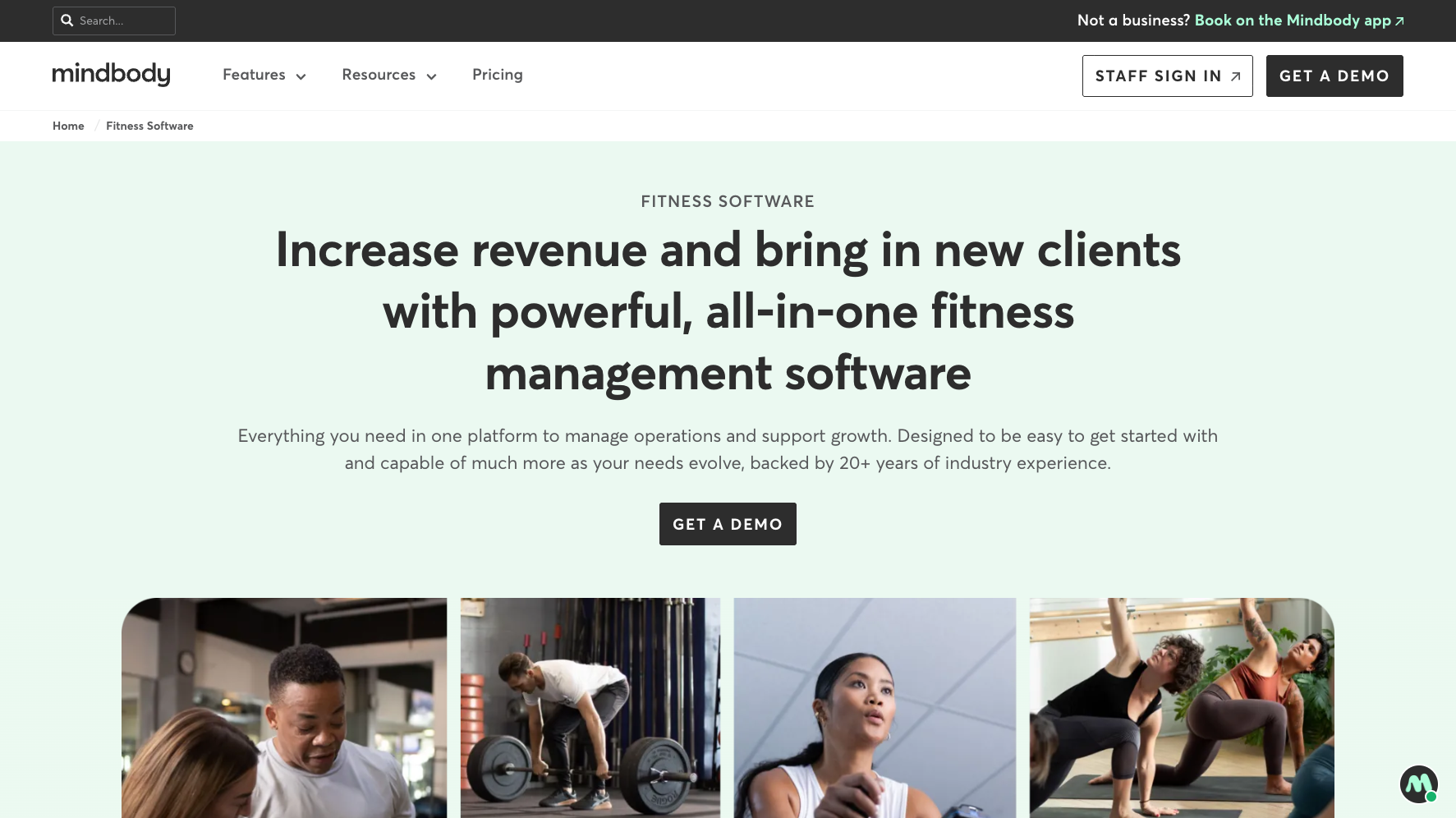
Mindbodyは業界の老舗です。長年の実績があるため、会計士や大家がすでに知っているという理由だけで利用しているジムオーナーもいます。
ビジネスが複数のサービスカテゴリ(ジムフロア、スパ、小売、委託スタジオスペースなど)にまたがる場合、それらすべてを管理できる数少ないプラットフォームの一つです。
特筆すべきはMindbodyマーケットプレイスです。これにより、地元のフィットネスオプションを積極的に探している消費者にあなたのビジネスをアピールできます。
これは単なる管理ツールではなく、真の会員獲得支援です。また、ブランドアプリ、バーチャルストリーミング(有料アドオン)、POS、豊富な連携ライブラリも提供しています。
これが良い点です。では、正直なもう一つの側面を見てみましょう。
インターフェースは古く感じられます。オンボーディングには数日ではなく数週間かかります。公開されている料金は1拠点あたり月額79ドルからですが、元々魅力的だった機能を追加するとすぐに高くなります。
バーチャルストリーミング、高度なマーケティング、ブランドアプリはすべて追加料金です。年間契約が一般的で、サポートの対応の遅さは一貫して不満として挙げられています。 MindbodyのG2レビューで。強力なプラットフォームですが、その力を使いこなすには努力が必要です。
料金: 公開されているのは1拠点あたり月額79ドルからという開始価格のみで、各プランは見積もり制です。第三者の報告では月額約99ドルから499ドル以上。無料トライアルはありません。年間契約が一般的です。
課題点: オンボーディングが複雑。アドオン料金が積み重なります。G2のレビューでは、サポートの遅さと、新しい競合他社に追いついていないインターフェースが挙げられています。
最適なのは: 複数店舗展開のジム、スパや小売事業を併設する施設、消費者向けマーケットプレイスでの露出を求めるビジネス。
ブティックフィットネススタジオに最適:Glofox (ABC Glofox)

Glofoxは、洗練されたUIと強力なブランドの会員アプリで定評を築きました。これらは、会員体験そのものが商品であるヨガスタジオ、ピラティス、バレー、HIITコンセプトにとって重要です。
ブランドが顧客の支払う価値の一部である場合、会員が実際に開きたくなるような洗練されたアプリは、それ自体に価値があります。
同社は、統合型CRM、自動プッシュ通知とメール、クラス予約、レポート機能など、より広範なスイートへと拡大しました。このプラットフォームは、ブティックフィットネスビジネスが本来あるべき姿を体現しています。
営業チームに電話する前に知っておくべき2つのことがあります。
まず、料金は公開されていません。ジムオーナーからの報告によると、機能に応じて月額110ドルから300ドル以上とされていますが、営業担当者との会話なしに具体的な金額を知ることはできません。
次に、Glofoxは2022年にABC Fitnessに買収されました。それ自体が問題というわけではありませんが、今後の製品の方向性やサポートの質については、かなりの不確実性が生じます。買収以来、コミュニティフォーラムでは複数のオーナーがこの点を指摘しており、それが Glofoxの代替サービス が最近より注目を集めている大きな理由の一つです。
料金: 非公開。報告によると、月額約110ドルから300ドル以上。
短所: 不透明な料金体系。レポート機能の深度が限定的。一部の会員管理手順は依然として手動。買収後の製品の方向性が不確実。
最適: ブランド体験と洗練された会員向けアプリが最優先事項であるブティックスタジオ。
クロスフィットボックスおよびファンクショナルトレーニングに最適:Wodify

Wodify has deep CrossFit DNA. WOD tracking, performance leaderboards, and athlete performance logging are built into the core product.
If your gym culture revolves around tracking lifts and posting times, Wodify delivers that natively rather than through an integration you wire together yourself.
The platform now positions itself as "the powerhouse platform for gym owners," with marketing toward martial arts and wellness businesses, too. They've expanded to serve other gym types, and Renzo Gracie affiliates appear in their customer roster.
But the sweet spot remains the CrossFit affiliate or functional fitness gym where performance data is central to the community.
Digital waivers, a branded app, and member management are included. If the WOD tracking and leaderboard culture aren't core to your gym, you're paying for something you won't use.
Pricing: $79 to $299/month. No free trial.
Where it falls short: Integration library is limited. Customization can feel rigid. The price doesn't always justify itself for gyms outside the CrossFit performance-tracking world.
Best for: CrossFit affiliates and functional fitness gyms where WOD tracking and leaderboards are part of daily culture.
Best free option for new gyms: PushPress

PushPress built their brand on being started by gym owners, and their free tier (PushPress Core) is a legitimate starting point for gyms opening their doors for the first time.
You get a member portal, calendar sync, centralized dashboards, and basic community features without a monthly bill.
Their paid tiers add billing automation, a branded app, marketing tools, and AI-powered analytics.
About "free." PushPress Core isn't free the way a Google Doc is free.
Transaction fees apply on payments processed through the platform. Features like the branded app require a paid upgrade. Per-member costs accumulate as you grow. What looks like $0/month can end up costing more than a $75/month flat-rate alternative at realistic gym scale.
Run the numbers before committing to the free plan long-term — and if the math doesn't work out, PushPress alternatives are worth a look.
Pricing: Free (Core) / $159/month (Pro) / $229/month (Max).
Where it falls short: Transaction fees and add-on costs on the free tier. Feature gaps between web and mobile. Reports aren't printable. Billing and advanced features require a paid upgrade.
Best for: Brand-new gyms starting from scratch who need something functional now and plan to upgrade as they grow.
Best for budget-conscious yoga & pilates studios: TeamUp

TeamUp describes itself as flexible studio management software. That's accurate.
Clean booking system, automated communications, a custom-branded app, payment processing, and detailed reporting at a price that's closer to what a small studio can actually afford.
Pricing scales with active members, which is a gym-owner-friendly model. You pay proportionally to actual attendance rather than a flat rate, whether you have 50 students or 150.
TeamUp has a strong UK and European following, with clients like GymBox London, Hotpod Yoga, and Hyrox. North American studios use it too.
It doesn't have the brand recognition of Mindbody in the US market, but gym owners who've made the switch tend to cite the cleaner interface and better value as the main reasons.
The booking flow is genuinely simple. Members can book a class in a few taps. That sounds basic. You'd be surprised how many platforms make it harder than it needs to be.
Pricing: Starts around $119/month for up to 100 active members, then scales up. Free trial available.
Where it falls short: No built-in payroll. Limited integrations. Less suited to gyms with complex membership structures or martial arts-specific needs.
Best for: Class-based studios that want solid scheduling and fair pricing without the complexity of larger platforms. Yoga, pilates, and barre studios in particular.
Best all-in-one with marketing built in: WellnessLiving
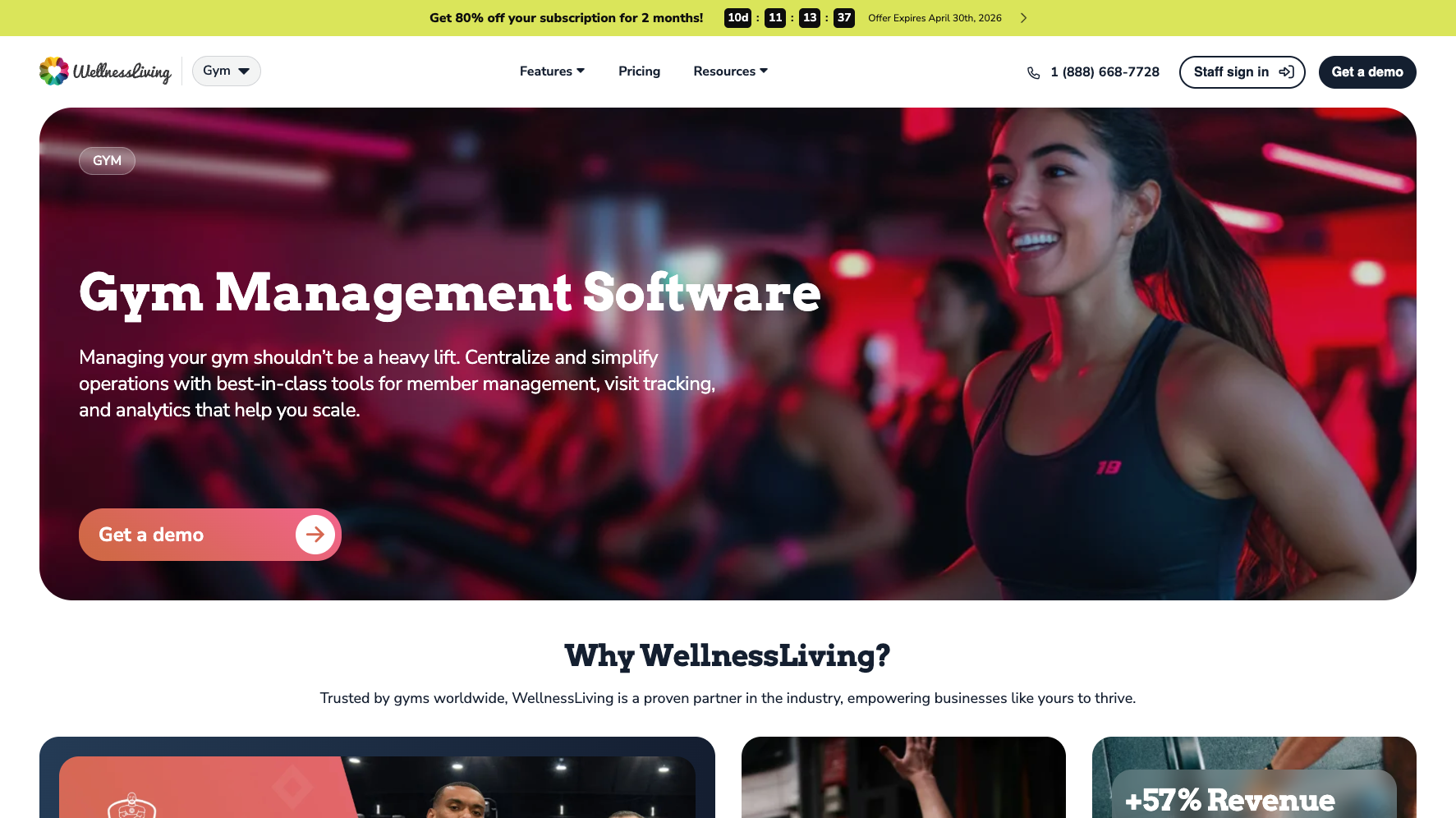
WellnessLiving's pitch is consolidation. Loyalty rewards programs, automated review requests, email campaigns, a branded app, and online booking all live in one platform.
If you're running Mailchimp alongside your gym software alongside a separate review management tool, that's the problem they're solving.
They report over 7,500 gyms, yoga studios, and wellness centers using the platform. Their vertical coverage is wide: fitness studios, martial arts schools, yoga, pilates, dance, personal training, and wellness businesses all have dedicated landing pages.
The loyalty rewards feature is the most distinctive thing they offer.
Members earn points for visits, purchases, and referrals. It's a retention mechanism built directly into the software rather than wired up through a third-party tool. For gyms where community engagement and member incentives are a priority, that's worth evaluating.
Pricing: Starts around $89/month, scales by features and member count. Free trial available.
Where it falls short: The interface can feel cluttered compared to simpler platforms. The learning curve is steeper. Some features feel partially built compared to dedicated tools in each category. Gyms that want serious email marketing depth will probably still want Mailchimp.
Best for: Gyms that want CRM, marketing automation, and loyalty programs under one roof without stitching together separate tools.
Also worth considering
Zen Planner has solid martial arts features, including digital belt tracking and communication automation. It's now owned by Daxko, which puts it inside a larger enterprise software portfolio. Good mid-market option if Gymdesk or Kicksite don't fit your needs. $99 to $289+/month.
Kicksite is a dedicated martial arts platform, family-owned, with a reputation for strong customer support. $49 to $199/month. A good fit for smaller schools that want simplicity over a deep feature set.
GymMaster is a cloud-based platform with integrated 24/7 Bluetooth door access using its own proprietary hardware (rather than wiring up a third-party system). That access control integration makes it a strong fit for traditional gyms where unmanned access is a real operational need. $89 to $209/month.
DEEPER DIVES: Want a closer look at these platforms? See our head-to-head breakdowns: Mindbody alternatives, Zen Planner alternatives, Kicksite alternatives, and GymMaster alternatives.
Gym Software Pricing Comparison (2026)
IMPORTANT:
Prices verified April 2026. Gym software pricing changes frequently. Check each vendor's site for current rates before making a decision.
Platform | Starting Price | Top Tier | Free Trial | Contracts | All Features Included? |
Gymdesk (with Gymdesk Payments) | $75/mo | $200/mo (up to 250 members) | 30 days | No | Yes |
Mindbody | $79/mo (quote-only) | ~$499+/mo (reported) | No | Annual | No (add-ons) |
Glofox | ~$110/mo | ~$300+/mo | No | Varies | Unknown |
Wodify | $99/mo | $299/mo | No | Varies | No (tiered) |
PushPress | Free | $229/mo | Free tier | No | No (tiered + fees) |
TeamUp | ~$59/mo | Scales | Yes | No | Yes |
WellnessLiving | ~$89/mo | Scales | Yes | Varies | No (tiered) |
Zen Planner | $117/mo | $251/mo | Yes | Varies | No (tiered) |
Kicksite | $85/mo | $165/mo | Yes | No | Yes |
GymMaster | $89/mo | $209/mo | Yes | Varies | No (tiered) |
Two things this table doesn't capture: transaction fees and add-on costs.
For small gyms under 100 members, pricing with every feature on every plan tends to come out cheaper than a platform with a low headline price and tiered features.
You need billing. You need a member app. You need reporting. If those live behind a higher tier, the "starter" price is a fiction.
For growing gyms, the question is different. Does the pricing model scale reasonably, or does it punish you as you add members?
Most per-member models have a ceiling where costs level off. Know where that ceiling is before you commit. And check whether there are per-transaction fees on top of the monthly rate. On high-volume billing months, those add up faster than you'd expect.
Setup fees and onboarding costs are real at the higher-complexity platforms. Mindbody onboarding can run hundreds of dollars. That's not in the monthly rate. Ask about it before you sign anything.
Use the break-even calculator to model what software costs actually look like against your revenue.
GYM OWNER TIP:
When comparing platforms, ask specifically: “Is billing included at this tier? Is the member app included? What features would I need to upgrade for?” The honest answers will tell you what you'll actually pay.
How to Choose the Right Gym Software
Which gym management software fits your gym?
Five questions. Honest recommendation with the trade-offs spelled out.
Not another features checklist. A decision tree.
QUICK DECISION TREE:
Martial arts school or BJJ gym: Gymdesk, Kicksite, or Zen Planner
Boutique fitness studio: Glofox, TeamUp, or WellnessLiving
CrossFit box: Wodify or PushPress
Large multi-service facility: Mindbody
Just starting out, need free: PushPress Core (read the fee structure first)
Marketing automation built in: WellnessLiving
Access control is core: GymMaster
Most platforms offer free trials. Use them. Software demos show you the best version of the product.
Only a trial shows you the daily reality. Whether the billing UI makes sense to you. Whether your staff can figure it out without a manual. Whether the reports actually answer the questions you have.
Start a 30-day Gymdesk free trial if you want to test what we do with your gym's actual data.
Gym management software that frees up your time and helps you grow.
Simplified billing, enrollment, student management, and marketing features that help you grow your gym or martial arts school.