
Low-Cost Gym Franchises: What 14 Brands Really Cost to Open

Search "low-cost gym franchises" and you'll get a lot of best gym franchises lists. Planet Fitness shows up on most of them.
Planet Fitness is a low-cost gym. It's cheap to join. It is not cheap to open.
Its own 2026 disclosure document puts a single club at $1,282,500 to $3,769,000, and that's the version where you finance the equipment.
So before you shortlist anything, you need to know which "low-cost" you're shopping for. Here's the short version:
- Genuinely cheap to buy. Jazzercise starts around $2,170, and GYMGUYZ (a mobile trainer franchise, no building) runs $112,100 to $194,000. 9Round, Fit Body Boot Camp, and Burn Boot Camp run from about $160,000 to $680,000.
- Mid-priced studios and 24-hour clubs. Roughly $540,000 to $1.1 million for Anytime Fitness, Snap Fitness, TITLE Boxing Club, and Orangetheory.
- Big-box clubs, including the low-price gyms. From about $830,000 to over $5 million to open.
Every franchise figure in this post comes from the franchisor's own Franchise Disclosure Document (FDD), the filing federal law makes franchisors hand you before you sign. We went through 14 of them.
Each one is dated, because these numbers move. TITLE's low-end investment went up about $180,000 between its 2023 and 2026 filings.
If you're weighing a low-cost gym franchise against opening your own gym, this is the page for that, too.
Low-Cost Gym Franchises Compared
Here's the whole field on one screen, sorted by total gym franchise cost. "Total investment" is the franchisor's own estimate of everything you spend before you open, including the franchise fee, build-out, equipment, and the cash you need to survive the first few months.
Franchise | FDD issued | Franchise fee | Total investment to open | Ongoing royalty | Locations, start of 2023 → end of 2025 |
Jazzercise | Mar 2026 (amended Jun 2026) | $1,250 | $2,170–$64,105 | 20% of member enrollment fees, minimum $250–$500/mo | 5,533 → 5,092 franchisees |
GYMGUYZ | Feb 2026 | $69,500 | $112,100–$194,000 | 7% of gross sales or $300 every two weeks, whichever is greater | 100 → 154 |
9Round | Apr 2026 | $19,900 | $160,449–$390,300 | 6% of net sales or $600/mo, whichever is greater | 371 → 142 |
Fit Body Boot Camp | Apr 2026 | $57,600 | $195,850–$391,800 | $997/mo in year one, then 5% or $997/mo, whichever is greater | 275 → 192 |
Burn Boot Camp | Apr 2026 (amended Jun 2026) | $60,000 | $291,145–$678,003 | 6% of gross revenue | 325 → 393 |
Anytime Fitness | Mar 2026 (amended Sep 2026) | $42,500 | $539,329–$905,482 | $842/mo flat | 2,330 → 2,282 |
TITLE Boxing Club | Apr 2026 | $49,500 | $548,637–$947,729 | 7.5% of gross revenue | 129 → 87 |
Snap Fitness | May 2026 | $39,500 | $554,731–$827,621 | $725/mo flat | 559 → 468 |
Orangetheory Fitness | Mar 2026 (amended Sep 2026) | $59,950 | $764,577–$1,104,920 | 8% of gross sales | 1,302 → 1,224 |
Retro Fitness | Apr 2026 | $29,000 | $832,216–$3,241,991 (financed equipment) | 5% of gross sales, $1,000/mo minimum | 86 → 77 |
Workout Anytime | Apr 2026 | $35,000 | $1,091,700–$2,305,400 | 6% of gross revenue | 179 → 189 |
Planet Fitness | May 2026 | $40,000 | $1,282,500–$3,769,000 (financed equipment) | 7% of membership fees | 2,314 → 2,709 |
Crunch Fitness | Apr 2026 | $35,000 | $2,147,500–$5,367,000 | 5% of gross sales | 328 → 486 |
Gold's Gym | May 2026 | $40,000 | $2,356,000–$5,162,000 | 5% of gross revenue or $2,000/mo, whichever is greater | 221 → 182 |
A few notes on reading it. Jazzercise's range covers two very different franchises, explained in its section below.
And the location counts are the franchisors' own Item 20 tables, which is the part of an FDD almost nobody reads. It's also the most interesting part.
We'll keep you in the loop with fresh content, podcasts, how-to guides, tool reviews, and product exclusives.
"Low-Cost" Means Two Different Things
Most lists mash two ideas together, and it matters which one you mean.
A low-cost franchise is cheap to buy. Small footprint, little build-out, sometimes no building at all. Jazzercise, GYMGUYZ, and 9Round live here.
A low-cost gym is cheap for members. These are the big-box, high-volume clubs the industry calls HVLP, for "high value, low price."
You win on volume, which means a big building, a lot of equipment, and a lot of members. That model is expensive to stand up. If you want the full rundown of how these formats differ, our guide to gym types covers it.
They're different businesses with different checks attached. If you have $150,000 and a list sends you to Planet Fitness, you've been sent to the wrong aisle.
The Cheapest Gym Franchises to Buy
These five have the lowest entry points in the group. "Cheapest" still covers a range from a used car to a small house.
Jazzercise
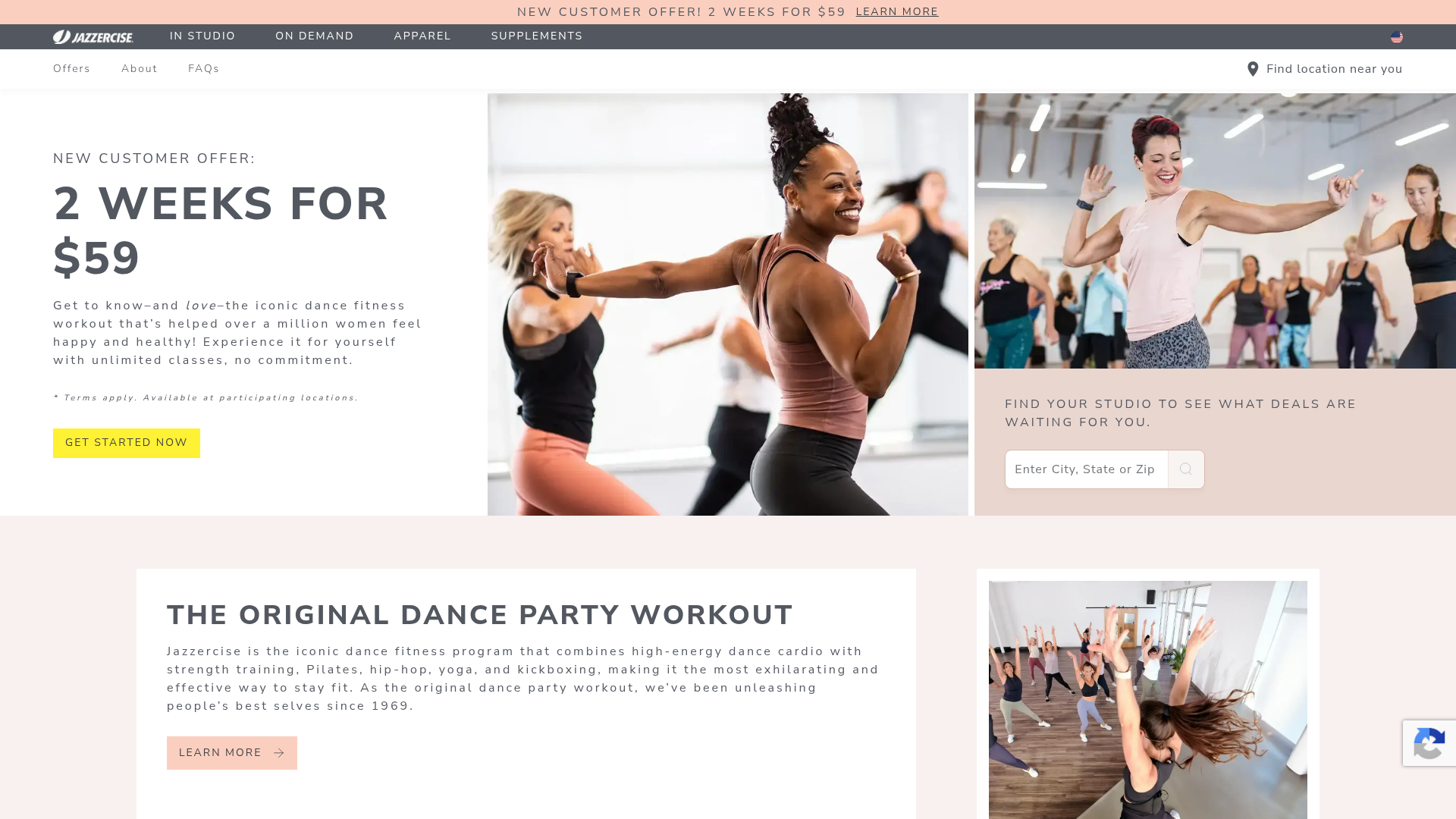
Jazzercise is the cheapest franchise on this list by a mile, and it's also the least like a gym. Its 2026 FDD has two main paths:
- Associate franchisee. $2,170 to $2,965 total. You teach classes for other Jazzercise franchisees.
- Class owner or business owner. $4,730 to $64,105. You run your own classes or your own center.
The franchise fee is $1,250 either way. The catch is the royalty: 20% of gross member enrollment fees (10% for certain programs), with a current monthly minimum of $250 for class owners and $500 for business owners. The FDD says those minimums could rise to $1,000 and $1,500.
Twenty percent is high. You're trading a tiny upfront check for a big cut of every dollar after.
That's a reasonable trade for an instructor who wants a brand and a format. It's a harder sell for someone who wants to build a business with equity in it.
Jazzercise doesn't publish financial performance figures.
GYMGUYZ
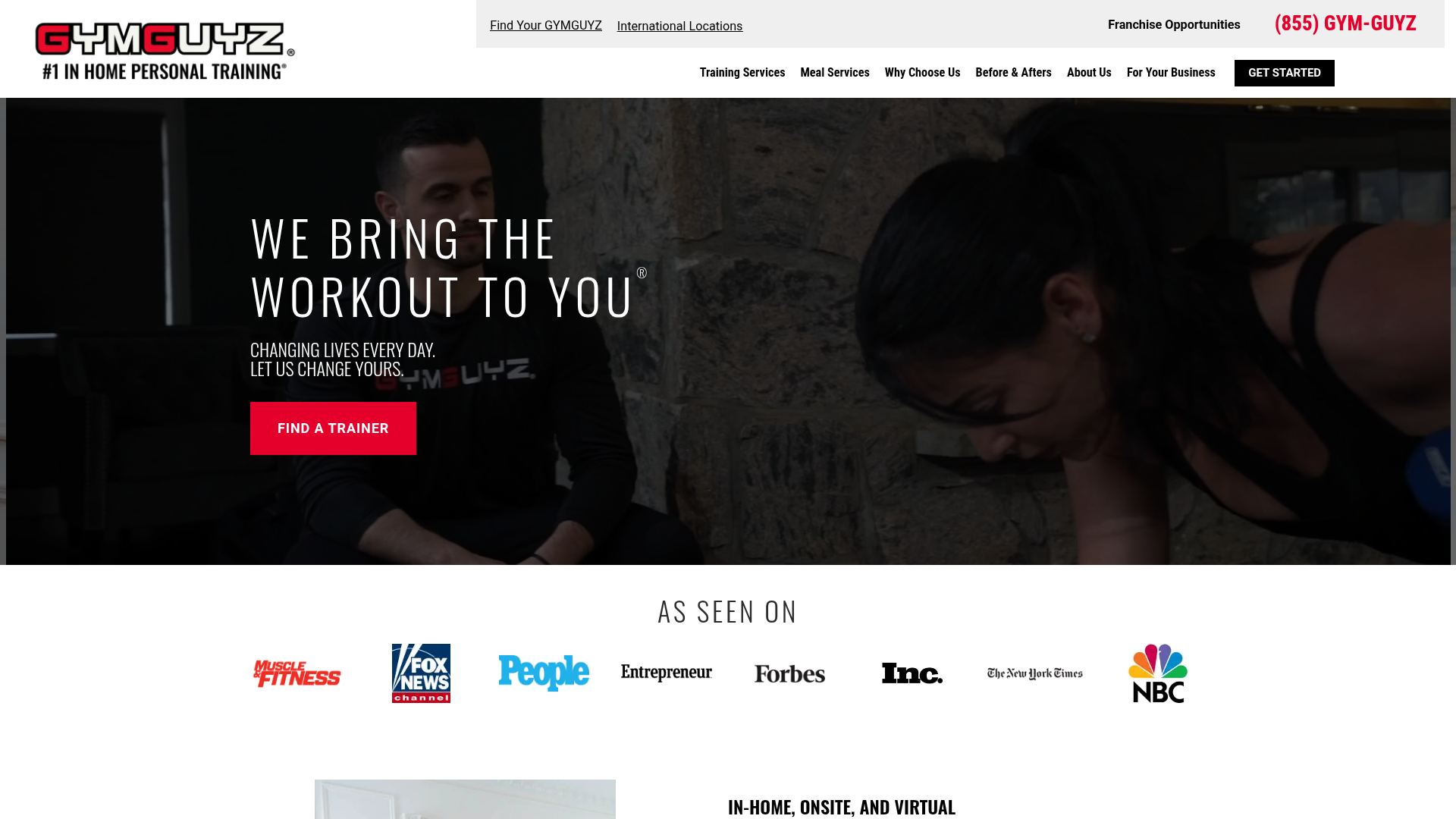
No building. GYMGUYZ is a franchised mobile fitness business, where trainers go to the client. That's why the total investment sits at $112,100 to $194,000.
The franchise fee is $69,500, and the royalty is 7% of gross sales or $300 every two weeks, whichever is greater. There's also a 2% brand fee, a technology fee of $50 to $90 every two weeks depending on how many units you run, a $375 monthly point-of-sale system fee, and a $318 monthly SEO fee. Small checks add up.
GYMGUYZ does publish results. Across 79 locations that had been open at least a year and ran full time in 2025, the median location did $89,610 in gross sales. The lowest did $11,460.
9Round
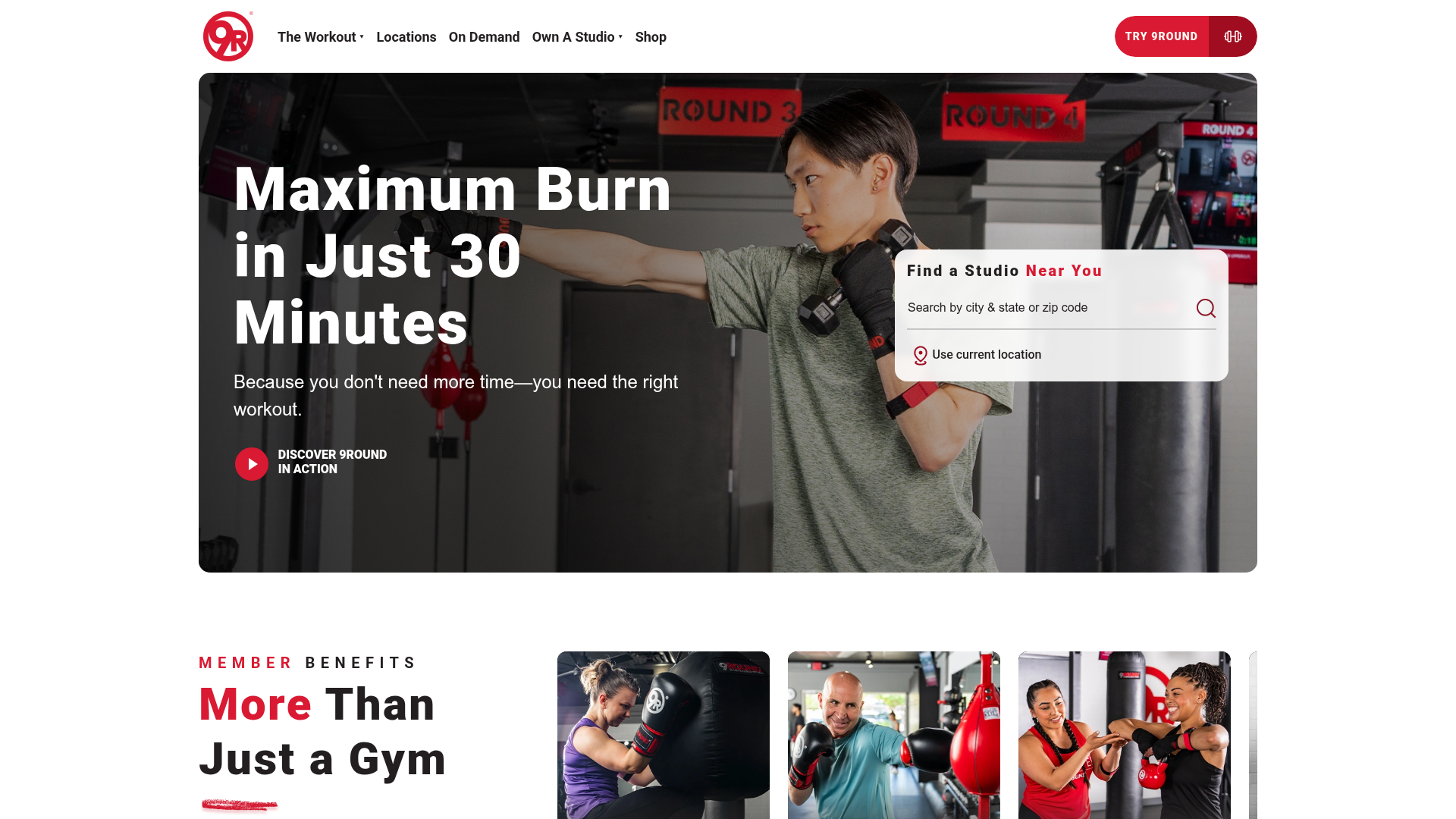
9Round is a kickboxing-style circuit workout in a small studio. It costs $160,449 to $390,300 to open, with a $19,900 franchise fee. (If boxing is the draw, compare what it costs to open an independent boxing gym.)
Ongoing, you pay the greater of 6% of net sales or $600 a month in royalties, the greater of 2% or $250 a month to the brand fund, and a $499 monthly technology fee. You're also required to spend the higher of 8% of gross revenue or $4,500 every three months on local advertising.
Now the part the listicles skip. 9Round had 371 locations at the start of 2023 and 142 at the end of 2025. That's the franchisor's own count.
It doesn't publish revenue figures, either. If you're considering 9Round, call former owners before you call the sales team.
Fit Body Boot Camp
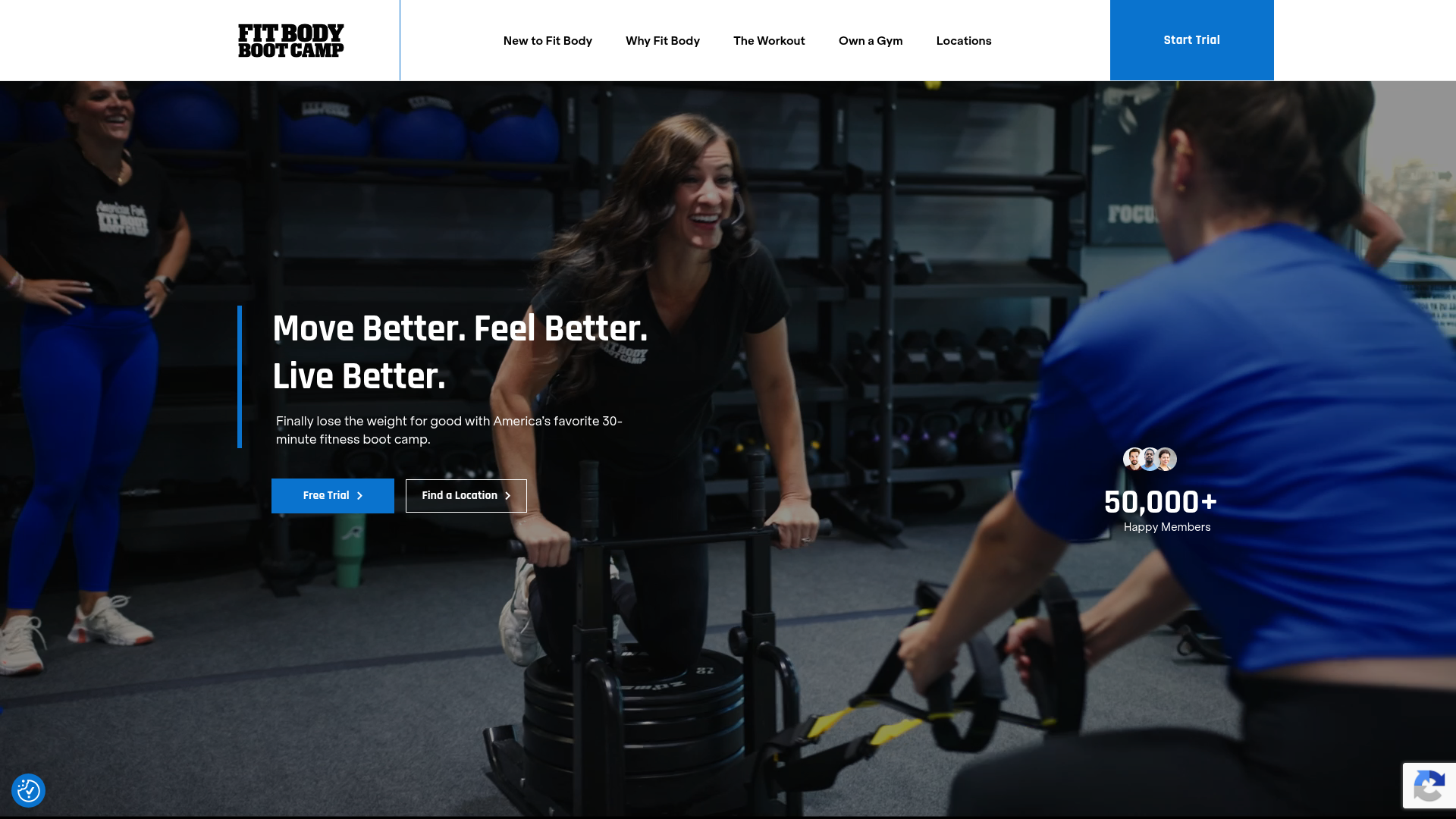
For $195,850 to $391,800 all in, Fit Body Boot Camp gets you group training in a modest space. The franchise fee is $57,600.
The royalty is a flat $997 a month for the first year, then the greater of 5% of gross revenue or $997. Add $500 a month to the marketing fund, another $500 a month in required local marketing, and a $400 monthly software reimbursement for the point-of-sale system.
There's no financial performance disclosure.
Burn Boot Camp
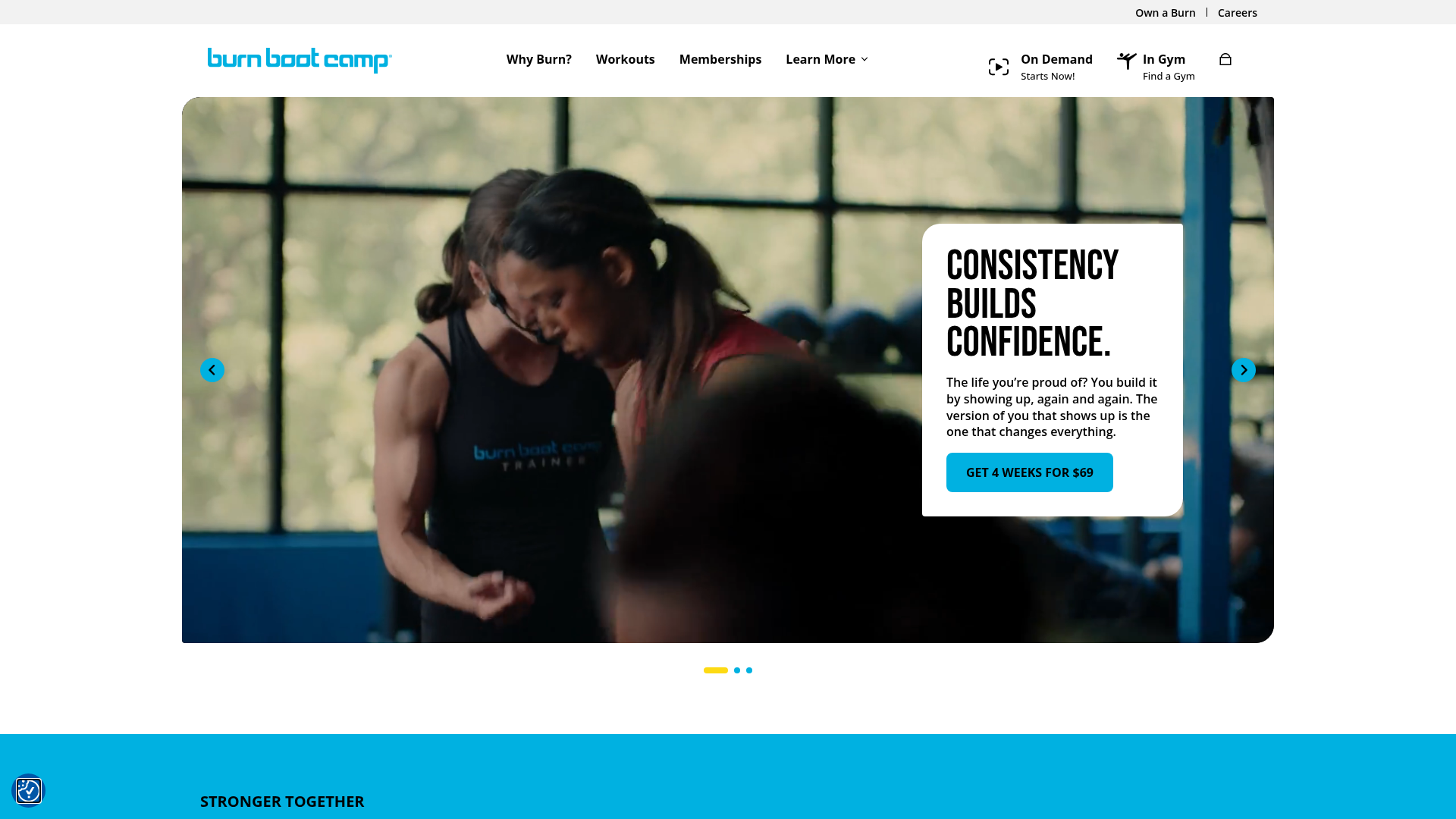
At $291,145 to $678,003 to open, Burn Boot Camp is the priciest of these five. It comes with a $60,000 franchise fee, a 6% royalty, a 2% brand fee, and an $860 monthly technology fee.
It's the only brand here that publishes an operating-profit figure across all its reporting franchised locations. More on that below.
Burn is also growing: 325 locations at the start of 2023, 393 at the end of 2025.
Mid-Priced Studios and 24-Hour Clubs
This is where most people's mental picture of "a gym franchise" actually lives. It's also where "low-cost" stops being accurate.
Anytime Fitness
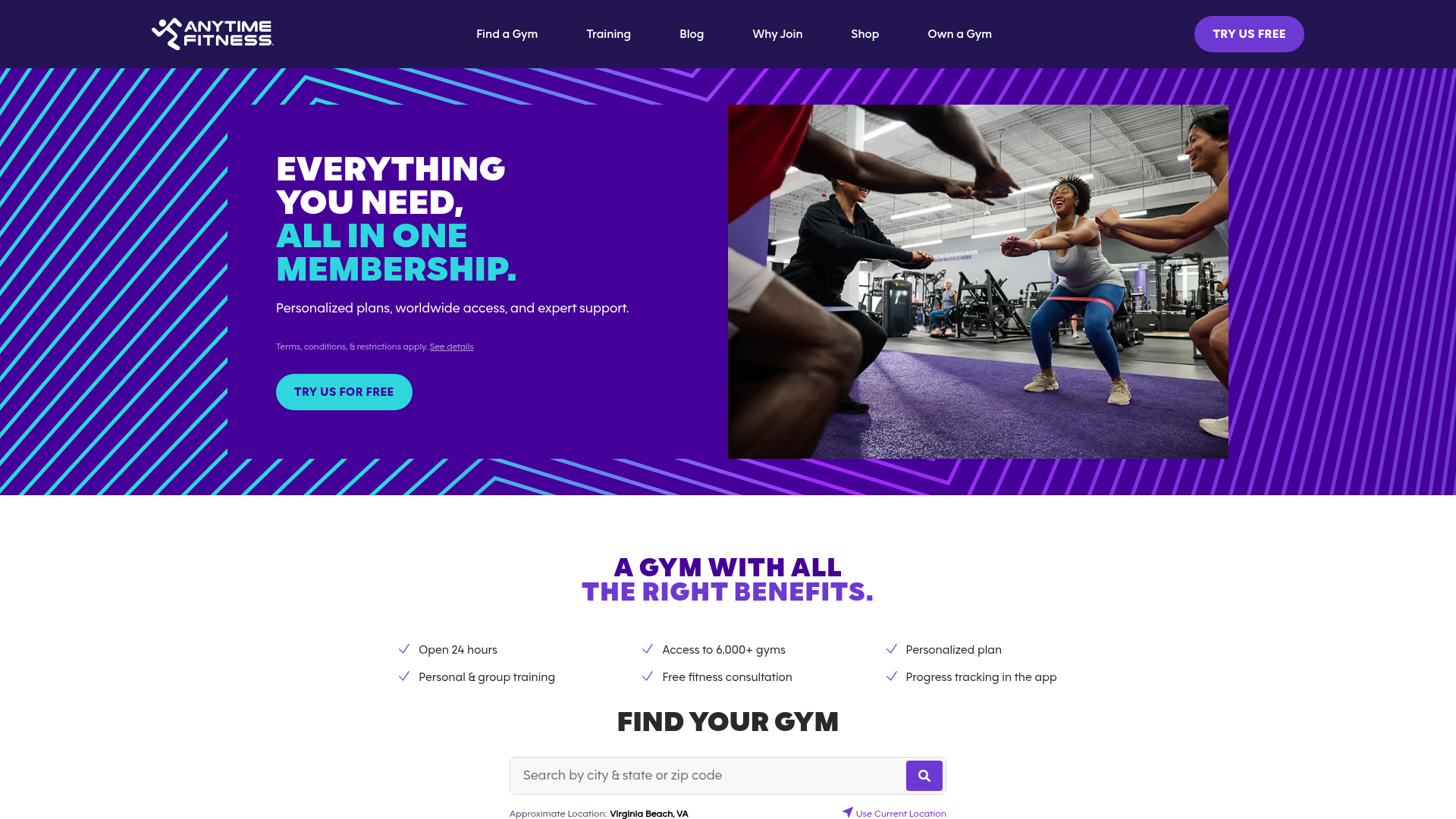
The 24-hour key-fob gym. Its FDD, amended September 2026, puts total investment at $539,329 to $905,482, with a $42,500 franchise fee.
Anytime charges flat monthly fees: currently $842 a month in royalties, $900 a month for advertising, and a $799 monthly base technology fee. That's $2,541 a month, or $30,492 a year, before you've sold a single membership. The FDD reserves the right to switch the royalty to a percentage of up to 8% of gross revenue, and to raise the advertising fee to the greater of $900 or 3% of revenue.
For the 12 months ending February 28, 2026, the 1,683 franchised centers in its revenue disclosure averaged $446,814 in total revenue, with a median of $398,982. Rent, payroll, and equipment payments all come out of that revenue.
Snap Fitness
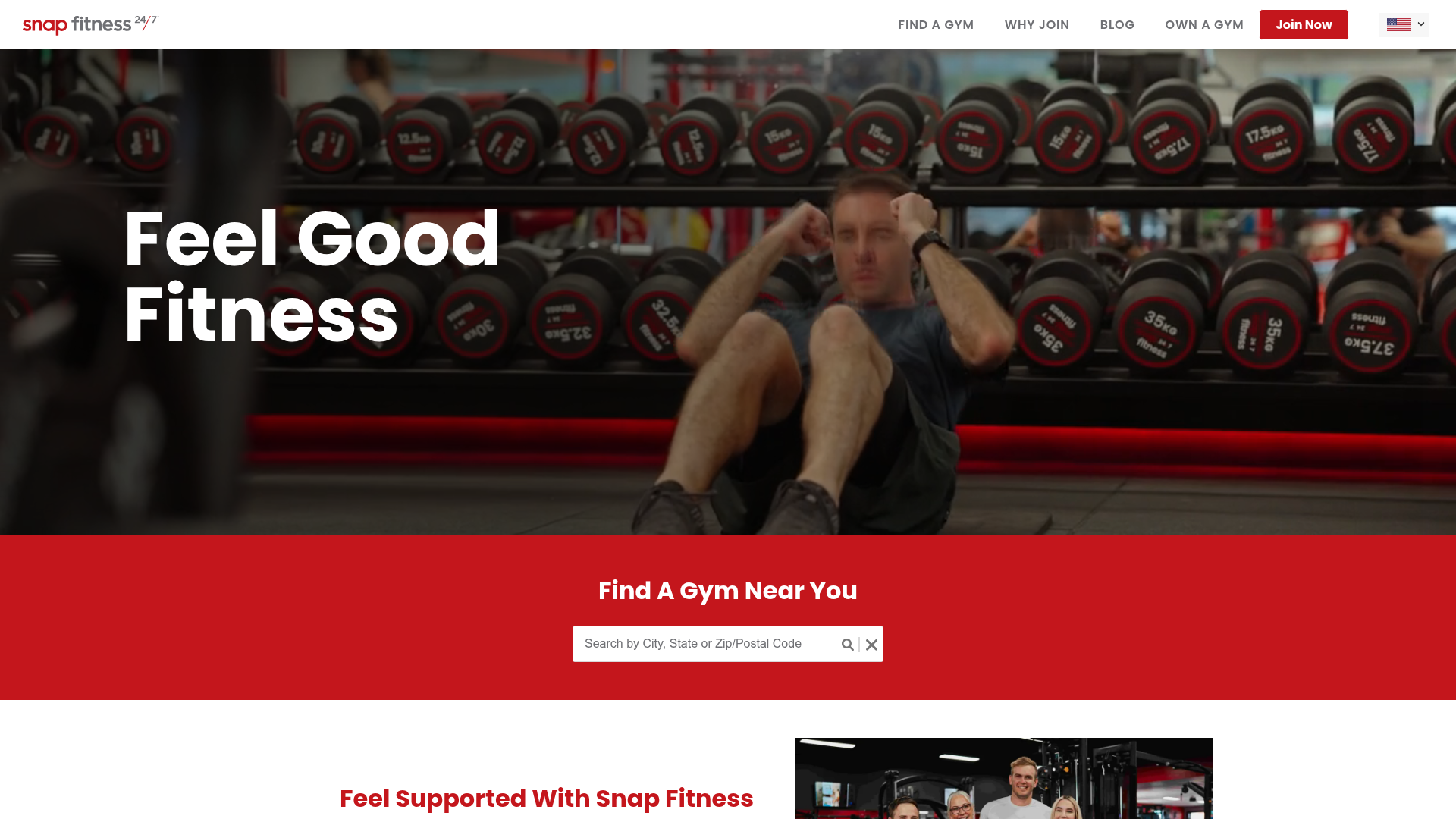
Snap is the other 24-hour flat-fee model. It costs $554,731 to $827,621 to open, with a $39,500 franchise fee.
Snap's three fixed fees, a $725 royalty, $518 for national marketing, and a $450 technology fee, total $1,693 a month ($20,316 a year). On top of that come a $200 monthly local marketing fund, $0.73 a month for every membership, and $7.25 for each new one.
Its franchised clubs averaged $277,584 in sales in 2025, with a median of $234,451.
TITLE Boxing Club
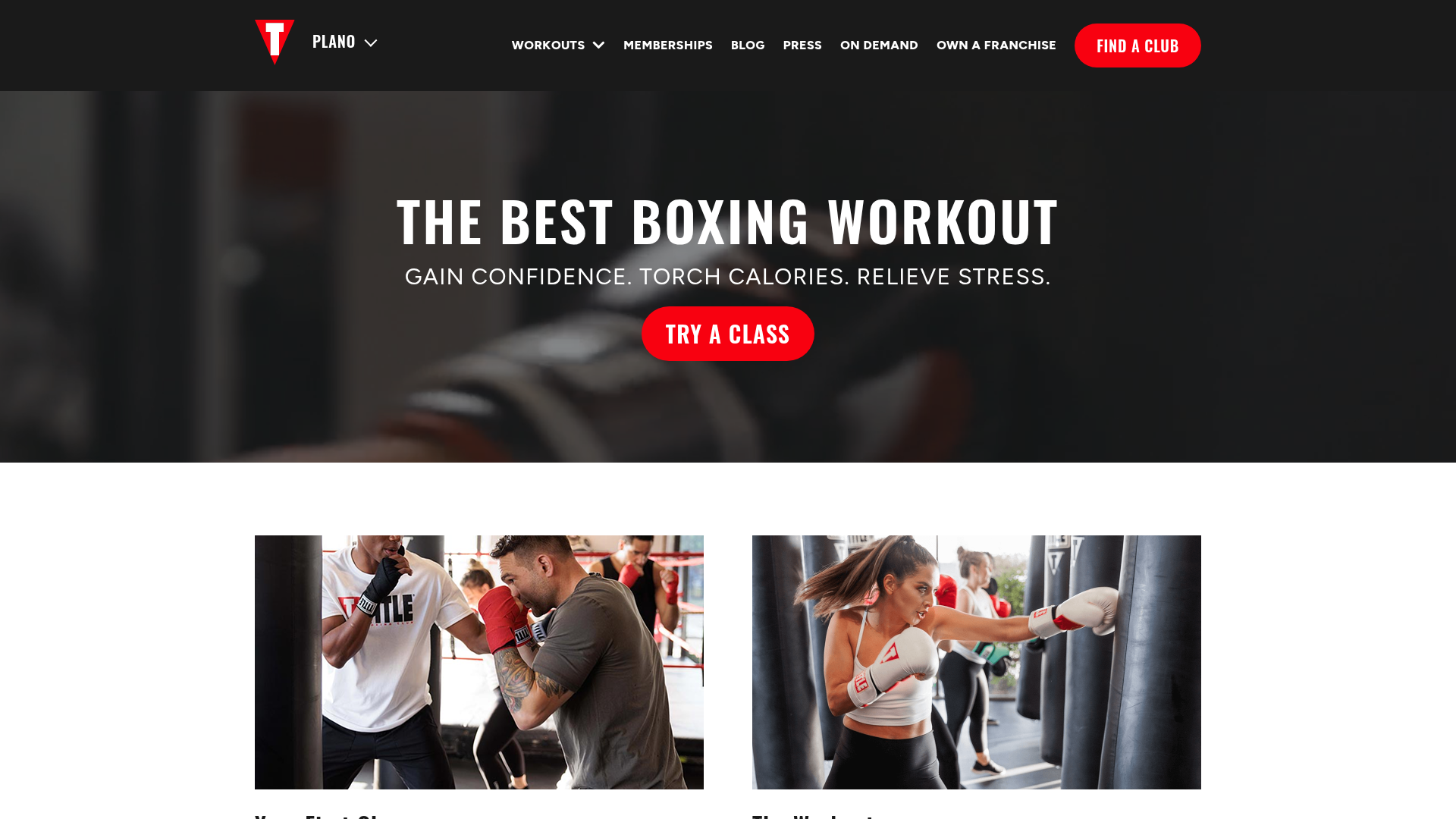
Boutique fitness boxing, taught as group classes. The 2026 FDD puts it at $548,637 to $947,729, up from $367,601 to $664,559 in the 2023 filing.
The franchise fee is $49,500. The royalty is 7.5% of gross revenue, with a twist.
WARNING:
After your first year, you're held to a minimum of $23,600 in monthly revenue, rising to $29,500 after year two. Miss it in any month and you owe a royalty adjustment, and the franchise agreement lets TITLE sell another franchise in your territory. Miss it three months running and TITLE can declare you in default.
Add a 1% brand fund, a $349 monthly technology fee, and required local advertising of $2,500 a month in year one and $2,000 a month after.
TITLE's 76 reporting franchised studios averaged $407,423 in revenue in 2025. Its location count fell from 129 to 87, and 15 franchised studios closed during 2025 alone.
Orangetheory Fitness
Orangetheory is the ceiling of this tier: $764,577 to $1,104,920 to open, a $59,950 franchise fee, an 8% royalty, a 3% brand fund, and an $899 monthly technology fee.
Its 1,189 reporting franchised studios averaged $802,145 in gross sales for the 12 months ending February 28, 2026. Another 95 franchised studios closed permanently during that same stretch. Total locations went from 1,302 to 1,224.
Cheap Memberships, Expensive Buy-Ins
Planet Fitness and Crunch are the brands people picture when they hear "low-cost gym." Gold's Gym, Workout Anytime, and Retro Fitness sit in the same bracket to open: big buildings and big equipment lists.
All of them start at seven figures except Retro Fitness, whose $832,216 low end assumes you take over a space a previous health club already used and finance your equipment.
- Planet Fitness. $1,282,500 to $3,769,000 if you finance your equipment, $2,385,000 to $5,386,000 if you buy it. 7% royalty on membership fees.
- Crunch Fitness. $2,147,500 to $5,367,000. 5% royalty.
- Gold's Gym. $2,356,000 to $5,162,000. The greater of 5% of gross revenue or $2,000 a month.
- Workout Anytime. $1,091,700 to $2,305,400, depending on club size. 6% royalty, plus a technology package of $595 to $795 a month.
- Retro Fitness. $832,216 to $3,241,991. 5% royalty with a $1,000 monthly minimum, and the FDD lets Retro raise it by up to half a point a year.
The revenue is big too. Planet Fitness reports its franchised clubs by thirds, and even the bottom third averaged $1,260,539 in annual dues revenue in 2025. Gold's 126 reporting franchised gyms averaged $1,797,000 in gross revenue in 2025.
But this tier is built for multi-unit operators with serious capital and bank financing lined up.
If you're a coach or a first-time owner with a five- or low-six-figure budget, this tier is out of reach.
The Fees That Show Up Every Month
The franchise fee is the number everyone quotes. It's the smallest cost you'll pay.
What stays with you is the stack of ongoing fees that come with any fitness franchise. Across these 14 FDDs, they come in four types:
- Royalty. Either a percentage of revenue (5% to 8% for most gyms here, 20% at Jazzercise), a flat monthly fee (currently, at Anytime and Snap), or "the greater of" both, which gives the franchisor a floor.
- Brand or advertising fund. Usually 1% to 3% of revenue, or a flat monthly amount.
- Required local marketing. A minimum you must spend in your own market: $2,000 to $2,500 a month at TITLE, and at least $4,500 a quarter at 9Round.
- Technology fee. Where a brand charges a monthly technology fee, it runs from $45 at Jazzercise to $899 at Orangetheory, and you can't opt out. Planet Fitness charges $100 a year for software, and Crunch and Gold's don't currently charge one. The fees bundle different things (apps, door access, heart-rate displays), so they don't compare directly.
Here's what that looks like on a real number. Take TITLE's 2025 average studio, at $407,423 in revenue, and run its FDD fees against it:
Ongoing fee | Rate | Annual cost at $407,423 revenue |
Royalty | 7.5% of gross revenue | about $30,557 |
Brand Creative Fund | 1% of gross revenue | about $4,074 |
Technology fee | $349/month | $4,188 |
Total paid to the franchisor | about $38,800 |
That's before the $24,000 a year in required local advertising. You'd spend on marketing as an independent too, so the dollars are close to a wash.
The difference is the minimum. An independent can cut back in a slow month. A TITLE owner can't.
And the $38,800 comes on top of all of it.
Flat fees cut the other way. Snap's three fixed fees add up to $20,316 a year whatever the club sells, before small per-membership charges that grow with your member count. At Snap's 2025 average of $277,584 in sales, that's about 7%.
For a club below the median, it's a bigger slice, and in a bad year it doesn't shrink.
Enter your expected revenue and the ongoing fees from a brand’s FDD, Item 6. You’ll see what you’d pay the franchisor each year and what share of your revenue that is.
If revenue fell 20%, your fees would fall by $6,926, not by 20%. The flat fees and the local advertising minimum stay the same whatever you sell.
Enter your email to see each fee on its own line, plus what the stack looks like in a slow year when revenue drops 20%. Then download it as a one-page report to take to your accountant or lender.
Example figures come from each brand’s 2026 Franchise Disclosure Document, as cited in this article. The Snap example leaves out its $200 monthly local marketing fund and per-membership charges, as the article does. Fees change between filings, so check Item 6 of the FDD you’re actually given. This covers ongoing fees only, not rent, payroll, or your startup investment.
The FTC's franchise buying guide notes that you typically owe royalties "even if you are losing money." A percentage royalty comes off the top line.
In a slow month, your landlord waits for rent. The royalty has already been drafted.
What Item 19 and Item 20 Tell You
Two sections of the FDD tell you the most.
Item 19: what locations sell (and sometimes earn)
Item 19 is where a franchisor may share how its locations perform. It's optional. Of these 14 brands, 9Round, Fit Body Boot Camp, and Jazzercise decline to share anything.
When a brand does share, it's almost always revenue. A studio doing $400,000 still pays rent, payroll, equipment, insurance, and those monthly fees before the owner sees a dollar.
Burn Boot Camp is the clearest exception. Crunch also reports EBITDA for franchised clubs in their first five years, and Anytime, Snap, Planet Fitness, and GYMGUYZ report profit only for locations the company itself owns.
Burn's 2026 FDD reports, for 307 locations in 2025:
FDD ITEM 19 · BURN BOOT CAMP
From Burn Boot Camp's 2026 FDD, covering 2025. Self-reported by franchisees and unaudited. Net operating income is gross revenue minus all operating expenses. Left out: 36 locations open less than a year, 9 corporate locations, and 43 with incomplete financial data.
$732,444
Average gross revenue
$121,679
Average net operating income
A 17% margin$109,155
Median net operating income
−$143,778
Lowest location: a loss of $143,778
Source: Burn Boot Camp 2026 Franchise Disclosure Document, Item 19. Figures are self-reported by franchisees and unaudited.
Burn defines net operating income as gross revenue minus all operating expenses, so it's an operating-profit figure. The figures are self-reported by franchisees and unaudited.
To get to those 307, Burn left out 36 locations open less than a year, 9 corporate locations, and 43 with incomplete financial data.
The biggest dividing line in Burn's data is membership. Locations with 500 or more members averaged $273,438 in net operating income. Locations under 200 members averaged a loss of $29,058.
If you want to see how owner income compares to revenue in practice, the breakdown of how much gym owners make walks through it.
Item 20: who's opening and who's leaving
Item 20 lists how many locations opened, closed, and changed hands, year by year. It also lists the contact details of franchisees who left the system.
Across these filings, growth is concentrated in a handful of brands. Planet Fitness went from 2,314 locations to 2,709 and Crunch from 328 to 486. Burn Boot Camp and Workout Anytime grew too, and GYMGUYZ grew from 100 to 154 locations.
Everyone else ended 2025 smaller than they started 2023. Every mid-priced brand here shrank: Anytime Fitness, Snap, TITLE, and Orangetheory.
In the cheapest tier, 9Round fell from 371 to 142 and Fit Body Boot Camp from 275 to 192. Even two big boxes, Gold's Gym and Retro Fitness, lost locations.
A shrinking system can still be a fine buy if the franchisor is pruning weak locations. But it's the first question to ask the sales team, and the second one to ask a former owner.
Franchise or Independent? How to Decide
If you're reading this, there's a decent chance you already teach, coach, or train. So before you pick the cheapest one, decide whether you want a franchise at all.
What the franchise fee and royalties buy you:
- A brand people already know. That can shorten your ramp to members.
- A playbook. Class formats, pricing, sales scripts, hiring, site selection.
- An approved supplier list. Equipment, build-out, and vendors are largely chosen for you.
- Systems on day one. Billing, scheduling, app, and member management come preselected.
What you give up:
- A permanent cut of revenue. Every one of these franchises takes a royalty for as long as you operate.
- Control over your product. Class format, pricing, décor, suppliers, and marketing all have rules.
- Your choice of tools. Required systems come with required fees, and you can't shop them.
- An exit on your terms. Transfers, renewals, and closing early all run through the franchise agreement.
An independent gym is the reverse: no royalty, and nobody hands you a playbook. If you want a franchise's lessons without its contract, our lessons from Club Pilates pull the playbook apart for independent owners.
Whatever's left after expenses is yours, and so is every decision about how you run it.
The cost side isn't automatically lower, either. An independent still pays for a lease, build-out, equipment, and insurance.
Our guide to the cost to open a gym breaks that down by gym type, and the gym startup cost calculator lets you plug in your own numbers. If funding is the sticking point, here are the gym financing options worth knowing.
You can buy the systems without the franchise
For a lot of coaches, the systems are the main reason to buy a franchise. Billing, scheduling, check-ins, and chasing failed payments are the parts of running a gym nobody trained you for.
That's also the part that's easiest to buy on your own now. Gym management software like Gymdesk handles automated billing, class scheduling, attendance, lead follow-up, and a website, for a flat monthly price based on active members.
Plans run from $75 to $200 a month with Gymdesk Payments for gyms with up to 250 active members, every plan includes every feature and unlimited staff, and there are no royalties attached. Use your own payment processor instead and it's $25 a month more ($40 on Large). For comparison, GYMGUYZ passes through a $375 monthly point-of-sale fee on top of its technology fee, and Fit Body Boot Camp charges a $400 monthly software reimbursement for its point-of-sale system. See Gymdesk pricing.
You still have to build the brand and the playbook yourself. But the systems no longer need to be the reason you sign a franchise agreement.
FOR INDEPENDENT GYMS
For a lot of coaches, the systems are the main reason to buy a franchise. Gymdesk runs billing, class scheduling, attendance, and lead follow-up for a flat monthly price based on active members, with no royalties attached.
See How Gymdesk WorksHow to Vet a Low-Cost Gym Franchise Before You Sign
If a franchise still looks right, good. Do the homework before you sign anything. Steps 1, 2, 3, and 5 come from the FTC's guide, and step 4 is extra:
- Get the FDD early. Franchisors must give it to you at least 14 days before you sign or pay. Read all of it.
- Call former franchisees. Item 20 lists owners who left the system in the last year. The FTC calls talking to franchisees possibly "the most reliable way to verify the franchisor's claims."
- Ask for Item 19 backup. If the franchisor publishes performance figures, you can request written substantiation. Ask how many locations were left out and why.
- Model the fees at the bottom of the range. Run the royalty, fund, and tech fees against a location at the median or below, since the strongest locations pull averages up. A gym break-even calculator makes this quick.
- Have an accountant and a franchise attorney read it. A few thousand dollars in advice is cheap next to a $500,000 mistake.
Run the Franchise Math Before You Buy In
"Low-cost" usually describes what members pay. Nine of the 14 brands here cost more than $500,000 to open, and the royalty comes out every month you're in business.
Franchising can still pay. Burn Boot Camp's locations averaged $121,679 in operating income in 2025, and some of its locations lost money under the same logo and the same fees. What you're buying is a system, and you can price that system out before anyone asks for a deposit.
So do the math first. Plug a brand's fees and a realistic revenue number into the fee calculator above, then decide whether that brand is worth the bill to you every year.
Sources: Franchise Disclosure Documents for each brand, as dated in the comparison table (Anytime Fitness, GYMGUYZ, Jazzercise, and TITLE Boxing Club retrieved from the Minnesota Department of Commerce franchise registry; all others from each franchisor's filed FDD), accessed September 23, 2026. FTC, "A Consumer's Guide to Buying a Franchise." Worked examples are Gymdesk calculations from FDD figures.
Gym management software that frees up your time and helps you grow.
Simplified billing, enrollment, student management, and marketing features that help you grow your gym or martial arts school.


FAQ
Low-Cost Gym Franchise FAQs
Quick answers, all from the same 14 disclosure documents.

Sean has spent the last decade creating content that helps businesses—small and not so small—grow smarter to allow operators to do more of what they love. You know, the fun stuff.
From shipping and international logistics to web development and marketing, he's done the work (not just the words) to scale retail and service businesses efficiently.
You can find his work at Sendle, Shogun, The Retail Exec, Gymdesk, and more.