
Karate vs Taekwondo: The Honest Comparison for Parents and Beginners
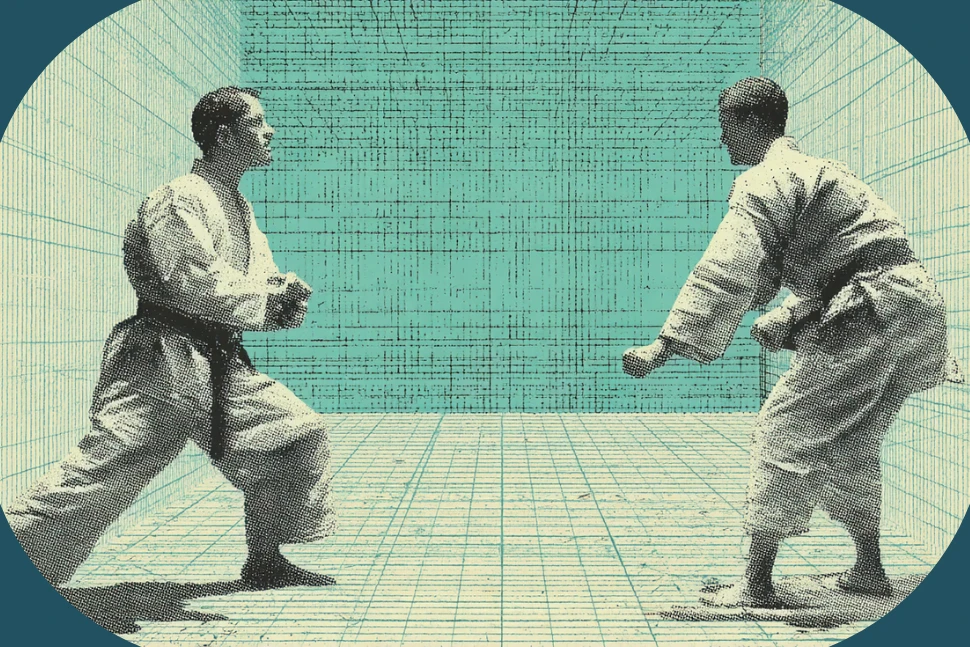
"What's the difference between karate and taekwondo?" Parents and beginners want to know.
A parent reaches out—they're interested in enrolling their kids in a martial arts program. They show up for a tour and casually mention other martial arts schools across town. They've read the comparisons—most of them are written by instructors promoting their own style.
That's the problem.
Families aren't looking for biased opinions. They're looking for facts—the cost, safety, experience, what the class looks like. They want to know what's best for them.
This is your solution to that problem—a neutral breakdown you can hand parents on a tour, whether you teach karate, taekwondo, or both. (Setting up the taekwondo side of your program? See our guide to starting a taekwondo school.)
The Short Answer: The Core Difference
Taekwondo is a Korean martial art that focuses on fast, high, and spinning kicks. Karate is a Japanese martial art that emphasizes powerful hand strikes, blocks, and, in some styles, low kicks.
Both arts teach discipline, respect, and structured progression—the comparison isn't about quality, it's about what each art emphasizes.
Core differences at a glance
Let's take a look at a side-by-side comparison families can use to understand the differences between karate and taekwondo.
Of course, both of these martial arts focus on the usual foundational principles—the kind of benefits families expect from a martial arts program (check out our guide on martial arts benefits).
The Origins and Philosophy of These Martial Arts
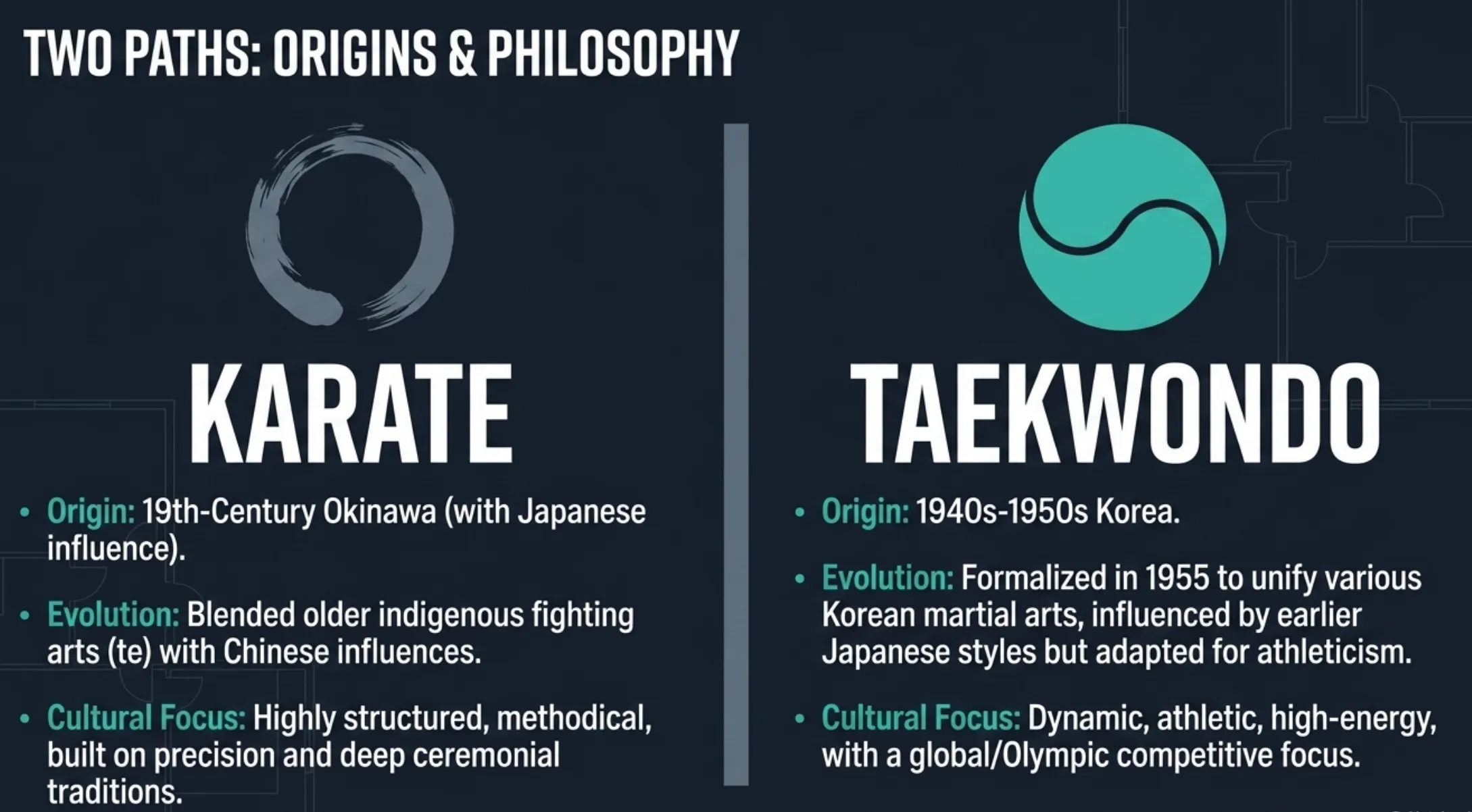
There's an uncommon assumption that martial arts like karate or taekwondo are ancient arts that have evolved over thousands of years. That's not the case.
Karate took its modern shape in 19th-century Okinawa, blending much older indigenous fighting arts (te) with Chinese influences.
The name "karate" (empty hand) and its formalized styles emerged in the late 1800s and early 1900s. The art has a heavy emphasis on discipline, structure, and precision.
Taekwondo originated in Korea in the 1940s–50s.
The art was influenced by Japanese martial arts; however, it evolved into a uniquely Korean art that's built on athleticism and powerful kicks.
Here's why the origins of these martial arts matter—their origins shape values and culture.
The values and culture determine how each class feels today—karate tends to be structured and methodical, while taekwondo is energetic and athletic.
Why does that matter? It gives families the chance to ask themselves three important questions:
- Which art pairs best with my child?
- What are we trying to accomplish?
- What do the techniques in each art look like?
Let's dig deeper into this.
Techniques: What Each Art Actually Looks Like
Parents are naturally curious about the structure of each art—they want to know what happens during a typical class.
This is helpful because it both gives them clarity on what to expect and shows them how to help their child adjust to your classes.
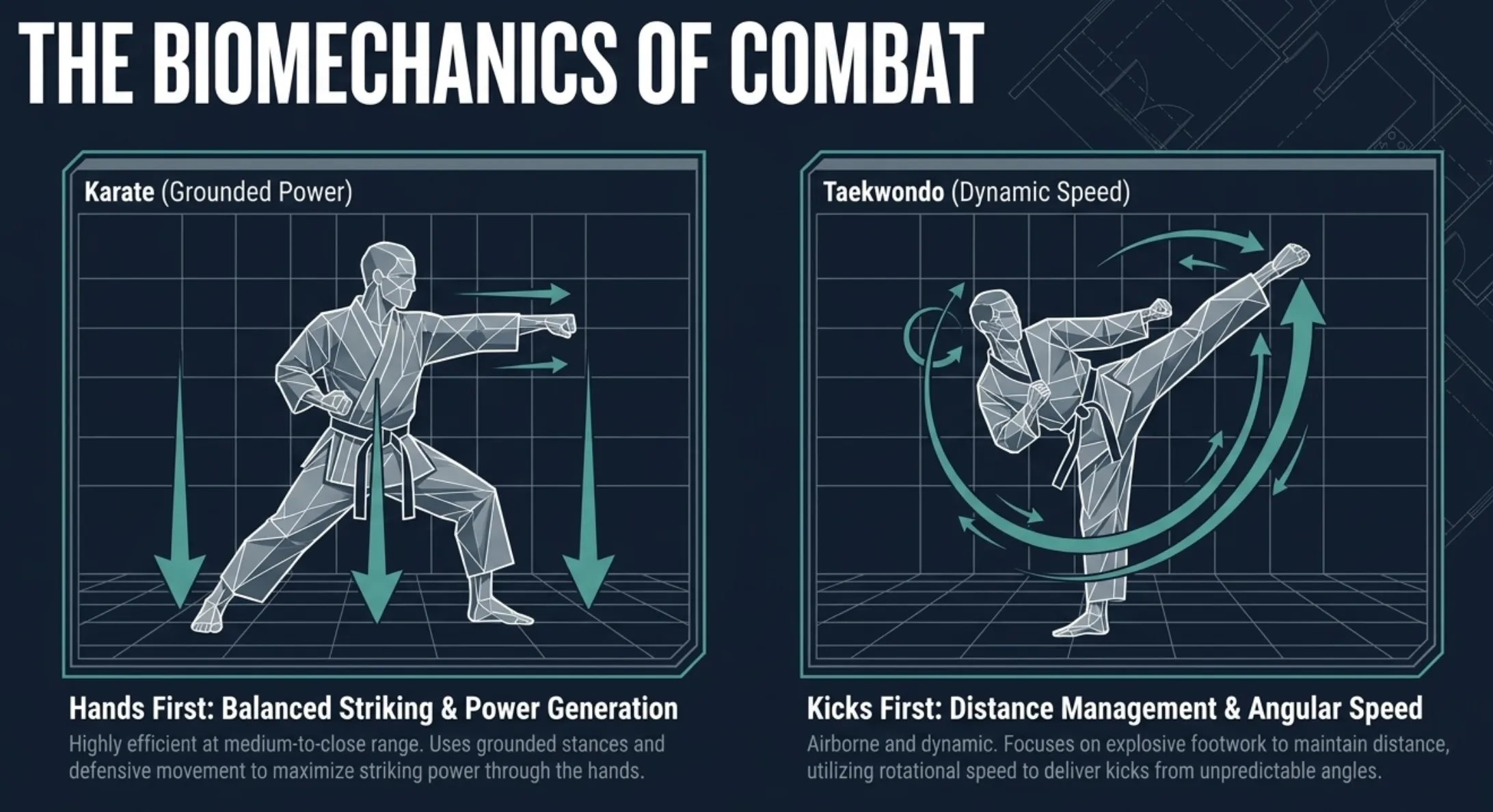
Karate: Hands first, balanced striking
Karate training emphasizes punches, blocks, and controlled strikes. Students practice:
- Kata (forms)
- Basic striking combinations
- Controlled partner drills
- Kumite (sparring)
The thing families don't expect is that karate styles vary widely. Shotokan looks different from Goju-Ryu, for example. There are four major styles and as many as ten styles of karate.
As karate instructor Mersina Giampapa explains in the Lion's Heart Family Martial Arts episode of Gymdesk Originals:
Taekwondo is just a lot more kicky. It is wild to me, the skills that Taekwondo martial artists can pull off.

That perspective captures the respectful difference many instructors see firsthand.
Taekwondo: Kicks first, athletic and dynamic
Taekwondo classes rely on athleticism; they're dynamic, and they often feel faster-paced. Their curriculum is focused on:
- High and spinning kicks
- Poomsae (forms)
- Explosive movement drills
- Sparring with electronic scoring systems
There are also major governing bodies—such as WT (World Taekwondo) and ITF (International Taekwon-Do Federation)—that set rules and guidelines, shaping the art's specific training style.
If you want to learn more about various martial arts, here's a big breakdown of all the different types of martial arts out there.
Belt Systems Compared
Karate and taekwondo both use a belt ranking system; while these belt systems have a lot in common, there are some key differences.
For the full color order in each system, see our standalone guides: karate belt order and taekwondo belt order. Both posts walk through every rank with the testing requirements at each step.
Competition and Olympic Status
The Olympic pathway for taekwondo is clear and uncontroversial. Taekwondo became a full-fledged Olympic sport in 2000, during the Sydney Olympics.
Karate only debuted in Tokyo 2020, after decades of effort, but was removed for 2024 and 2028.
This is an important detail for families focused on competition. If you're looking for high-level competition, both karate and taekwondo have options.
However, taekwondo is the clear option if you have Olympic aspirations.
Why was karate removed from the Olympics? There were several reasons:
- Olympic organizers felt karate wasn't engaging enough. Younger audiences weren't as interested, especially compared to the newer "urban" sports that had been added recently.
- Viewers found the points-scoring system very confusing. As a result, it was difficult to keep viewers engaged. Viewers weren't as interested in the kata (solo) performances.
- The final match ended in controversy. A karate athlete won gold after getting KO'd in a fight. His opponent was disqualified for using "excessive force" during kumite (sparring). This was confusing for spectators and karatekas.
Here's the frustrating part about the controversy surrounding karate.
In the Olympics, Taekwondoins can win by knockout. Sure, it's a different art, but spectators have common-sense expectations that come from other martial arts.
It's a perception problem.
A KO in Muay Thai, kickboxing, boxing, sambo, or even combat jiu-jitsu equals a loss, not a disqualification. True, the rules in karate are different; that's part of the confusion spectators had during the event.
It's not over, though. Despite the frustration expressed by the global karate community, the WKF is campaigning for inclusion in future games, such as Brisbane in 2032.
For competition-focused families, this distinction is important. Taekwondo gives students a clear Olympic track to follow. Karate, on the other hand, offers a strong, active, and thriving international tournament circuit.
Which Is Better for Self-Defense?
This is a frequently asked question—parents want to know how practical these two arts are. First, let's look at these arts, then address the bigger question.
The advantages of karate:
- Powerful hand techniques
- Highly efficient at medium and close-range
- A strong emphasis on defensive movement
- Kata maximizes power generation
The advantages of taekwondo:
- Ideal for distance management (i.e., playing keep away)
- Powerful kicking at a variety of ranges
- Builds athletic mobility, speed, and strength
- Learn how to take angles quickly
Both arts build anticipation.
Over time, students learn to recognize "tells" in an attacker's body language, allowing them to react to a strike before it fully develops.
First, a disclaimer.
No single art guarantees self-defense success—but both karate and taekwondo offer incredibly useful foundations when taught responsibly.
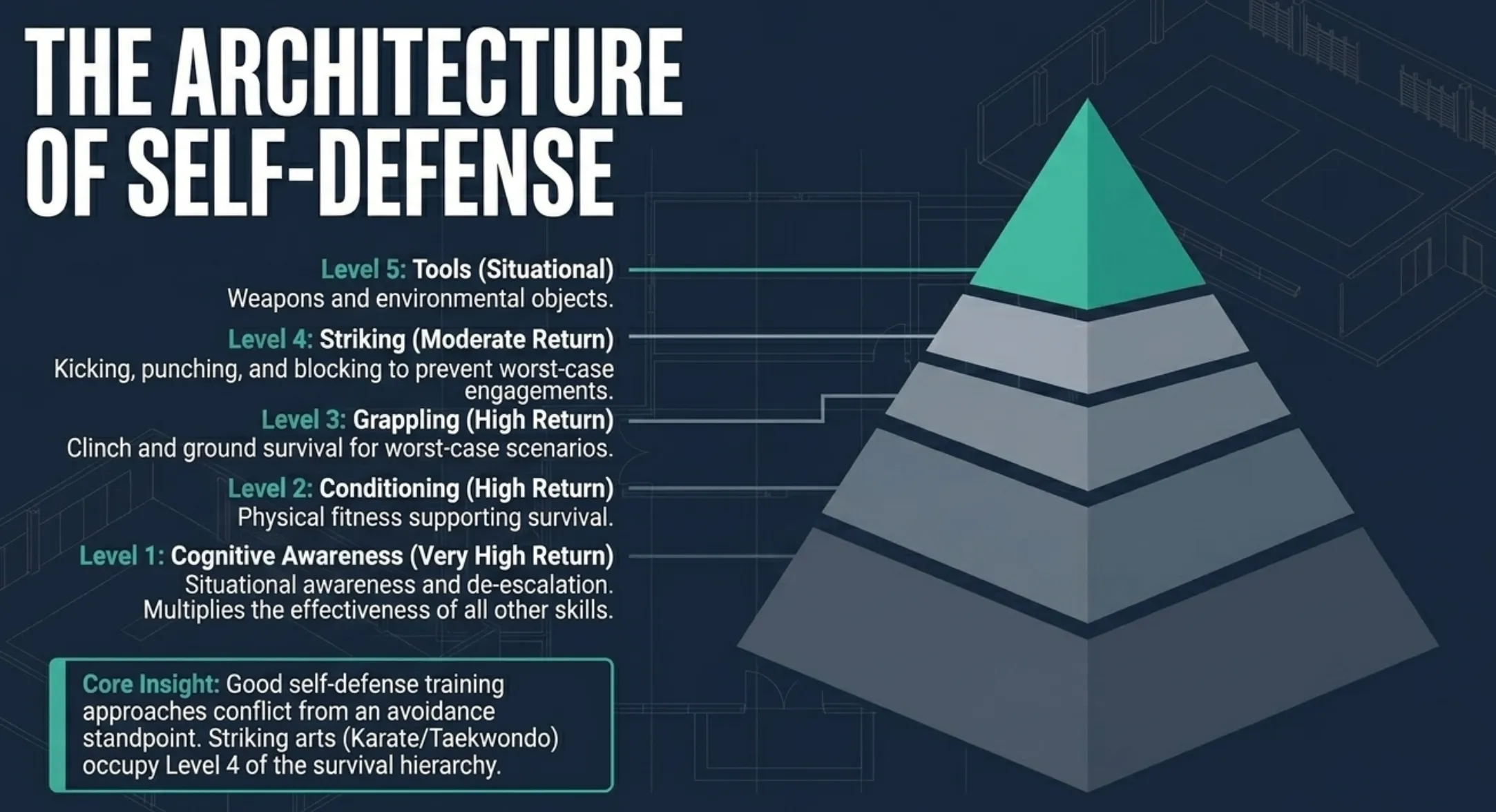
Okay, how do you maximize your odds of success? It's simple, you layer your martial arts training. Here's a brief breakdown that outlines training priorities for self-defense success:
Isn't this MMA with extra steps? Nope, this goes far beyond MMA or any single martial art. Good self-defense training approaches conflict from an avoidance standpoint, whereas MMA seeks engagement.
Which Is Better for Kids?
This is an important decision point for families. It isn't about which art is best; it's about the art that's best for their child.
That's a big difference.
It's not uncommon for martial arts schools to accept students in the 4–5 age bracket. Kids in the 6–7 bracket tend to be a better fit. Their attention span is longer, and they've made significant gains with coordination and refined motor skills.
Brian Foster of King Tiger Taekwondo explains:
The thing I love about taekwondo is it's a fantastic entry-level. We get kids from all different types — some very uncoordinated, some very athletic.


Here's how you can determine what's best, and the reason why for parents:
Parents know their kids best. If you're helping parents compare programs, our guide on choosing a martial art is a great place to start.
Cost Comparison: What You'll Actually Pay
Here's an estimate of the monthly costs for karate and taekwondo classes. Prices will vary based on factors like:
- Value
- Location
- Instructor pedigree
- Type of facility
- Class frequency
- Program type
Here are pricing estimates for both:
Sources: USA Karate annual membership and USA Taekwondo for federation dues; Kukkiwon registration for the official 1st Dan certification fee; Daedo for taekwondo electronic PSS pricing; price ranges aggregated from US commercial-school pricing across Taekwondo Nation, Karate Academy Online, and Martial Arts WA.
Those aren't the only costs to watch for. Hidden costs include:
- Tournament travel and lodging
- Association memberships (e.g., membership dues, national/international dues)
- Special seminars and events
- Kit maintenance (e.g., groin protection, sparring gear)
- Coaches' fees (if you want your coach to corner you at a competition)
These hidden costs aren't gotchas. They're standard across most martial arts programs—jiu-jitsu, kickboxing, even wrestling.
There may be variations, but these costs are a fairly standard part of combat sports.
Safety and Injury Rates
Injury is always a risk with sports.
But with combat sports, injury, especially in competition, seems to be the goal. Is this an unacceptable risk?
This looks like really bad parenting until you see the next table.
If we're comparing taekwondo and karate to American football, the data is pretty shocking:
- Most football injuries occur during games, not practice buuut.
- Tackling accounts for approximately 68% of football injuries
- Over 500,000 football injuries occur annually among US high school players (yikes)
- Football players are far more likely to get hurt than other high school competitors
Okay, surprising but also a little shocking, not gonna lie. Football, hockey, and even wrestling come with a higher injury risk than martial arts. That puts things in perspective a bit.
What does this tell us? Most karate or martial arts classes emphasize:
- Controlled contact
- Protective equipment
- Safe progressions
Good schools prioritize safety; they follow injury-prevention best practices and emphasize controlling sparring.
Because they want their students to come back. Injury is a retention killer; it's bad for business.
If you're looking for a straightforward process you can use to minimize injuries, check out our guide on injury prevention and management.
How to Choose the Right School
Well-run schools carefully track student attendance and progress. They rely on digital platforms to manage their school's day-to-day operations.
Red flags include:
- Hard sales tactics
- Mandatory long-term contracts
- No clear curriculum
Look for:
- Clear belt requirements
- Transparent pricing
- Positive instructor/student interactions
- Trial classes
- Clear, consistent communication with families
Parents may also want to know why kids quit karate. This comprehensive guide provides helpful talking points to educate parents, showing you what to avoid.
Choose the Martial Art That's Best for Your Family
There's no clear winner here in the karate vs taekwondo debate. As we've seen, both martial arts develop:
- Skills
- Discipline
- Confidence
- Proficiency
- Physical fitness
- Focus
Remember the decision point I mentioned earlier? Choosing the right martial art isn't about which art is best; it's about choosing the art that's best for the child.
The best choice depends on:
- The student's personality
- Family goals and expectations
- The school quality
Well-run schools—the kind families place their trust in—are willing to explain these differences honestly. They do this even if it means recommending another martial art or school.
If you teach karate or taekwondo, a platform like Gymdesk gives you one place to track attendance, manage promotions, and keep parents in the loop—so you can spend more time coaching and less time chasing paperwork.
Share this with the families looking for a school. Whether they pick you, the dojo down the street, or the TKD school across town, they'll get the honest answer they deserved when they walked in.
Gym management software that frees up your time and helps you grow.
Simplified billing, enrollment, student management, and marketing features that help you grow your gym or martial arts school.


FAQ
Karate vs Taekwondo FAQs
A few quick answers to the questions parents and beginners ask most often when they're choosing between the two arts.
.webp)
Andrew McDermott is a gym owner, Brazilian Jiu Jitsu brown belt, and digital marketer. He’s on a mission to build premier, high-stakes grappling tournaments, world-class academies, and a championship team of high-level athletes.