空手 vs 柔術:どちらの武道を習うべきか?

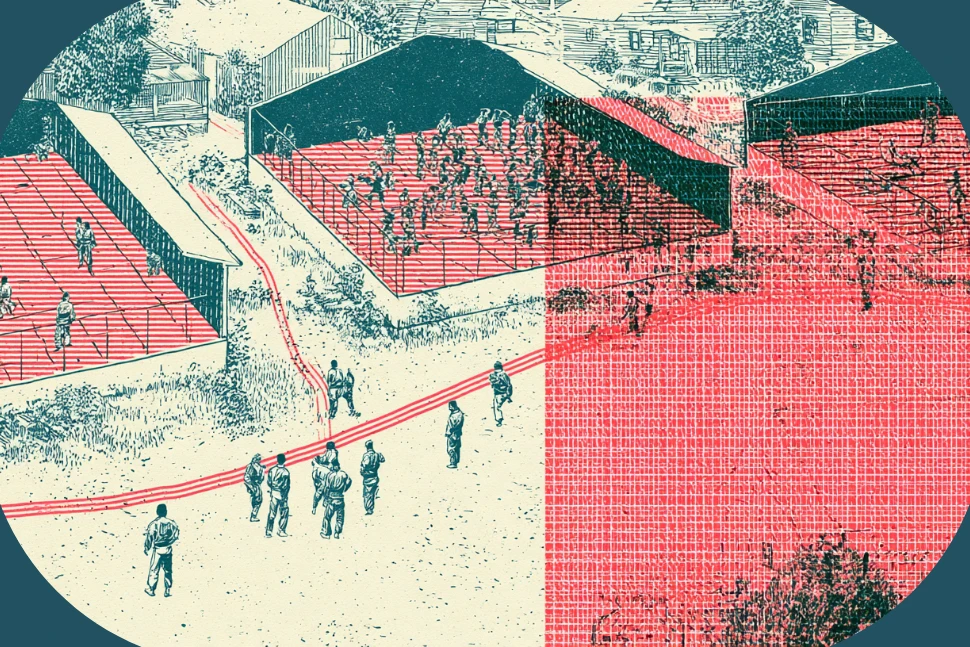
Two of the most popular different martial arts in the world, built on opposite answers to the same question: what's the fastest way to make a fight stop?
Karate says: keep your distance, hit them first, and finish it before they touch you.
Jiu-jitsu says: close the distance, take them down, and finish it where they can't punch you anymore.
Both work. They just work in completely different places. So the real question isn't which is better—it's which one fits you.
The Core Difference: Striking Distance vs Grappling Distance
Karate is a striking art.
The whole system is built around being one step outside your opponent's reach—then closing it in a single explosive movement, landing a finishing strike, and stepping back out.
Jiu-jitsu is a grappling art.
The whole system is built around being so close your opponent can't generate striking power—then taking them to the ground, controlling them with leverage, and finishing with a choke or joint lock.
Every other difference falls out of this one.
Karate trains stances, kicks, punches, blocks, and forms (kata) that drill movement patterns into muscle memory. Class feels like a structured workout—lines of students moving in unison, sparring at controlled contact, belt tests against a fixed curriculum.
BJJ trains positions, transitions, sweeps, and submissions. Class feels like a problem-solving puzzle—drilling specific moves, then "rolling" (live sparring) against partners who fully resist. Belt progression is famously slow, with each rank representing years of mat time.
Karate produces fast, technical strikers who finish standing.
BJJ produces patient, technical grapplers who finish on the ground.
Neither is universally better. They're answering different questions.
Karate at a Glance
Karate is a Japanese striking art that came out of Okinawa in the late 19th and early 20th centuries, formalized in mainland Japan by Gichin Funakoshi in the 1920s.
Today it covers a family of styles—Shotokan, Goju-ryu, Kyokushin, Wado-ryu, Shito-ryu—each with its own emphasis but a shared technical core.
What you'll actually do in a karate class:
- Kihon (basics): drilling punches, kicks, blocks, and stances solo or in lines
- Kata (forms): memorizing and refining set sequences of movements that encode the art's techniques
- Kumite (sparring): point-style or continuous, with contact ranging from light to full depending on the style
Shotokan is the most widely taught style worldwide and emphasizes long, low stances and explosive linear power.
Kyokushin is the bareknuckle full-contact branch—brutal conditioning, head kicks legal, no punches to the face.
Goju-ryu mixes hard linear techniques with softer circular ones and closer range. The style you walk into matters more than most newcomers realize.
The belt system is structured but varies by style and organization. White through brown belts (the kyu grades) typically take 4–6 years of consistent training before testing for black belt (shodan).
For a full breakdown of how the colors progress, see our karate belt order guide.
If you've also been weighing karate against Korea's most popular striking art, our karate vs taekwondo breakdown covers that head-to-head separately—this post stays focused on the karate-vs-BJJ question.
Jiu-Jitsu at a Glance
Brazilian Jiu-Jitsu—the version most people mean when they say "jiu jitsu" today—is the ground-fighting art the Gracie family adapted from Japanese judo in the early 20th century. For the full lineage, see how jiu-jitsu has evolved.
It broke into the global mainstream in 1993, when Royce Gracie won the first UFC tournament by submitting bigger, stronger strikers from his back.
That moment is the reason most people now believe what BJJ practitioners have argued for decades: a smaller technical grappler can defeat a larger untrained striker once the fight hits the floor.
What you'll actually do in a BJJ class:
- Warmup and drills: specific positional drills, escapes, and submission entries
- Technique: the instructor demonstrates a move, students partner up and rep it
- Rolling: 5–6 minute live sparring rounds against fully resisting partners, often four to six rounds per class
For a deeper look at what BJJ actually trains and how the curriculum is structured, our standalone primer covers it.
Two big training variants exist.
Gi BJJ trains in the traditional kimono, uses grips on the fabric, and rewards patient pressure. No-gi trains in shorts and a rashguard, looks more like wrestling, and rewards speed and scrambles. Most schools teach both.
The belt system is intentionally slow: white, blue, purple, brown, black.
Average time to BJJ black belt is 8–12 years of consistent training—roughly double a karate timeline. The slow progression is the point. By the time someone holds a BJJ black belt, they've rolled with thousands of opponents.
When Each Art Wins
"Which is better" always depends on what you're optimizing for. Here's how each art shakes out across the goals most beginners actually have.
For self-defense
For an untrained attacker on the street, BJJ usually has more useful tools.
You can pull guard, sweep to mount, and finish with a choke or armbar without ever throwing a strike that could break your hand or escalate a legal situation. Most untrained people have zero answer for being on their back.
Karate's advantage in self-defense is not what it teaches you to do—it's what it teaches you to not let happen.
The whole art is built on managing distance. A trained karateka recognizes the range a punch is coming from and gets out of it. That's a real skill, and arguably more useful than knowing how to fight from the bottom of someone's mount.
Where karate falls short is what happens after the first exchange.
If you don't end the confrontation with that first strike, you're now grappling with someone—and most karate curricula spend very little time there.
Where BJJ falls short is multiple attackers and hard surfaces. You don't want to be on the ground with your back exposed or your hip on concrete.
Net: BJJ gives you more tools for the most common situation (one untrained attacker, soft surface, no weapon). Karate gives you better range awareness and a better chance of never being in the situation in the first place.
For more depth, our guide to the best martial art for self-defense breaks this down across more styles.
For kids
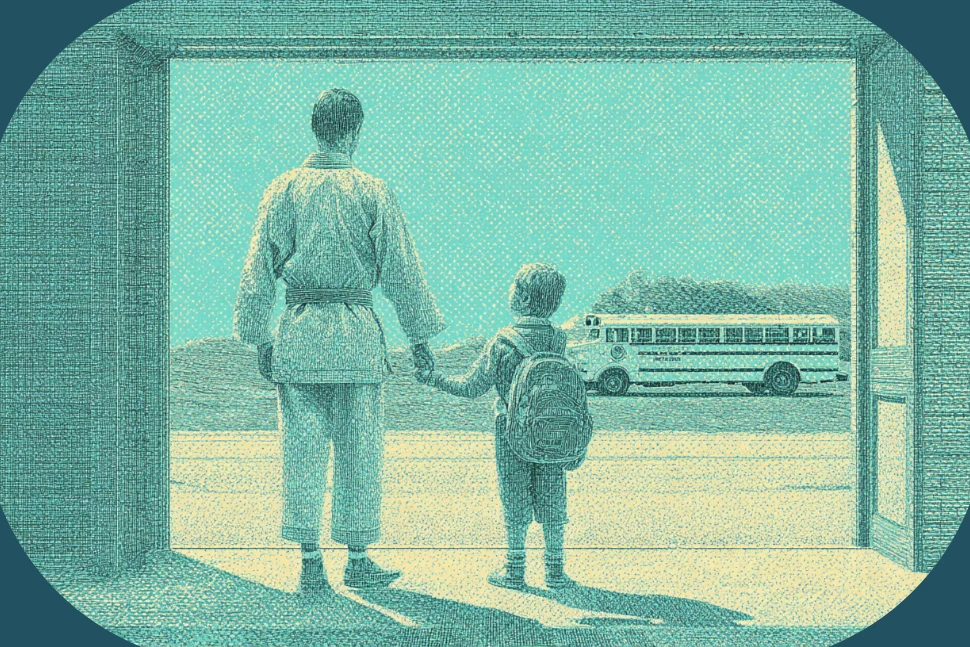
Karate often wins for kids under 10.
The structured curriculum—lines, drills, belt tests, formal etiquette—is purpose-built to teach focus, respect, and progression to young students.
Most karate schools have dedicated children's programs with age-appropriate sparring and a steady ladder of stripes and belts that keep kids motivated.
子供向けのブラジリアン柔術(BJJ)も、特に7歳頃からは非常に有益ですが、実戦形式のスパーリングには、多くの低年齢児にとって難しい感情のコントロールが求められます。優れた道場では、子供専用のプログラムを設け、独自のカリキュラムや大会への道筋を用意しています。
どちらの武道であっても、何も習わないよりは子供にとってプラスになります。決断の決め手となるのは、看板に掲げられた流派よりも、目の前にいる指導者です。
フィットネス目的の場合
どちらの武道も体づくりには効果的ですが、そのアプローチは異なります。
空手は、爆発的なパワー、長い立ち方による脚の持久力、そして型やミット打ちを通じた有酸素能力を養います。クラスの構成は、安定した有酸素運動に無酸素運動のバーストを組み合わせたものが多いのが特徴です。
ブラジリアン柔術は、握力、体幹のアイソメトリックな持久力、そして負荷のかかった状態での組み技特有の無酸素能力を鍛えます。抵抗する相手との5分間のスパーリングは、打撃系とは全く異なる種類の疲労をもたらします。
もしフィットネスに 加えて 関節への負担の少なさを求めるなら、空手がおすすめです。もしフィットネスに 加えて 頭部への打撃を受けるリスクなしにハードなトレーニングをしたいなら、ブラジリアン柔術が適しています。
競技目的の場合
空手の競技には2つの形式があります。一つはポイント制(WKF/JKAスタイル)で、技が決まるたびに中断します。もう一つはフルコンタクト制(極真やノックダウン方式)で、勝負が決まるまで続きます。さらに、体操のように採点される「型」の部門もあります。
ブラジリアン柔術の競技は組み技のみで、ポジションの優位性(テイクダウン、パスガード、マウント、バックなど)に応じてポイントが与えられ、サブミッション(一本)または時間切れで勝敗が決まります。
道着あり・なしの部門があり、年齢別のマスターズクラスも充実しています。また、IBJJFやADCCが主催する大規模なオープン大会も数多く開催されています。
ブラジリアン柔術は大人向けのアマチュア競技シーンが非常に大きく、空手は若年層の競技文化がより深く根付いています。
総合格闘技(MMA)や実戦を想定する場合
ここからは比較がより明確になります。
現代のMMAは、ルールに守られない状況でどの武道が有効かを検証する30年にわたる実験のようなものであり、その答えは変わっていません。つまり、打撃の基礎、レスリングの基礎、そしてサブミッション(組み技)の基礎のすべてが必要だということです。
ブラジリアン柔術は3つ目をカバーし、2つ目とも重なります。空手は1つ目の一部をカバーします。
空手をルーツに持つ最も明確な成功例は、2009年にUFCライトヘビー級王座を獲得したリョート・マチダでしょう。彼は松濤館流の距離感とカウンター攻撃を駆使して頂点に立ちました。
彼は空手がMMAで通用することを証明した存在ですが、同時に例外的な存在でもあります。なぜなら、彼は空手に相撲、ブラジリアン柔術(BJJ)、ムエタイを組み合わせていたからです。
打撃系と組み技系の格闘技の比較というより大きなテーマについては、こちらをご覧ください。 格闘技の有効性比較 また、近距離での組み技に関する議論については、BJJ対レスリングの比較記事も参考にしてください。
MMAを目指す場合、多くのコーチが推奨する習得順序は、まずレスリングかBJJで戦いの場所をコントロールできるようにし、その上で立ち技の攻防を制するための打撃系格闘技を学ぶというものです。空手も有効ですが、通常は土台として選ばれることはあまりありません。
60代まで続けるトレーニングとして
この点に関しては議論の余地がありません。長く続けられるという点ではBJJに軍配が上がります。
BJJは、生涯を通じてトレーニングできるように設計された格闘技です。多くの道場では、50代や60代の紫帯、茶帯、黒帯の練習生が、若い生徒たちと混ざって日常的にスパーリングを行っています。
ペースを落とすことも、強度を調整することも可能です。それでも技術はそのまま残ります。
空手も生涯続けられる武道ですが、蹴りによる関節への負担や、低い姿勢を維持する身体的負荷、また流派によっては打撃を受け止める必要があるため、年齢を重ねるにつれて体への負担が大きくなりがちです。
長年空手を続けてきた人の多くは、晩年になると型を中心とした稽古に移行します。それは優雅なものですが、始めた当初の空手とは異なる性質の武道といえます。
BJJがなぜ40年続けられるスポーツなのか、その詳細についてはこちらをご覧ください。 BJJトレーニングのメリット 長期的な視点で。
道場運営者の皆様へ
空手やBJJの道場を運営されている場合、見込み客が読んでいる比較コンテンツ(この記事も含む)が、彼らが道場の門を叩く際に何を求めているかを決定づけています。
彼らは、次のような問いに対する確信の持てる答えを求めています。 「これは自分に合っているか?」 体験クラスの料金を支払う前に。
見込み客を獲得している道場には共通点があります。体験予約が簡単であること、問い合わせに1時間以内に返信すること、そして見込み客、出席状況、昇級、更新といった情報を3つのスプレッドシートに分けるのではなく、一元管理していることです。
Gymdeskの武道・格闘技道場向けソフトウェア は、空手、ブラジリアン柔術(BJJ)、総合プログラムの運営業務(見込み客獲得、クラススケジュール管理、帯・ストライプ管理、請求、継続率レポートなど)を効率化するために設計されています。
この記事がマーケティングの役割を果たすなら、このソフトウェアは経営の役割を果たします。
選び方の基準:3つの質問
どちらの道場にするか迷っている見込み客が訪れた際、以下の3つの質問をすれば、納得のいく答えが必ず見つかります。
1. 最寄りの道場は 実際 どんな雰囲気ですか?
初心者にとっての正直な答えは、「自宅から15分以内にある良い道場で練習する」のが一番です。
素晴らしい空手道場は、平凡な柔術アカデミーよりもあなたのためになりますし、その逆もまた然りです。実際に道場の前まで行き、クラスを見学し、指導者と話をしてみてください。看板に掲げられた武道よりも、そこにいる指導者の方がはるかに重要です。
2. 練習中に どんな感覚 を求めていますか?
素早い動きや体系化された型の練習、そして明確な昇級試験を通じた成長を望むなら、空手のクラス構成が合っています。
組み技や問題解決、そして抵抗する相手との地道な練習を何年も続け、じっくりと昇級していきたいなら、ブラジリアン柔術が合っています。
3. 年齢はいくつで、どれくらいの期間練習を続けたいですか?
12歳未満の初心者なら、空手の方が一般的に始めやすいでしょう。10代後半から40代で、運動能力があり、「護身術を身につけたい」という目的が明確なら、ブラジリアン柔術がおすすめです。
40代以上で、60歳になっても動ける体を維持したいなら、ブラジリアン柔術が良いでしょう。ただし、激しい試合対策よりも技術的なスパーリングを重視する道場を選ぶことが条件です。
真剣に武道に取り組む人たちが実際に行っていること
長年道場に通い続けている熱心な武道家の多くは、どの武道が最強かという議論をやめ、両方を学び始めます。
打撃しかできない者は、一度テイクダウンされただけで無力化してしまいます。組み技しかできない者は、間合いを詰める動きが相手に読まれてしまいます。真にバランスの取れた武道家とは、その両方の間合いをカバーできる人のことです。
もし一つしか選べないなら、上記の目標に合致するものを選び、少なくとも2年間は打ち込んでください。二つ選べるなら、空手を週2回、型と打撃のために学び、ブラジリアン柔術(BJJ)を週2回、寝技と長く続けるための体力作りのために学ぶのが理想的です。
長年武道を続けてきたベテランの多くがこの組み合わせにたどり着くのには理由があります。それは、実際の喧嘩(あるいは現実のトラブル)で起こりうる状況をより広くカバーできるからです。私たちの クロス・トレーニング・ガイド では、燃え尽きることなく両方のスタイルを組み合わせる方法について詳しく解説しています。
準備ができたら、今週中に最寄りの評判の良い道場へ足を運び、体験レッスンを予約しましょう。壁に掲げられた流派の名前よりも、今この瞬間から始める1年間の継続的な稽古の方がはるかに重要です。
Gym management software that frees up your time and helps you grow.
Simplified billing, enrollment, student management, and marketing features that help you grow your gym or martial arts school.


FAQ
空手 vs 柔術 よくある質問

Josh is a martial arts educator and coach who bridges live training on the mats with evidence-based teaching. A 4th degree Taekwondo black belt and dedicated Brazilian Jiu-Jitsu practitioner, he’s spent years running classes, mentoring students, and helping instructors move beyond rote drills to training that actually works under pressure.
He holds a Master of Education in Teaching & Learning from Liberty University and runs Combat Learning, where he breaks down ecological dynamics, constraints-led coaching, and games-based training for combat sports. Through his writing and podcast work with Gymdesk, Josh turns coaching science and gym-owner stories into practical ideas you can use to run better classes and build a stronger martial arts school.