Two mats. One running a kids' striking class. The other running advanced grappling for adults. It's 5:30 PM at TEAMSMMA in Chula Vista, California, and both are full.
The guys running this place are still active-duty Naval Special Warfare. They teach hand-to-hand combat for the military during the day and run an MMA gym at night.
On the wall behind the check-in counter, two flags hang next to the roster of coaches. Most of the coaches are also professional fighters. Or professional competitors. Or both.
The gym is seven months old.
The MMA market by 2030. The sport is growing fast, and so is the business around it.
"Together Everybody Achieves More Success," Danny Felix says, explaining the acronym. He says it like someone who means it.
Danny's been doing martial arts since he was five years old. Started with ninjitsu in the '80s because of the Ninja Turtles. Moved to taekwondo. Found jiu-jitsu when the UFC showed up and changed everything.
He's in his upper 40s now. The only person he's competing with these days is himself. And the refrigerator, late at night.
Bobby Winther is the other half. Started jiu-jitsu at 14 to prepare for military service.
His uncle was a taekwondo black belt and a purple belt in jiu-jitsu back when the grappling bug was first spreading. Bobby tried one class and never stopped.
He's got a 4-1 professional MMA record. He's currently prepping for the ADCC Open, a premier grappling tournament in San Diego, while also expecting a baby at the end of February.
Fight camp and baby camp. Simultaneously.
If you'd rather watch than read, you can do that here:
How Two Operators Met
Danny and Bobby met around 2021 in the Navy.
They bonded over what Danny calls their "competitive nature." Both were already deep into martial arts. Both were already teaching combatives. The friendship formed the way many military friendships do: shared intensity, shared purpose, not much downtime.
"First off, Danny and I, we love chaos," Bobby says. "It seems we don't like to rest for even a second, even though we always want rest."
These two are active-duty service members who decided their off-hours needed more structure, not less. They started training together, then coaching together, and eventually had the conversation every gym owner has: what if we did this ourselves?
If you've ever wondered what it takes to start a martial arts school while holding down a full-time career, Danny and Bobby are the extreme version of that question.
When There's a Knife in Play
Bobby explains the difference between military combatives (hand-to-hand combat training for the military) and civilian martial arts in a way that sticks with you.
In jiu-jitsu, pulling guard—deliberately going to your back to fight from bottom—is a legitimate strategy. In combatives, it can get you killed.
"We really hold on to the top position a lot in combative athletes. Whereas jiu-jitsu, it may be okay to give up the bottom. We don't really want to do that because there's sometimes there's knives in play, there's pistols in play, rifles in play."
That changes how you teach everything.
Turtle position—hands and knees, back exposed? Fine in competition grappling. Terrible if there's a weapon involved.
Bobby puts it simply:
I just say, hey, the fist could be any weapon. Therefore, I need to have a technique that protects me from getting hit by that weapon multiple times.
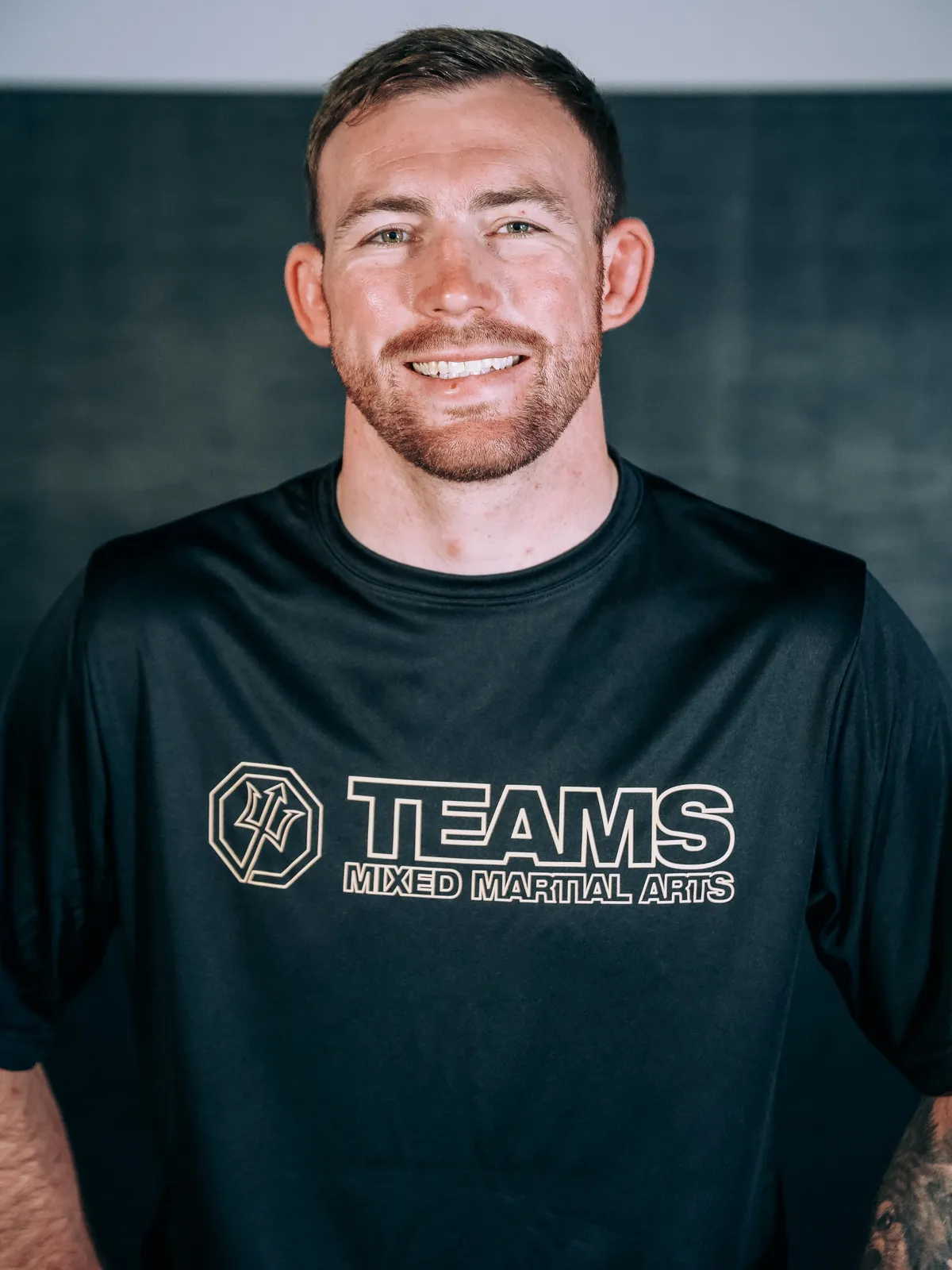
The philosophy doesn't stay locked in military training rooms. It flows directly into how TEAMSMMA teaches MMA to everyone who walks in the door. Kids included.
The priority is always staying on your feet, maintaining top position, and understanding why certain positions are dangerous. That translates perfectly to MMA and cross-training for combat sports.
Bobby again: "That really translates well into our curriculum for MMA in general here, because that's how we like to fight. That's how we teach all of our fighters to fight."
Danny adds the bigger picture. Before guys like Bobby brought MMA methodology into Naval Special Warfare, the combatives programs were inconsistent. Different systems, different claims about what worked. No way to test them under real pressure.
"The big thing that evolution, courtesy of mixed martial arts, brought to NSW was realism and truth in combat. It was a system that we were able to evolve, test, improve."
The fix was brutally simple. Put on all your gear. Everything you'd wear on a mission. Then see if your martial art still works.
"If this system, your version of martial arts, functions with all those things that you're expected to utilize in the battlefield, then it works. If it works under 100% oppositional force, then it works."
That's a curriculum design philosophy you can take to the bank: if your techniques don't hold up under full resistance, they don't work. Period. Simple as that.
The Decision to Go Autonomous
Danny and Bobby weren't fleeing a bad situation. They were at another gym. They were treated well.
But they'd hit the ceiling that every ambitious coach hits: they wanted to build something their way.
"I think a lot of it kind of came out of a need for our own spot to really be autonomous," Bobby says.
"We were at an old gym. We were treated very well. And I think we just all got to a point where we wanted our own spot to be able to shape the professional team the way we want it."
The curriculum, the coaching staff, the whole culture. They wanted to shape all of it. And because their training background was so specific, the gym was always going to carry that military DNA.
"Because Danny and I have a lot of military experience, it naturally has that military style. That's kind of all we know. We've done martial arts our whole lives. We've been in the military half of our lives."
So they found a spot in Chula Vista, south of San Diego. Dual mats.
Full strength and conditioning section. State-of-the-art restrooms with men's and women's showers. A Freebird Coffee Station with horchata cold brew and kombucha. And a roster of coaches who are also active fighters.
During the facility tour, Danny stops at the check-in counter:
"We start off with the best software on the market called Gymdesk. It helps us track all of our members and it helps the members log in."
Seven months in, and the place is already full at 5:30 on a weekday.
Building Fighters From the Ground Up
Bobby's approach to fighter development and competition is methodical.
TEAMSMMA runs a progression path: kids programs feed into adult classes, adults feed into amateur competition, amateurs develop into pros. You can enter at any level, but the development is deliberate.
The first question is always the same. Do you actually want to fight? Not do you think you should. Not are your friends telling you to. Do you want this?
"Make sure they're not pressured into thinking that they have to do this. Hey, do you want to fight? Is this something you want to do?"
If yes, show up consistently. That's the proof of commitment.
Then the coaches start watching. Are you sharpening up fast enough to handle better competition? Are you outgrowing your current level? Those answers determine the timeline.
The part that matters most is what Bobby won't let happen: rushing it.
We've seen so many times, like, amateurs turn pro too fast and they get crushed and it kills their pro career, like, right off the bat.
We will try to keep guys amateur as long as it makes sense for them.
That's the kind of patience that looks like a disadvantage until you see the results. Some fighters turn that corner fast. Some take longer. Neither is wrong.
The job of the coaching staff is to know when someone is genuinely ready, not when they think they're ready.
"A lot of guys think that, yo, I'm ready for pro. Like, you're not ready for pro sometimes."
Bobby says it without judgment. He's been on the other side. He knows what the jump to pro looks like because he's living it at 4-1.
Head striking coach Vincent Salvador has developed fighters from their first Muay Thai lesson through amateur bouts at local promotions. Wrestling and judo coach Justin Flores rounds out the staff.
Every coach at TEAMSMMA teaches daily classes. From 7 AM to the evening sessions. If you're looking for a place where your coach also competes, TEAMSMMA fits the profile.
Dual Mats, Shared Language
At 5:30 PM, TEAMSMMA runs two classes simultaneously. Kids striking on one mat. Adults advanced grappling on the other.
Parents aren't sitting in folding chairs scrolling their phones while their kids train. They're training.
Danny takes the kids. Bobby takes the adults. The framework is the same. The complexity is different.
At the end of the day, the ride home, you're going to be able to discuss what you learned as an adult. Your kid's going to be able to understand what you're saying because, essentially, we're teaching the same framework.

That's a retention play disguised as scheduling. Families who train together build a culture that extends past the gym. Danny sees it clearly:
"We're creating a culture that can truly exist within TEAMSMMA. It'll exist at home, whether it's them talking about it at the dinner table or them practicing it on the weekend."
If you run a gym and you're not doing some version of this, think about what happens at 5:30 PM on a Tuesday.
A parent drives 20 minutes to drop off a kid. Sits in the car for 45 minutes. Drives home. That's over an hour of dead time, every week, for a parent who might actually want to train.
Put them on the mat. Give them and their kid the same vocabulary. Watch what happens to your retention.
PRO TIP:
Schedule parent and kids classes simultaneously on separate mats. Teach the same framework at different complexity levels. The ride home becomes a debrief, the dinner table becomes a mat—and families who share the language stay together longer.
The Human Performance Center
Seven months in, and Danny is already thinking about what comes next. TEAMSMMA is building toward a human performance center that Danny says will rival something the UFC might have.
The plan: sports science, nutrition, and conditioning built into fight camp planning. Coaches sit down with fighters, break down their opponents, and build a complete preparation map. Not just the sparring. The whole picture.
"We'll be able to lay out a battle map. It's going to help the amateurs and the pros take their best training. Understand when they're going to fight, how they're going to fight. And most importantly, what game plan they're going to put together."
It's ambitious for a gym that hasn't hit its first birthday. But when two guys are running military operations by day and building an MMA gym by night, ambition isn't the variable in short supply. Discipline is the asset.
What TEAMSMMA Gets Right
Danny and Bobby built their gym the way they were trained to build anything: test it, prove it, improve it.
The location works. Chula Vista gives them proximity to San Diego's fight scene without competing directly in an oversaturated market.
The coaching staff competes at the pro level, which means every beginner is learning from people who actually use what they teach.
The dual-mat scheduling turns a logistics problem into a community advantage. And the fighter development path protects young careers instead of burning them.
The military background runs through everything. It is the operating system.
Bobby sums it up: "Any skill level, any person can come in here and get better. And that's what's cool and I think unique about our system."
Seven months old and already full at 5:30 on a Tuesday. The fist could be any weapon, but at TEAMSMMA, the weapon is the system.
Watch the full story of TEAMSMMA in our Gymdesk Originals series.
About Gymdesk Originals: Real gym owners. Real stories. We visit gyms across the country to learn how they built their communities from the ground up.
Gym management software that frees up your time and helps you grow.
Simplified billing, enrollment, student management, and marketing features that help you grow your gym or martial arts school.


FAQ

Seanは過去10年にわたり、規模を問わずさまざまな企業が賢く成長できるよう、コンテンツを制作してきました。経営者が本当に好きなこと、つまり楽しい仕事にもっと時間を使えるようにするためです。
配送や国際物流からウェブ開発、マーケティングまで、言葉だけでなく実務を通じて、小売業やサービス業の効率的な事業拡大に携わってきました。
これまでの執筆先には、Sendle、Shogun、The 小売 Exec、Gymdeskなどがあります。