Inside Lucas Lepri’s 25-Year Journey From World Champion to BJJ Gym Owner

Sean
Flannigan
February 6, 2026
"You're playing karate, find a real job."

That's what Lucas Lepri heard from friends and family while studying business in Brazil. They weren't being cruel. 

Back then, martial arts wasn't seen as a viable career path. Not in his hometown, not for someone with a university degree in front of them.

Fast-forward to 2024. 

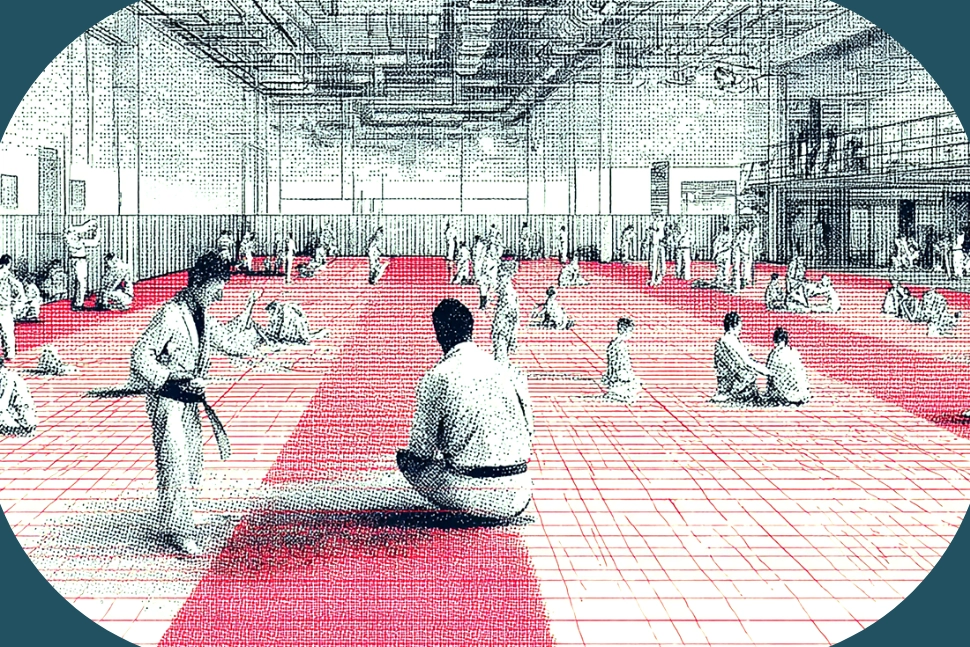
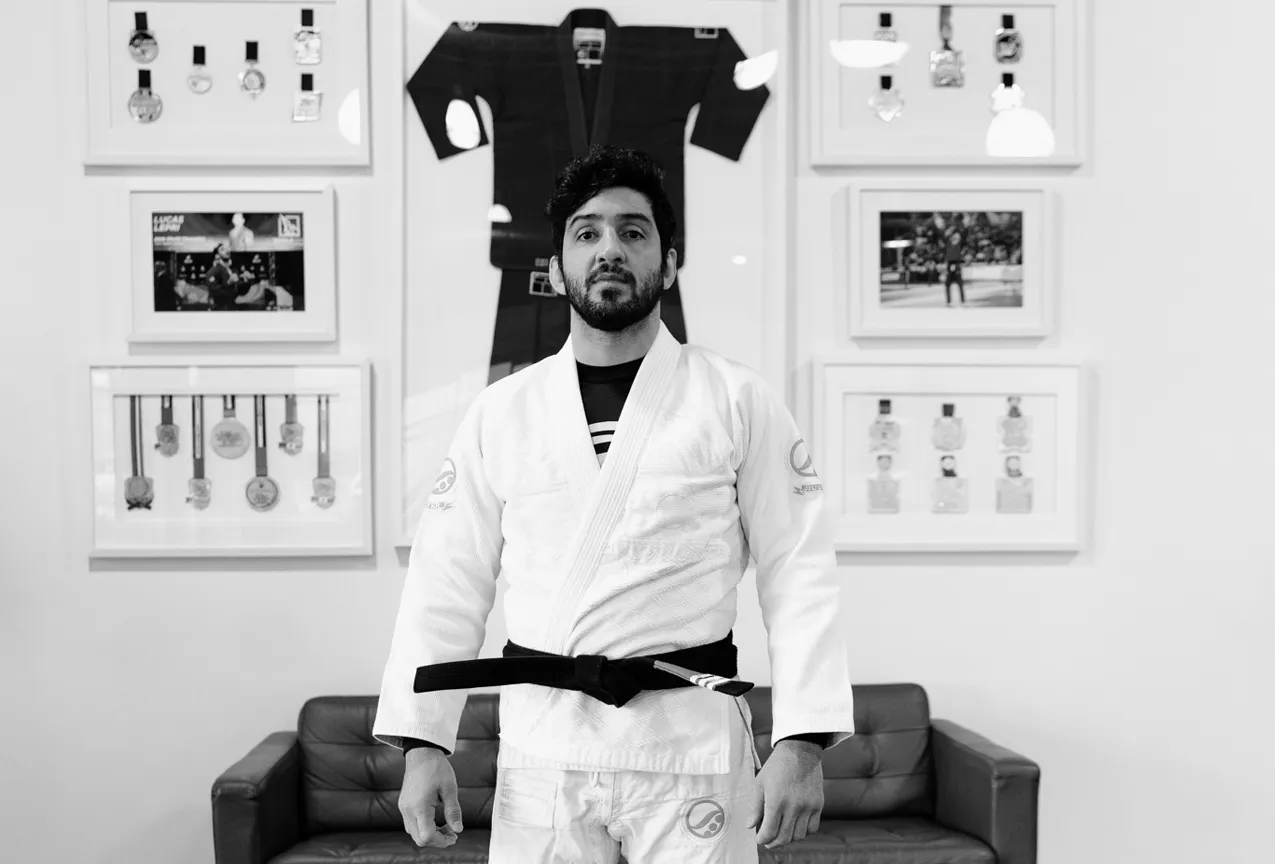
Lucas stands in a 9,000 square foot headquarters in Charlotte, North Carolina. Four thousand square feet of mat space. Two locker rooms with showers. A parents' lounge playing tournament highlight reels on a wall-mounted TV. Sixteen consecutive Charlotte Open championship trophies lining the walls. A Hall of Fame career spanning 52 countries and 800 seminars.

This isn't a story about overnight success or viral growth. It's about the 25-year journey from blue belt assistant to gym owner, and the systems Lucas built to prove the naysayers wrong.

The Naysayer Moment: When Teaching Jiu-Jitsu Wasn't a "Real Job"

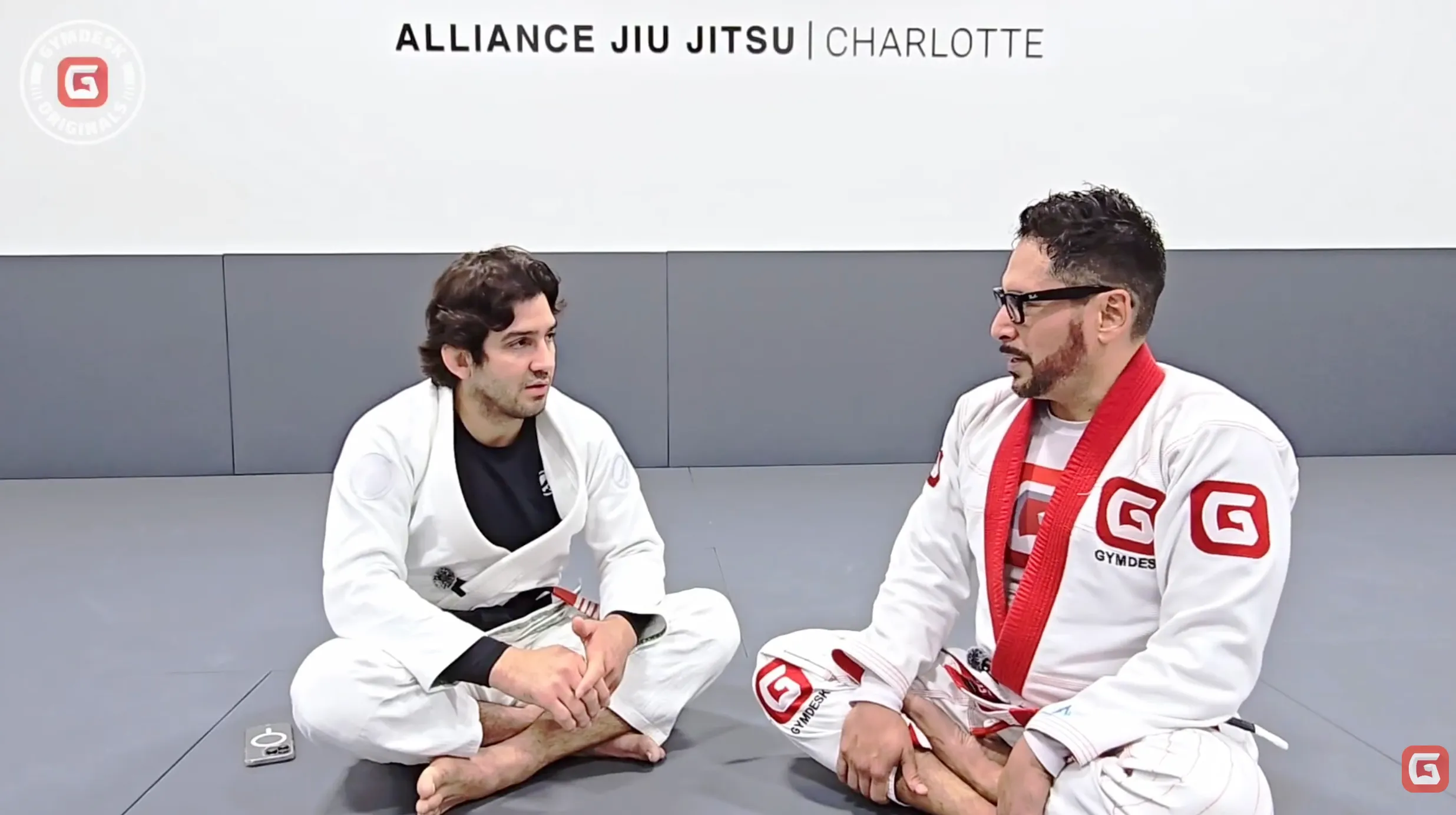
Lucas Lepri in conversation with Gymdesk CEO Alex Cuevas

"You're playing karate, you have to find a real job," Lucas recalls hearing during his university years. 

He was studying business, teaching jiu-jitsu on the side, training twice a day, and chasing a dream that most people around him couldn't see.

The pressure was real. In Brazil in the early 2000s, martial arts instruction wasn't considered a legitimate career. 

It was a hobby. A side hustle at best. Something you did until you got serious about life.

But Lucas felt something different when he taught. He saw students transform. He understood the methodology behind the techniques, not just the moves themselves. And he couldn't shake the feeling that this was his path, regardless of what anyone else thought.

"Don't listen much to others... stick with yourself, what you're feeling," he says now. "The same people today say, 'Hey, Lucas is my friend.'"

That doubt exists for gym owners globally today. You've probably heard it yourself. From parents, from partners, from well-meaning friends who ask when you're going to get a "real job."

Lucas's answer: Stick with it long enough to prove them right or wrong. Just don't expect results overnight.

From Student to Teacher: Learning to Teach While Learning to Fight

"I started jiu-jitsu at 15 years old," Lucas says. 

He'd already spent five years doing capoeira, building balance, coordination, agility. But jiu-jitsu was different. It worked.

"When I was a blue belt, I started to help my professor... teaching the classes."

Not because he was a natural instructor. Because his professor needed an assistant and Lucas was willing to learn.

By age 19, when his professor moved to Rio de Janeiro, Lucas was the head coach. He was still a brown belt. Still competing. Still figuring out his own game. 

But now he was responsible for teaching others, which meant he had to understand not just what worked, but why it worked.

"Understanding the concepts behind the techniques, not just copying YouTube videos," he explains. That distinction is the foundation of his teaching philosophy: methodology over memorization.

He trained twice a day. Taught between sessions. Studied business at university. Competed on weekends. Built his competition resume while building his teaching experience. 

The two tracks ran parallel for years before they converged into a single career path.

You can't teach what you don't deeply understand. Lucas spent years learning the "why" behind every movement, every position, every transition. That groundwork, laid between ages 15 and 22, gave him the technical foundation for everything that followed.

The Competition Years: Building Reputation Through Results

In 2007, at age 22, Lucas won his first IBJJF World Championship. 

It was held in California, the first time Worlds had been held in the United States instead of Brazil. A historic moment, and Lucas was standing on top of the podium.

That medal wasn't just a personal achievement. It was a business asset.

Over the next 15 years, Lucas would compete for 22 of his 25 years training. Nine IBJJF World Championships. Hall of Fame induction. Eight hundred seminars across 52 countries. 

"I was competing more in Brazil, US, Europe, Japan, Russia," he says. The list of countries grew year after year.

"800 seminars for the last 15 years... this opportunity to connect with a lot of people, help our community to grow." Those seminars weren't just teaching gigs. They were networking. Brand building. 

Every seminar created referral networks that sent students back to wherever Lucas was teaching.

Competition results filled his classes. When prospects searched for schools in Charlotte, they saw "9x World Champion" and trusted the instruction before they walked through the door. 

That's the benefit of martial arts competition as a business strategy: every medal is marketing. But there was a tradeoff.

"When you compete, you have to be 100% that way... otherwise you cannot do well." 

You can't split your attention between competition prep and business growth. Lucas learned this the hard way: to scale Alliance Charlotte, he'd eventually have to choose.

In 2019, he retired from competition to focus on the business full-time. 

The decision freed up mental bandwidth he didn't know he needed. Having automated systems for billing and attendance meant Lucas could travel for seminars without operations falling apart back home. 

Students checked in via app, payments ran automatically, and his wife managed everything remotely. That level of operational maturity took years to build.

The Journey to Charlotte: Finding Home After Years of Movement

In 2009, Lucas moved to New York City. Four years at Alliance NYC, learning English, adapting to American culture, building connections in the US jiu-jitsu scene.

Then Atlanta for two and a half years. "Learned a lot from Master Jacare," he says. 

Not just technique but operational knowledge. How to run an academy. How to manage students, staff, and systems. 

His wife worked at Jacare's school too, learning the behind-the-scenes operations that would later become the backbone of their Charlotte business.

During this time, Lucas connected with other Alliance instructors who would go on to build their own successful schools. 

Gabriel Goulart trained alongside Lucas in New York before opening Alliance San Fernando Valley, where he pioneered modern BJJ academy design. Years later, Lucas's cousin Frederico Silva would open Alliance Fort Mill under Lucas's guidance. 

The Alliance network isn't just about technique. It's about sharing operational knowledge across school owners.

In 2013, Lucas chose Charlotte. "Charlotte... international airport... two hours to mountains, 2.5 hours to beach... growing city." 

Infrastructure for travel. Quality of life for family. Room to grow.

He'd originally considered Chicago. But Charlotte felt right after visiting. So he committed: opened his first location and stayed put.

"I was 11 years in one place... first place that I opened."

Eleven years in the same location. No jumping to the next opportunity. No chasing the next big thing. Just building reputation and trust one student at a time, in one community, for over a decade.

KEY TAKEAWAY:

Eleven years in the same location. No jumping to the next opportunity. No chasing the next big thing. Just building reputation and trust one student at a time, in one community, for over a decade.

That patience became the foundation for everything that followed.

11 Years in One Location: Building the Foundation Before Scaling

Most gym owners want to expand within 2-3 years. Lucas waited 11.

"I was supposed to move a little bit before but I was competing still... so hard to have time."

Competition demanded total focus. Moving to a larger facility required bandwidth Lucas didn't have while preparing for Worlds.

So he stayed. Built systems. Developed culture. Watched his students win 16 consecutive Charlotte Open championships, a team competition dominance that was a point of pride throughout the interview.

"We create a culture... old students welcome the new students and help them understand what we do."

That culture didn't emerge overnight. It was cultivated over years of consistent messaging, consistent standards, and students who'd been training long enough to embody the gym's values and pass them to newcomers.

During this phase, Lucas built the operational systems that would support future growth:

  • Check-in automation: Students handle their own check-ins via app. Even five-year-olds can do it.
  • Level tracking: Attendance and progress monitored automatically, flagging students ready for belt promotions.
  • Family account management: Parents with multiple kids in different programs get unified billing and communication.
  • Staff development: Assistant instructors trained to teach methodology, not just moves.

As Alliance Charlotte grew from dozens to hundreds of students, Lucas couldn't manually track who was ready for belt promotions or which kids were missing too many classes. 

Systems like attendance monitoring and belt progression tracking automated this, flagging students who hit promotion criteria or whose attendance dropped. 

This freed Lucas to focus on teaching methodology while his wife and front desk staff handled logistics.

"My 100% focus is the methodology... my wife takes care more on that part."

The outcome: he teaches regularly while running a large multi-program operation. That's only possible with systems mature enough to handle complexity without constant founder involvement.

You can't scale without systems. 

Lucas stayed in one place long enough to systematize operations before expanding to a larger facility. That's the lesson most gym owners miss: patience precedes growth.

Watch Lucas Lepri's full story at Alliance Jiu-Jitsu Charlotte—from his competition career to building a 9,000 sq ft facility.

The 2024 HQ: When to Scale and How Lucas Did It

October 2024. Grand opening weekend.

A 9,000 square foot facility with 4,000 square feet of mat space: 3,000 in the main area, 1,000 in a secondary space for simultaneous classes.

"This is kind of always the things that I always dreamed... to have," Lucas says. 

But the timing mattered. "Visualize the way that I want as well." He'd spent years mentally designing the facility before he ever started looking for real estate.

Five years after retiring from competition. Eleven years after opening his first location. Twenty-five years after starting jiu-jitsu.

4,000 sq ft of mat space (3,000 main + 1,000 secondary for simultaneous classes)
16 consecutive Charlotte Open championships won by Alliance Charlotte team
October 2024 - Grand opening of 9,000 sq ft headquarters

The facility has dual mat spaces for simultaneous classes, two locker rooms with showers, a parents' lounge with TV showing tournament highlights, a retail area with Alliance gear, and trophies lining the walls. 

A visual reminder of the culture built over more than a decade.

KEY TAKEAWAY:

Four indicators told Lucas it was time to scale:

1. Competition retirement freed mental bandwidth. He could finally focus on growth without splitting attention.

2. Eleven years built community foundation. Deep roots in Charlotte meant brand recognition and trust.

3. Systems were mature. Operations could handle the complexity of a larger facility.

4. Clear vision. He knew exactly what he wanted because he'd visualized it for years.

Don't rush to scale. 

Lucas spent 11 years building the operational foundation and community trust before moving to a 9,000 sq ft facility. That patience, the culture-first approach to expansion, meant he wasn't gambling on unproven systems or hoping demand would materialize. 

He was meeting existing demand with infrastructure that matched his operational maturity.

"Find the comfort in discomfort... never feel comfortable... always dream it and work really hard to achieve your dreams."

The Operational Framework: Running 8+ Programs Across Two Mat Spaces

Alliance Charlotte runs multiple programs simultaneously:

Kids programs:

  • Little Champions (ages 3-5)
  • Champions 1 (ages 6-8)
  • Champions 2 (ages 9-13)

Adult programs:

  • Three levels: beginners, intermediate, advanced
  • Gi and no-gi across all levels

Class schedule: 7am, 11am, 12pm, 6:30pm, 7:30pm. Multiple sessions daily, often with two classes running simultaneously in separate mat spaces.

Managing this complexity requires systems Lucas couldn't have handled manually: "Track the students with the levels, the attendance, the payments." 

Check-in systems handle 100+ students per day. Attendance tracking by level flags promotion-ready students automatically. Family billing consolidates multiple kids' memberships into one parent account. Staff can pull student progress reports instantly instead of digging through spreadsheets.

"Have a really good staff... gym program... helps a lot."

Front desk team, assistant instructors, his wife managing backend operations. All accessing the same student data, all coordinated through systems that prevent the chaos of manual tracking.

"We have class this morning already checking in" right on the Gymdesk app. 

Students take responsibility for their own check-ins. Five-year-olds can do it. That's the simplicity threshold you need when running a large operation.

"Payment systems... create their own accounts... communicate with everybody."

Parents manage their own billing, update payment methods, get automated reminders, and receive communications through the platform. This reduces front desk workload and gives families control over their accounts.

The outcome: Lucas teaches full-time while running a professional operation. His wife manages backend operations, front desk staff handle logistics, and Lucas focuses on "the methodology." 

Exactly what a head instructor should be doing. That's only possible when systems enable operational excellence without requiring constant founder intervention.

Running 8+ programs across two mat spaces with multiple simultaneous classes requires automation. Without it, growth creates chaos. With it, growth creates capacity.

Lucas's Advice for Aspiring Gym Owners

LUCAS'S ADVICE:

"Decide as early as possible... stick with that... don't just keep jumping side to side." Pick gym ownership and commit long enough to see results. Success takes years, not months.

"Have understanding of jiu-jitsu... not from watching a technique on YouTube and go teach it." Learn the "why" behind techniques, not just the "what."

"Be good with people... always have a big smile, welcome people." Technical skill alone doesn't build a gym. Warmth, customer service, and welcoming energy matter just as much.

"You need to have a really good staff... you cannot grow by yourself." Good assistant instructors, good front desk team, good systems. You can't scale alone.

"Have a white belt mentality forever." Never stop learning. Keep evolving.

"Don't listen much to others... follow your heart." Ignore naysayers. Not because they're wrong about the difficulty, but because only you know your commitment level.

"Success does not come overnight... 25 years... a lot of effort... has to be above 100%." Investment comes before harvest. Lucas trained for 25 years before opening the HQ facility. That's the real timeline.

The Culture He Built: More Than Technique

I'm super proud of the facility, but I'm super proud even more about this culture that we have been building.
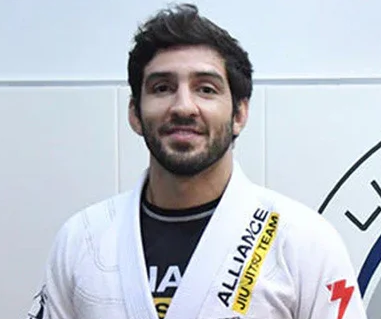
Lucas Lepri
LUCAS LEPRI
Owner, Alliance Jiu-Jitsu Charlotte

That sentence reveals Lucas's priorities. 

The 9,000 sq ft space is impressive. But it's just infrastructure. The culture, the way students treat each other, the mentorship embedded in the community, the family atmosphere—that's what makes people stay.

"The old students welcome the new students and help them understand what we do." 

Culture of mentorship. Students helping students. Not because Lucas enforces it, but because the culture embeds it.

"Find comfort in discomfort... never feel comfortable."

That mindset applies to training, to competition, and to business growth. Never settle. Always push forward. White belt mentality forever.

The student loyalty and retention Alliance Charlotte achieves comes from this culture-first approach. The facility is the shell. The culture is what makes people drive across town to train, what makes them bring their kids, what makes them stay for years.

Sixteen consecutive Charlotte Open championships. That's team culture translating into competitive success. That's students pushing each other because they care about representing the gym well.

Pride in culture over pride in facility. That's the lesson.

The Long Game: 25 Years from Blue Belt to 9,000 Sq Ft HQ

How long does it take to open a successful BJJ gym? 

Lucas Lepri's journey shows the realistic timeline: 25 years from starting training to opening a professional headquarters, with 11 years spent building foundation in a single location before scaling. 

Quick success stories are rare; sustainable growth requires years of operational refinement and community trust.

Let's map the full timeline:

Year
Milestone
Age 15
Starts jiu-jitsu
Blue belt
Becomes assistant instructor
Age 19
Head coach when professor moves to Rio
Age 22 (2007)
First World Championship
2009
Moves to US (Alliance NYC)
2013
Opens Alliance Charlotte (first location)
2019
Retires from competition
2024
Opens 9,000 sq ft headquarters

Twenty-five years from starting jiu-jitsu to opening the HQ. Eleven years in one location before scaling up. Not about revenge against the naysayers but about validation through building something sustainable.

"The same people today say, 'Hey, Lucas is my friend.'" They came around. Not because Lucas proved them wrong out of spite, but because he built something undeniable.

Those naysayers who said "find a real job" weren't wrong about the difficulty. They just didn't understand the commitment required. 

Lucas proved martial arts is a real career, but only if you commit for decades, build systems that support growth, stay in one place long enough to build trust, focus on culture as much as technique, and never stop learning.

The outcome: teaching full-time in a professional operation. Not just running a gym, but building a legacy. Not just surviving as a martial arts instructor, but thriving as a business owner who happens to teach jiu-jitsu.

Just like Lucas built systems that let him focus on teaching instead of admin, modern gym owners can do the same. Automated billing, attendance tracking, and family account management aren't luxuries—they're how Lucas built the operational foundation that lets you teach full-time while running a professional business.

The naysayers see the 9,000 sq ft facility and think it's the success story. 

But Lucas knows the real victory is simpler: teaching jiu-jitsu full-time, supporting his family, building culture, and doing it in a way that scales without sacrificing quality.

That's what a "real job" looks like when you're patient enough to build it right.

About Gymdesk Originals

This story is part of our documentary series featuring real gym owners, their challenges, and the communities they've built from the ground up. No scripts, no polish—just authentic conversations about the journey from vision to reality.

Watch them all here.

Gym management software that frees up your time and helps you grow.

Simplified billing, enrollment, student management, and marketing features that help you grow your gym or martial arts school.


FAQ