
柔術ジムのSEO: ブラジリアン柔術アカデミーのランキング完全ガイド
私の最初の武道クラブは失敗しました。
私の夢であり、世界で唯一やりたかったことだったテコンドープログラムの終了を知らせる最後のメールを送ることは、胸が張り裂けそうでした。
当時、私はビジネスやマーケティングについて何も知りませんでした。 最近は、検索エンジン最適化とマーケティング全般に関する自分のやり方がよくわかっています。
その失敗をきっかけに、検索エンジン最適化に重点を置いたマーケティングの方法を学ぶようになりました。そして、私がこの方法で専門化したのには十分な理由があります。
柔術にとって、SEOが好きな理由はたくさんあります。
- 入学希望者の 78% モバイルデバイスで柔術ジムを検索します。こうした検索の大半は Google が占めています。オンラインでの認知度は、利用者があなたのアカデミーを見つけるか、競合他社に足を踏み入れるかに直接影響します。
- ソーシャルメディアドライブ ジムに通う人の発見率の 63% フィットネスビジネスや柔術ジムでは、残りの大部分はローカルGoogle検索からのものです。しかし、ほとんどのブラジリアン柔術アカデミーは、適切なSEO戦略を実施していないため、このトラフィックを見逃しています。
ほとんどのジムオーナーが気付いていないことは次のとおりです。 レストランのように500の企業と競合しているわけじゃない
ほとんどの都市では、ブラジリアン柔術アカデミーは5〜10校しかありません。基本的な SEO に 6 ~ 12 か月間取り組めば、ローカルの検索結果を圧倒できます。
競合他社は口コミや高額な有料広告に依存しています。SEO 戦略をうまく実行すれば、柔術学校が Google 検索結果の上位に表示されます。これは、意欲の高い学生が積極的にトレーニングを求めている場所です。
このガイドは完全版の一部です 柔術マーケティング戦略。
ここでは、特にSEOについて詳しく説明します。私の長年の経験、失敗、そして難しい教訓を活かして、検索エンジンでアカデミーを上位にランク付けし、はるかに低いコストでリードを流し続けるお手伝いをします。
柔術ジムでSEOが重要な理由
ローカルSEOとは、潜在的な学生が「近くの柔術クラス」や「[都市] のブラジリアン柔術ジム」などの用語を検索したときに表示されるように、オンラインプレゼンスを最適化することです。
これには、ウェブサイト、Googleビジネスプロフィール、ビジネスリスティング、ローカルキーワード、レビュー、ローカルソースからのバックリンクが含まれます。
適切に行えば、ローカル検索結果を圧倒し、お住まいの地域の学生を引き付けるのに役立ちます。
ローカル検索の機会
検索エンジンは、学生が格闘技のトレーニングを見つける主な方法になっています。 消費者の 89% オンラインで購入プロセスを開始し、 72% が特にグーグルを使っている 地元のお店を探すために。
競争のダイナミクスは厳しいです。
「柔術教室 [都市]」のジムランキング1位は、おおよそのキャプチャー オーガニッククリックの 27.6%。2ページ目にジム?クリック数の 5% 未満。
この勝者が最も多く取るというダイナミクスにより、ランキングは持続可能な成長の優先事項となっています。
お客様の競争優位性
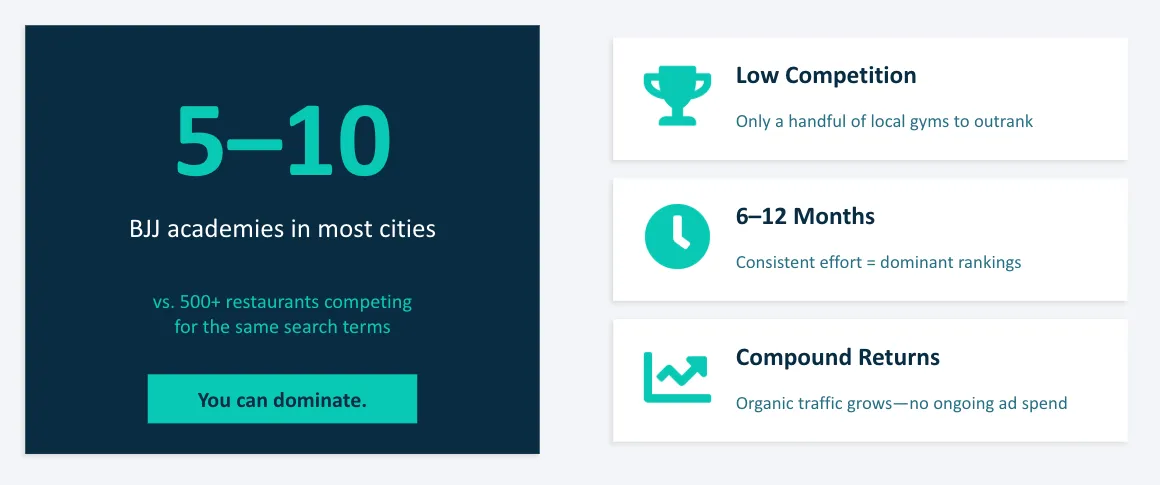
良いニュースは次のとおりです。 あなたは何百もの選択肢と競争しているわけではありません。
500以上の地元の競合他社に直面しているレストランとは異なり、ほとんどの都市にはブラジリアン柔術アカデミーが5〜10しかありません。これは大きなアドバンテージです。競合他社がそうではないのに、あなたがSEOの基本にコミットすれば、あなたの勝ちです。
SEO 広告と有料広告
SEOの財務的根拠は、長期的なコストを比較すると明らかになります。
フィットネスと格闘技のキーワードの Google 広告 1 回のクリックあたり平均 3 ~ 5 ドルそしてコストはあっという間に膨らみます。
有料広告に月額 1,000 ~ 2,000 ドルを費やしているジムでも、ウェブサイトと Google ビジネスプロフィールが適切に最適化されていれば、継続的な広告費なしで、時間の経過とともに同様のトラフィックを増やすことができます。
そのお金は、施設の改善、インストラクターの育成、または独自のトレーニングに振り向けることができます。
モバイルデバイスがこの変化を加速させています。先に述べたように、ローカルモバイル検索の 78% がオフラインコンバージョンにつながりました。
学生は通勤中、昼食時、またはトレーニングを開始することを決めた直後に検索します。このような意図の強い検索は絶好の機会ですが、それは所属するアカデミーが現れた場合に限られます。
ブラジリアン柔術ジム向け Google ビジネスプロファイルの最適化
Google ビジネスプロフィールの最適化は、柔術 SEO にとって最も影響の大きいアクティビティです。多くの場合、適切に導入してから 2 ~ 4 週間以内に目に見える結果が得られます。
請求と検証
まだプロフィールを申請していない場合は、business.google.com から始めてください。はがきによる確認では通常 5 ~ 14 日かかりますが、既存の企業では電話による確認が可能な場合もあります。
他の誰か(以前の所有者または従業員)がリスティングを申請した場合は、Google のサポートプロセスを通じて所有権の譲渡をリクエストできます。
完全なビジネス情報チェックリスト
NAP(名前、住所、電話番号)は、すべてのプラットフォームで一貫している必要があります。これは簡単に聞こえますが、一貫性の欠如は検索エンジンを混乱させます。
- 事業名: ウェブサイト、Google ビジネスプロフィール、すべてのディレクトリで完全に一致する
- 住所のフォーマット: ウェブサイトで「Street」を使用している場合は、他の場所で「St.」と略さないでください。
- 電話番号: 書式には一貫性を持たせましょう。できれば、ジムに直接つながるローカル番号を使用してください
- 時間: 休日の特別営業時間を含め、正確かつ最新の状態に保つ
- ウェブサイトの URL: 内容が正しく、ホームページへのリンクであることを確認してください
コンバージョンにつながる写真戦略
高品質の写真は、検索パフォーマンスとコンバージョン率の両方に大きな影響を与えます。
Googleは特定の番号を義務付けていませんが、写真を掲載している企業には番号が付けられます ディレクションリクエストが 42% 増加 ウェブサイトのクリック数が 35% 増加しました。
高品質の写真をできるだけ多く追加してください。
含める内容:
- 複数の角度から見たトレーニングフロア(マットスペースと機器の品質を表示)
- 資格の簡単な説明付きのインストラクターの写真
- セッション中のクラスのアクションショット
- ベルトを受け取ったり競ったりする学生
- 建物が見分けられるように外観を撮影
写真の最適化:
- サイズ:プロフィール写真の場合は720x720ピクセル、カバー写真の場合は720x540ピクセル
- プロ仕様の照明とよく構成されている
- 最近のトーナメントの写真や新しい装備で季節ごとに更新
定期的な更新は、お客様のビジネスが引き続きアクティブで最新の状態であることを Google に知らせます。
BJJ特有のカテゴリーとサービス
主なカテゴリとして「武道学校」を選択してください。サブカテゴリには、提供内容に応じて「スポーツクラブ」、「フィットネスセンター」、「護身術学校」などがあります。
格闘技のトレーニングに加えて従来のフィットネス機器を提供する場合を除き、「ジム」などの一般的なカテゴリは避けてください。
さまざまなプログラム用の特定のサービスリストを作成します。
- Gi ブラジリアン柔術クラス
- ノーギブラジリアン柔術トレーニング
- キッズ柔術プログラム
- 女性向け護身術教室
- コンペティショントレーニング
各サービスリストでは、潜在的な学生に明確な情報を提供しながら、特定のキーワードをターゲットにできます。
サービスの説明例:
「[市] にある初心者向けのブラジリアン柔術クラスは、あらゆる年齢やフィットネスレベルの学生を歓迎しています。少人数制のクラスでは、経験豊富な黒帯のインストラクターによる個別の指導が可能で、忙しい専門家や学生にも柔軟に対応できる柔軟なスケジュール設定が可能です。」
アカデミーを差別化する詳細を含めてください。オープンマットセッション、競技トレーニング、または法執行機関向けの専門プログラムについて記載してください。
投稿と Q&A の最適化
また、定期的に投稿し、Q&Aがこれらのローカル検索者向けに最適化されていることを確認する必要があります。
グーグル投稿:
クラスのハイライト、プロモーション、イベント、またはトレーニングのヒントについて毎週投稿してください。
ほとんどの投稿タイプは7日後に期限切れになるため、一貫性が重要です。このアクティビティは、リスティングが最新のものであることを Google に伝えます。
Q&Aセクション:
見込み客が実際に尋ねる質問に、独自の質問を投げかけましょう。
- 「始めるには経験が必要ですか?」
- 「ファーストクラスには何を着たらいいの?」
- 「無料試用版はありますか?」
- 「キッズクラスは何歳まで受け付けていますか?」
これらに徹底的に答えてください。受講を検討している学生は、この情報が役に立つと感じ、プロフィールにキーワードが豊富なコンテンツを追加してくれます。
レビュー生成戦略
レビューはそれ自体に焦点を当てる価値があります。地元企業、特に大規模なウェブサイト権限を持たないジムにとって、これらは最も強力なランキング要素の1つです。
ローカルSEOにとってレビューが重要な理由
ほとんどのローカルビジネスでは、ウェブサイトのバックリンクは最小限で、ドメイン権限も低いです。レビューはそのギャップを埋めます。
レビューは、レビュー担当者がシステムによって検証された実在の人物であることを Google に通知します。 消費者の 97% レビューが購入の決定に影響するとします。また、93% は肯定的なレビューを見た後にビジネスを利用する傾向が高くなっています。
ローカル検索で競い合う柔術ジムでは、レビューがランキング #3 と #1 の決定要因になることがあります。
レビューを依頼するタイミング
タイミングが重要です。熱意が高くて、新鮮な体験ができるときに聞いてみましょう。
最高の機会:
- ベルトプロモーション後: 彼らは誇りと感謝の気持ちを込めてくれます。絶好のタイミング
- 最初のコンペティション後: 特に業績が良かったり、ブレークスルーがあった場合は特にそうです。
- 3か月のマイルストーンで: 彼らは献身的で、共有できる実際の経験を持っています
- ブレークスルーの瞬間の後: 最初のサブミッション、最終的にコンセプトが成立する、あるいは停滞期を乗り越える
- 彼らが友達を紹介するとき: 彼らはすでに支持者です
強引にならずに尋ねる方法
最も効果的なアプローチは、大量のメールを送信するのではなく、レビューリクエストを通常のメンバーとのやり取りに統合することです。
シンプルに: 「Googleでの経験を共有していただけませんか?他のユーザーが私たちを見つけるのに本当に役立ちます。」
次に、直接レビューリンクを送信します。モバイルフレンドリーにしましょう。ほとんどの人は、あなたが尋ねた直後にスマートフォンで返信します。
💡 ジムオーナーからのアドバイス: Googleでジムを検索し、リスティングをクリックして [レビューを書く] をクリックすると、Googleレビューのリンクが表示されます。その URL をコピーして、簡単に共有できる場所に保存します。
レビューへの返信
悪いレビューも良いレビューも、できるだけ多くのレビューに返信したいと思うでしょう。これはとても重要です。
肯定的なレビュー:
レビュー担当者が言及した具体的な詳細を確認してください。個人的に感謝します。
例: 「サラ、最初の1週間で私たちのチームがどれほど歓迎されているかを教えてくれてありがとう。皆さんの柔術の旅をサポートできることを嬉しく思います。マット上で上達するのを楽しみにしています。」
否定的なレビュー:
これらを慎重に取り扱ってください。受験生候補者は、あなたが批判にどのように反応するかに基づいてアカデミーの性格を判断します。
- フィードバックを承諾する
- 適切であれば謝罪する
- 個人的に話し合うことを申し出る
- 公に議論したり、正当な懸念事項を却下したりしないでください
警告: 偽のレビューやプロフィールは絶対に使用しないでください。Google はリスティングにペナルティを課しますが、リスクを冒す価値はありません。
ボリューム目標を確認
マジックナンバーはありませんが、 グーグルレビューが10件に達する ローカルランキングにとって意味のある変曲点であり、それを超えると収益が減少します。
本当の利点は一貫性です。毎月数件の新しいレビューを投稿し、平均星4.5以上の評価を維持してください。
柔術ジムのローカルキーワードリサーチ
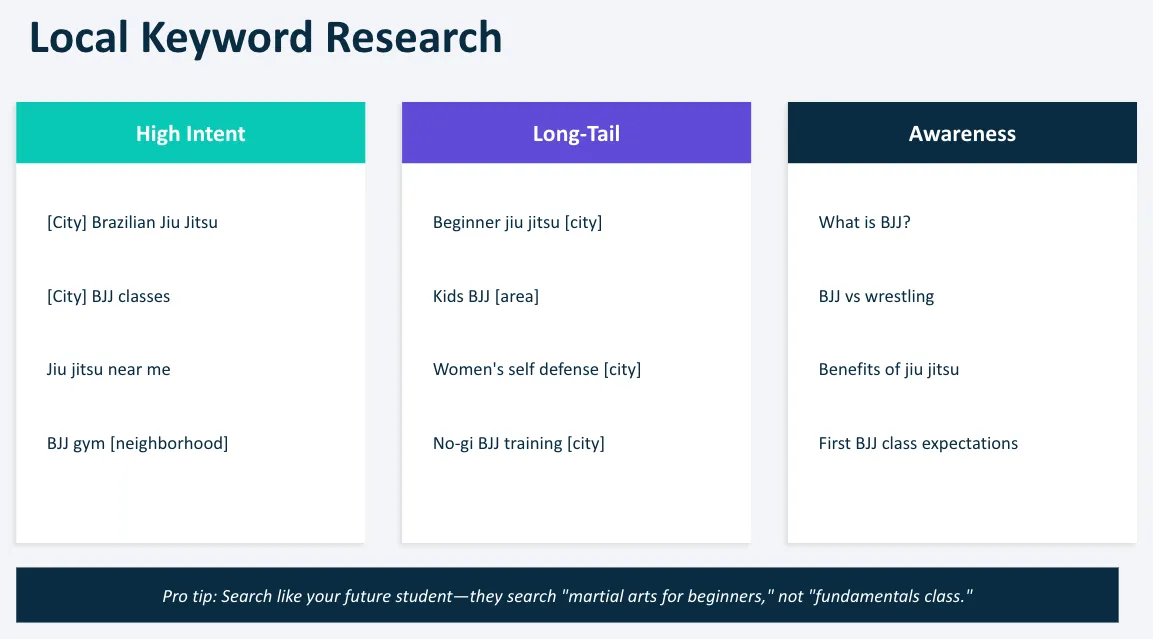
キーワード調査により、潜在的な学生が実際に何を検索しているかがわかるため、コンテンツを作成し、その意図に合ったページを最適化できます。
主なキーワード (ハイインテント)
これらはあなたのお金のキーワードです。これらの用語を検索するユーザーは行動を起こす準備ができています。
- 「[市] ブラジリアン柔術」
- 「[シティ] ブラジリアン柔術クラス」
- 「近くの柔術」
- 「ブラジリアン柔術ジム [近所]」
- 「ブラジリアン柔術教室 [市]」
これらの用語は通常、競合は中程度ですが、コンバージョン率は高くなります。地理的修飾語を使用する検索者は、現地の研修を受けたいという明確な意図を示しています。
ロングテールキーワード (競争力が低い)
ロングテールのバリエーションは、多くの場合、コンバージョンの可能性が高くランキングの機会が容易になります。
- 「初心者柔術教室 [市]」
- 「キッズブラジリアン柔術 [エリア]」
- 「女子護身教室 [近所]」
- 「ノーギブラジリアン柔術トレーニング [シティ]」
- 「護身術のための柔術 [都市]」
- 「成人格闘技教室 [市内]」
これらの特定のフレーズは、資格のある潜在的な学生を引き付ける一方で、競争が少なくて済みます。
啓発キーワード (コンテンツ機会)
これらの検索は、ブラジリアン柔術の発見、調査、選択肢の比較など、旅の早い段階で集められたものです。彼らは今日サインアップする準備ができていませんが、数週間後には登録できるかもしれません。
ブログコンテンツに最適なトピック:
- 「ブラジリアン柔術とは」
- 「ブラジリアン柔術対レスリング」
- 「ブラジリアン柔術と柔道の違い」
- 「ブラジリアン柔術ブルーベルトが手に入るまでの期間」
- 「柔術は護身術にいいの?」
- 「初めてのブラジリアン柔術クラスで期待できること」
- 「大人にとっての柔術のメリット」
これらの質問に関するコンテンツを作成することで、権威が高まり、時間をかけて育むことができるトラフィックを獲得できます。
季節ごとのキーワードトレンド
検索パターンは予測可能なサイクルに従います。
- 1月: 「新年の格闘技教室」、「フィットネス目標柔術」、「決意重視の検索」
- 夏: 「キッズ武道キャンプ」、「青少年ブラジリアン柔術プログラム」、体系的なアクティビティを求める保護者
- 秋: 新学期のタイミング、「放課後の格闘技」、新しいルーチンの確立
これらのトレンドに合わせてコンテンツを企画し、季節ごとの需要を捉えましょう。
キーワード調査用の無料ツール
基本的なキーワード調査を行うのに高価なソフトウェアは必要ありません。
- Google オートコンプリート: 「bjj [city]」と入力して、どのような候補が表示されるかを確認してください
- 「人々も尋ねる」: Google が検索結果に表示する質問を確認する
- 一般市民への回答: 質問ベースのキーワードを生成する無料ツール
- ユーバーの提案: キーワードボリュームデータを含む限定無料利用枠
競合分析方法
競合他社が何をしているのかを理解することは、彼らが見逃した機会を見つけるのに役立ちます。
競合企業の上位 3 ~ 5 社を特定
シークレットブラウザウィンドウで主なキーワードを検索し、オーガニック検索結果と Google マップパックの両方で、どのキーワードが一貫して表示されるかを記録できます。
他のブラジリアン柔術ジムだけに集中しないでください。総合格闘技学校、空手学校、一般的なフィットネスセンターは、同じ検索トラフィックをめぐって競合することがよくあります。
彼らの強みとギャップを分析
各競合他社のウェブサイトと Google ビジネスプロフィールにアクセスしてください。以下を探してください。
コンテンツ:
- 彼らはブログを持っていますか?どのくらいの頻度で公開していますか?
- どのようなトピックが取り上げられていますか?
- コンテンツに明らかなギャップはありますか?
レビュー:
- Googleのレビューはいくつありますか?
- 彼らの平均評価は?
- 彼らはレビューにどのように反応しますか?
Google ビジネスプロフィール:
- 彼らのプロフィールは完成していますか?
- 彼らは質の高い写真を持っていますか?
- 彼らは定期的に投稿していますか?
ウェブサイト:
- モバイルフレンドリーですか?
- 読み込みは速いですか?
- 各プログラム専用のページはありますか?
勝つチャンスを見つけよう
悪用できるギャップを探してください。
- 競合他社がブログを書いていない場合は、コンテンツで競合他社を上回ることができます
- 彼らの写真が古い場合や品質が低い場合は、優れた写真が有利になります。
- レビューが少ない場合は、焦点を絞ったレビューキャンペーンを行って合格させることができます。
- GBPが不完全な場合は、完全に最適化されたプロファイルの方が部分的なプロファイルに勝ります。
柔術ジムのウェブサイト最適化
ウェブサイトはSEO戦略の基盤です。他のすべての戦術はここにあります。
すべてのブラジリアン柔術ウェブサイトに必要な必須ページ
少なくとも、サイトには次のものを含める必要があります。
- ホームページ: 明確な価値提案、誰にサービスを提供しているか、何が他と違うのか
- について/私たちのストーリー: インストラクターの資格、ジムの理念、これまでの道のり
- プログラム: 大人用ブラジリアン柔術用、子供用ブラジリアン柔術用、女子クラス用、競技チーム用などのページが分かれています。
- スケジュール: 現在の授業時間、読みやすい
- 価格設定: 透明性を保ちましょう。価格を隠すことは、入学希望者を苛立たせる
- インストラクター: 略歴、資格、写真、教育理念
- 連絡先/場所: 住所、電話、地図、お問い合わせフォーム
- ブログ: 継続的なコンテンツ(テクニックのヒント、学生のスポットライト、ジムのニュース)
モバイルファーストデザイン (交渉不可)
柔術検索の 78% がモバイルデバイスで行われているため、サイトはスマートフォンでも完璧に機能する必要があります。
必要条件:
- モバイル接続で3秒未満で読み込み
- ズームしなくてもテキストが読める
- トライアルのスケジュールを立てたり、ジムに連絡したりするためのタッチフレンドリーなボタン
- 水平スクロールなし
Google のモバイルファーストインデックスでは、モバイルサイトのバージョンが検索ランキングを決定します。美しいデスクトップサイトがモバイル版で壊れてしまうと、被害に遭うことになります。
ページ上の SEO 要素
ページで使用するテキストは、ターゲットキーワードでランク付けするうえで非常に重要です。これらの必須のメタタグについては、これを行ってください。
タイトルタグ:
サービスページには次の式に従ってください。 「[市] | [ジム名] のブラジリアン柔術クラス」
ホームページの場合: 「[シティ] でのプレミアブラジリアン柔術トレーニング — [ジム名]」
検索結果で切り捨てられないように、タイトルは 60 文字未満にしてください。
メタディスクリプション: 明確な行動を促すフレーズや関連性の高いキーワードを自然に取り入れましょう。
例: 「[ジム名] の無料トライアルクラスでブラジリアン柔術の旅を始めましょう。[City] では、専門家による指導、親しみやすいコミュニティ、柔軟なスケジュール設定が可能です。今すぐトライアルを予約してください!」
ヘッダー階層:
- メインキーワードを含むページごとに H1 件ずつ
- 主要セクションの H2 タグ (「アダルトプログラム」、「キッズクラス」、「スケジュール」)
- 各エリア内のサブセクション用の H3 タグ
画像の代替テキスト: キーワードを自然に取り入れながら、画像の内容を説明してください。Google のクローラーボットにとって、すべてがテキストです。
代わりに:「ブラジリアン柔術クラス」使用: 「[ジム名] での夜のブラジリアン柔術クラスでガードパスのテクニックを練習する成人学生」
場所固有のコンテンツ
複数の地域や地域にサービスを提供する場合は、それぞれ専用のページを作成してください。
「[近所A] の柔術教室」と「[近所B] のブラジリアン柔術トレーニング」を別々のページに分けると、地理的に特定の検索を競合することなくキャプチャできます。
重要: 各ページには固有のコンテンツが必要です。地域名が異なる同じテキストをコピーして貼り付けないでください。コンテンツが重複していると、ランキングが下がる可能性があります。
ランドマークへの近さ、交通手段、地域の特徴など、地域の詳細を含めてください。これにより、本当に役立つ情報を提供しながら、地理的関連性を確立できます。
💡 ジムオーナーからのアドバイス: ジムデスクは以下を提供します 無料で、モバイルフレンドリーで、SEOに最適化されたWebサイト すべての会員で。リードキャプチャフォーム、予約、マーケティングオートメーションと統合されているので、5 種類のツールをつなぎ合わせる必要はありません。
テクニカルSEOの基本
開発者になる必要はありませんが、これらの基本事項は重要です。
ページスピードの基本
目標:モバイルでの読み込み時間が3秒未満。
サイトの速度を低下させる一般的な問題:
- 非圧縮画像 (アップロード前に圧縮)
- プラグインまたはスクリプトが多すぎる
- 低速サーバーでの安価なホスティング
速度を確認するツール:
- Google ページスピードインサイト (無料)
- タイムメトリックス (無料)
サイトが遅い場合は、まず画像圧縮から始めてください。通常、これが最大の原因です。
ローカルビジネス向けのスキーママークアップ
スキーママークアップは、検索エンジンがビジネス情報(名前、住所、営業時間、サービス)を明確に理解できるようにするコードです。
ローカルビジネススキーマには以下を含める必要があります。
- ビジネス名
- 住所
- 電話番号
- 営業時間
- サービスエリア
最近のウェブサイトビルダーの多くは、これを自動的に追加します。そうでない場合は、Google の構造化データマークアップヘルパーを使用してコードを生成してください。
SSL 証明書 (HTTPS)
サイトの URL は「http://」ではなく「https://」で始まる必要があります。Google はこれをランキングの指標として使用し、ブラウザは安全でないサイトについてユーザーに警告するようになりました。
ほとんどのホスティングプロバイダーには無料のSSL証明書が含まれています。ご利用のプロバイダが対応していない場合は、切り替える価値があります。
内部リンク構造
ホームページは主要なサービスページにリンクする必要があります。サービスページには、講師の経歴やテクニックリソースなどの関連コンテンツへのリンクが必要です。
この相互接続された構造は、ユーザーと検索エンジンの両方がサイトをナビゲートするのに役立ちます。また、ページ権限をウェブサイト全体に分散させます。
BJJジムのコンテンツマーケティング
コンテンツは時間をかけて権限を構築し、カスタマージャーニーのあらゆる段階にいるユーザーからのトラフィックを獲得します。
ブラジリアン柔術のコンテンツファネル
コンテンツについては、次の 3 つの段階で考えてみましょう。
- ファンネルの上部 (アウェアネス): ブラジリアン柔術に出会っている、または武道を考えている人を集めています。購入する準備はまだできていません。リサーチしている最中です。
- じょうごの中央 (考慮事項): 人々がオプションを比較し、決定を下すのを助けます。彼らは自分がトレーニングしたいと思っていることを知っていて、どこでトレーニングするかを考えています。
- ファネルの底面 (決定値): 関心のある見込み客をトライアルの登録に変える。彼らは行動を起こす準備ができています。
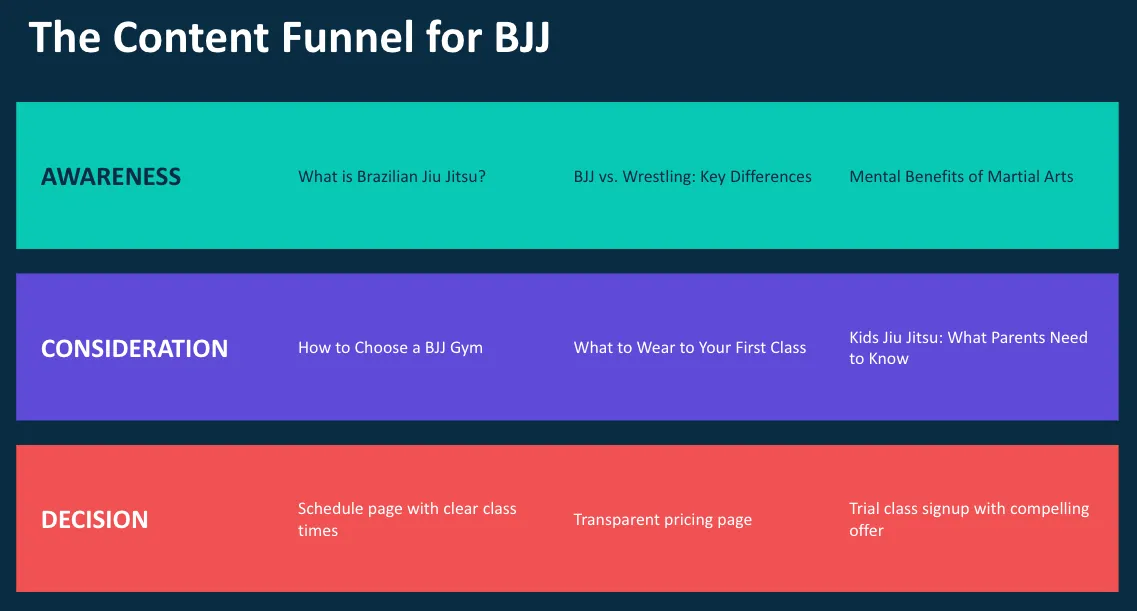
ファネルステージ別のブログコンテンツのアイデア
ここでは、ファネルの各部分から始めるためのアイデアをいくつか紹介します。
アウェアネスコンテンツ:
- 初めての柔術クラスで期待できること
- 忙しいプロフェッショナル向けのブラジリアン柔術のメリット
- 柔術は護身術に良いですか?
- ブラジリアン柔術対レスリング:主な違い
- 格闘技トレーニングの精神的メリット
検討内容:
- ブラジリアン柔術ジムの選び方
- 初めてのブラジリアン柔術クラスに何を着るべきか
- 女性のためのBJJ: 完全ガイド
- 柔術アカデミーに参加する前に尋ねるべき質問
- キッズ柔術:親が知っておくべきこと
決定の内容:
- 授業時間がわかりやすいスケジュールページ
- 価格ページ (透明性を保つ)
- 魅力的なオファー付きのトライアルクラス登録
- 地図と道順が記載されたロケーションページ
トレーニングコンテンツの転用
ここに秘密があります。あなたはすでにすべてのクラスでコンテンツを作成しています。
- 今日のフィルムテクニック: YouTube の動画とブログの投稿になります
- 学生の質問に答えてください。 FAQ ページまたはブログ記事になります
- プロモーションストーリーの共有: 学生のスポットライトになる
- コンペのまとめ: ニュースコンテンツになる
1週間に1回のテクニック説明で、どのエージェンシーでも制作できないほど本格的なコンテンツが得られます。あなたは毎日マットの上にいて、すでにやっていることを記録しておきましょう。
動画コンテンツ戦略
アートは視覚的であるため、ビデオは柔術コンテンツに適しています。
YouTube のタイトルにはローカルキーワードを含める必要があります。
- 「ガードパッシングの基本 | [シティ] でのブラジリアン柔術トレーニング」
- 「初めての柔術クラスで期待できること | [ジム名]」
関連する Web サイトのページに動画を埋め込むことで、ページ滞在時間を増やし、複数のランキング機会を創出できます。
InstagramやTikTokのショートフォームコンテンツは、ウェブサイトやYouTubeチャンネルへのトラフィックを増やすことができます。
コンテンツカレンダーの計画
最小: 1 か月あたり 2 件のブログ投稿 理想: 1 週に 1 回
質は量より勝る。役に立ち、よく書かれた1つの記事は、5つの薄い投稿よりも優れています。コンテンツを季節のトレンドに合わせる:
- 1月: 新年のフィットネスコンテンツ、初心者向けガイド
- 夏: キッズプログラム、フィットネス特典
- 秋: 新学期のルーチン、忙しいスケジュールの大人向けクラス
柔術ジムのリンクビルディング戦略
バックリンク(他のウェブサイトからあなたのウェブサイトへのリンク)は、依然として重要なランキング要因です。
ローカルビジネスパートナーシップ
お住まいの地域の補完的な企業と提携してください。彼らはあなたと競合していないので、両方のビジネスの成功に役立ちます。これらには次のようなものが考えられます。
- ヨガスタジオ
- マッサージセラピスト
- 理学療法クリニック
- スポーツ栄養店
- カイロプラクター
これらのパートナーシップは、相互紹介やバックリンクの自然な機会を生み出します。相互プロモーションコンテンツは、これらの関係を強調すると同時に、貴重なローカルリンクを獲得できます。
コミュニティへの関与
地域社会に参加しましょう:
- ローカルイベントのスポンサー: トーナメントスポンサーシップ、チャリティーイベント、ユーススポーツチーム。イベントのウェブサイトは通常、スポンサーにリンクしています。
- 地元メディアの報道: コンテスト結果、特に子供向けプログラムについては、地元のニュースをご覧ください。ジャーナリストは地域のスポーツ記事が大好きです。
- 主催イベント: 護身術セミナー、オープンハウス、チャリティーワークアウト。これらはコンテンツとリンクの機会を生み出します。
格闘技コミュニティリンク
地元のブラジリアン柔術学校としては、オンラインでの認知度を高めたいですよね。これはブランド認知度です。次の戦略で良い機会を見つけましょう。
- ゲスト投稿: 格闘技関連の出版物、フィットネスのブログ、地元のライフスタイルサイトでは、質の高いコンテンツが求められることがよくあります。トレーニングのメリット、テクニックの説明、地域社会への関与について書くことを申し出る。
- フォーラムとコミュニティ: r/bjj、Sherdog、その他の武道コミュニティに心から参加してください。質問に答え、役立つリソースを共有し、信頼を築きましょう。適切な場合は、サイト上の関連コンテンツにリンクすることで、自然なバックリンクの機会が得られます。
- 機器パートナーシップ: ブラジリアン柔術機器会社やGIメーカーは、ウェブサイトでアカデミーパートナーを紹介することがよくあります。このような関係は、バックリンクやブランドアソシエーションのメリットをもたらすだけでなく、学生に製品割引の可能性をもたらします。
重要なディレクトリ送信
編集監督のもと、質の高いディレクトリに焦点を当てる:
一般ディレクトリ:
- 叫び声
- イエローページ
- Foursquare
- Apple Maps/Apple Business Connect
- ビング・プレイス
業界固有:
- 武道学校ディレクトリ
- ローカルフィットネスディレクトリ
- 商工会議所リスト
業界固有のディレクトリは、トピックに関する権限があるため、一般的なビジネスディレクトリよりも重要です。
ローカル引用管理
引用とは、お客様の会社名、住所、電話番号を他のウェブサイトに記載することです。
優先引用元
以下のプラットフォームで引用を作成:
- Google ビジネスプロフィール (最も重要)
- 叫び声
- フェイスブックビジネス
- アップルマップ
- ビング・プレイス
- イエローページ
- Foursquare
- 地方商工会議所
- 武道協会リスト
- 地元のスポーツとフィットネスのディレクトリ
NAP の一貫性がすべて
名前、住所、電話番号はどこでも同じでなければなりません。
わずかな違いでも問題が発生します。
- 「ブラジリアン柔術アカデミー」対「ブラジリアン柔術アカデミー」
- 「123 メインストリート」対「123 メインストリート」
- 「(555) 123-4567" 対「555-123-4567"
1つの形式を選択して、どこでも使用できます。
引用監査プロセス
Moz LocalやBrightLocalなどのツールを使用すると、次のことが可能になります。
- 貴社のビジネスがオンラインで掲載されている場所を探す
- 修正が必要な不一致を特定
- 新しい引用機会を発見してください
引用監査を毎月実施して、問題を早期に発見してください。
SEOの進捗状況を追跡する
測定しないものは改善できません。時間をかけて自分の業績を見れば、戦略を続けるべきか、それとも組み合わせるべきかがわかります。
必須の無料ツール
費用がかからず、ビジネスに大いに役立つ必須ツールがいくつかあります。当然のことながら、これらはすべて Google のツールです。
- Google 検索コンソール: トラフィックを促進するキーワードと、サイトが検索結果にどのように表示されるかを示します。クリックスルー率を監視し、技術的な問題を特定し、ランキング順位を追跡します。
- グーグルアナリティクス 4: トラフィックソース、ユーザーの行動、コンバージョンを追跡します。トライアルクラスの登録、電話、お問い合わせフォーム送信の目標を設定します。
- Google ビジネスプロフィールインサイト: プロフィールから、リスティングを閲覧した人の数、道順をリクエストした人、電話をかけた人、ウェブサイトにアクセスした人の数を確認できます。
毎週監視すべき主要指標
これらのプラットフォームでは、以下を追跡する必要があります。
- インプレッション: 検索結果に表示される頻度
- クリック数: ユーザーが検索からサイトにアクセスする頻度
- 平均ポジション: ターゲットキーワードのランク付け
- GBPのビューとアクション: プロフィールビュー、ルートリクエスト、通話
- オーガニックトラフィックからのトライアル登録: 最も重要な指標
タイムラインの期待(辛抱強く)
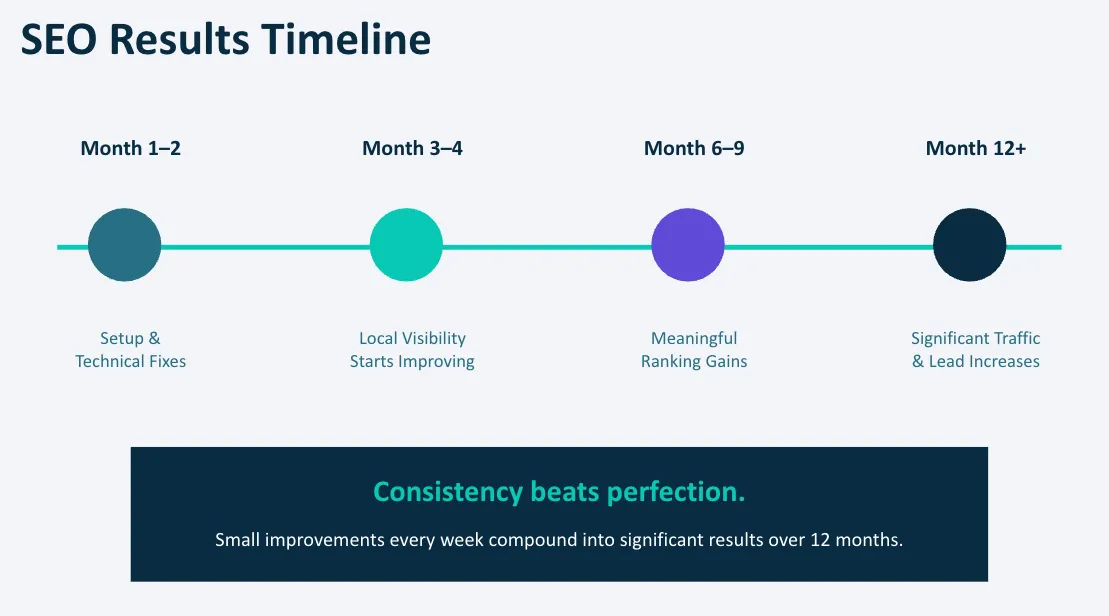
SEOには時間がかかります。現実的な期待値を設定する:
- 1 か月目から 2 か月目: セットアップと技術的修正
- 3 か月目から 4 か月目: 地域の視認性が向上し始める
- 6 か月目から 9 か月目: 有意義なランキング改善
- 12か月目以降: トラフィックとリードの大幅な増加
Google ビジネスプロフィールを最適化すると、結果がより早く表示され、2 ~ 4 週間以内に結果が表示されることもあります。
完璧さよりも一貫性が重要です。12 か月にわたる小さな改善が 1 回限りの最適化の推進に勝ります。
避けるべきよくあるSEOミス
他の人の過ちから学び、それを繰り返さないようにしてください。オンラインでの存在感に大きな問題を引き起こすような「ダメ」はたくさんあります。それをしないでください。
- キーワードスタッフィング: 「ブラジリアン柔術クラス」をすべての文に強制すると、ユーザーエクスペリエンスが低下し、検索エンジンのペナルティが発生する可能性があります。「ブラジリアン柔術トレーニング」、「武道指導」、「グラップリングレッスン」など、セマンティックバリエーションを自然に使用してください。
- ロケーションページ間で同一のコンテンツ: 複数の地域にサービスを提供している場合は、同じコンテンツを異なる地域名でコピーして貼り付けないでください。各ページには、その地域に関する固有の情報が必要です。
- 否定的なレビューを無視する: 防御的に反応したり、批判を無視したりしないでください。正当な懸念事項に専門的に対処し、必要に応じて謝罪し、問題を個人的に解決することを申し出てください。潜在的な学生は、あなたの対立への対処方法に基づいてあなたの性格を評価します。
- モバイル最適化を軽視する: 検索の 78% がモバイルデバイスで行われているため、モバイルエクスペリエンスが損なわれているとランキングが下がります。スマートフォンで定期的にサイトをテストしてください。
競争の激しい市場のための高度な戦術
基本を理解したら、これらの戦術で優位に立つことができます。
競争の少ないキーワードをキャプチャ
大きなSEO対策ができたら、小さなものを追いかけて全体像を網羅しましょう。
- マットページを開く: 「オープンマット [シティ]」と「近くのブラジリアン柔術オープンマット」は、主要キーワードよりも競合が少ないです。これらのページは、追加のトレーニングを求めている既存のプラクティショナー、つまりこれまでとは違うが貴重なオーディエンスを集めています。
- 特定のプログラムページ: 女性向けクラス、競技チーム、ファンダメンタルズプログラム専用のページでは、競合他社がターゲットにしていないロングテールキーワードをランク付けできます。
- 講師紹介ページ: 紹介やコンテストで特定のインストラクターについて聞いたことがある人は、「[インストラクター名] 柔術」と検索することがよくあります。最適化された略歴ページがこのトラフィックを捉えます。
イベントとトーナメントのページ
トーナメントを主催することで、リンク構築の絶好の機会が生まれます。イベントページには、参加者のウェブサイト、地元メディア、格闘技ブログからのリンクが自然と集まります。
今後のイベント、登録、過去のトーナメントの結果に関する詳細情報を含めてください。
音声検索のよくある質問ページ
音声検索のクエリは会話形式です。「柔術の授業料はいくらですか?」「初めてのブラジリアン柔術クラスには何を着たらいいの?」「柔術は護身術にいいの?」
音声アシスタントとの話し方に合った自然な言葉でFAQページを構成します。これにより、注目のスニペットと音声検索の結果が表示されます。
あなたのブラジリアン柔術SEOアクションプラン
上記のすべてが圧倒的に感じることがあります。これを管理しやすいステップに分割する方法は次のとおりです。
ボトムライン
SEOは柔術ジムのROIが最も高いマーケティングチャネルです。一度ランキングが確立されれば、支払いをやめた瞬間に広告が止まる有料広告とは異なり、オーガニックトラフィックには何の費用もかかりません。
競争上の優位性は現実のものです。500の企業ではなく、5~10の地元のアカデミーと競合しているのです。競合他社が口コミだけに頼っている状態で、一貫した SEO の取り組みに取り組めば、あなたの勝ちです。
重要なポイント:
- Google ビジネスプロフィールは最優先事項です。 完全に完成させ、常に最新の状態に保ち、一貫してレビューを生成してください。
- 一貫性は完璧に勝る。 毎週の小さな改善が、12か月にわたって大きな成果につながります。
- 将来の学生のように考えてください。 彼らは「基礎授業」ではなく、「初心者のための格闘技」を探しています。彼らが今いる場所で彼らに合ったコンテンツを作りましょう。
- コンテンツは既にあります。 教えていることをマットの上に記録して、ウェブサイトやYouTubeで再利用しましょう。
- レビューはあなたが思っている以上に重要です。 大規模なウェブサイト権限を持たない地元企業にとって、レビューがランキングの決定要因になる可能性があります。
有料広告、コンテンツマーケティング、コミュニティ構築など、SEO以外のその他の戦略については、当社の全戦略をご覧ください BJJ マーケティングガイド。
今日から始めましょう。ジムをグーグルで検索したり、プロフィールを申請したり、1人の学生にレビューを依頼したりできます。小さな行動が大きな結果につながる。
技術的な悩みを伴わずにSEO対応のWebサイトを構築する準備はできていますか?Gymdeskには、プロフェッショナルなウェブサイトビルダー、リードキャプチャフォーム、メンバー管理が1つのプラットフォームにまとめられています。 無料トライアルを始める それがあなたのジムでどのように機能するか見てみましょう。
Gym management software that frees up your time and helps you grow.
Simplified billing, enrollment, student management, and marketing features that help you grow your gym or martial arts school.


FAQ
柔術ジムのSEOに関するよくある質問
いつものように、ここではさらにいくつかの質問と簡単な回答を示します。