Cómo construir un estudio de artes marciales impulsado por la comunidad
Con

Luke tiene cinturón negro de jiu-jitsu brasileño y es luchador científico certificado, con formación en catch wrestling. Con experiencia profesional en marketing, Luke aporta tanto habilidad técnica como un enfoque centrado en la comunidad a su estudio de artes marciales, con énfasis en la inclusión y la técnica.
Sobre el gimnasio
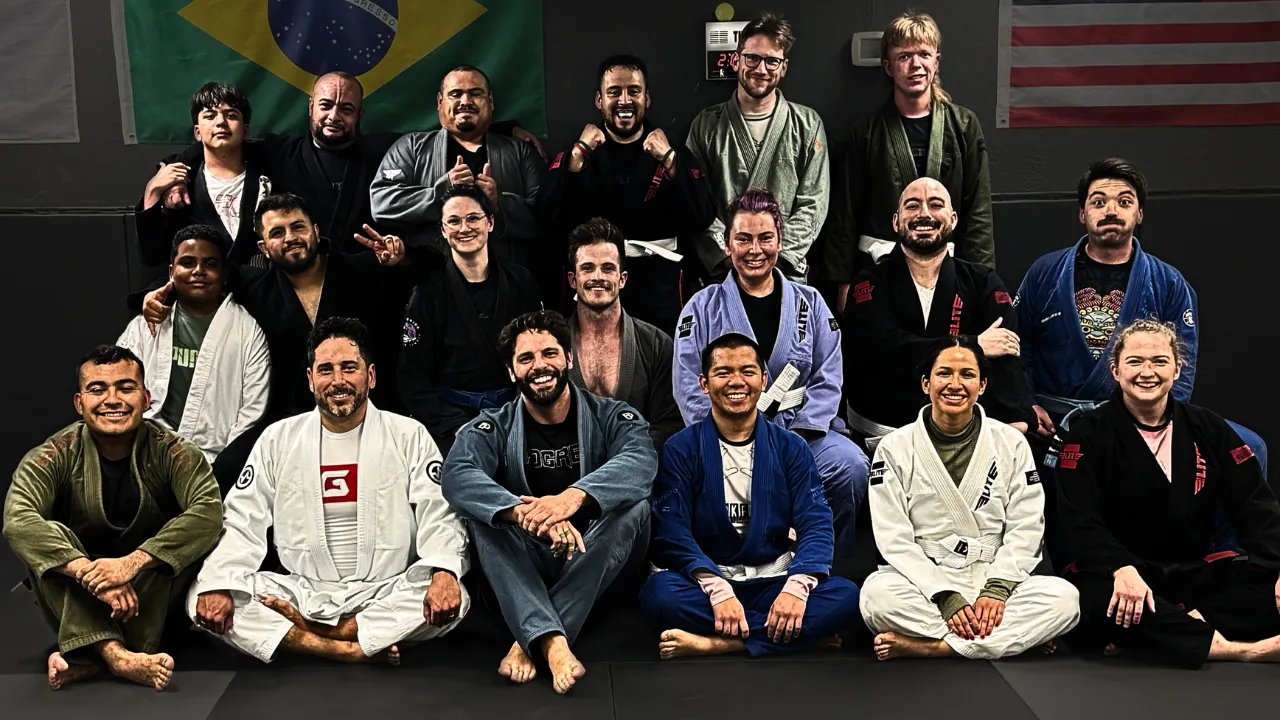
Fundado en 2023, Forte Jiu Jitsu está ubicado en Phoenix, Arizona. El gimnasio ofrece entrenamiento de jiu-jitsu brasileño, catch wrestling y judo, con clases para competidores y para quienes entrenan por afición. Forte Jiu Jitsu organiza con regularidad clases de defensa personal para mujeres y eventos comunitarios. El espacio está pensado para todos los niveles de experiencia y pone un fuerte énfasis en la técnica y en construir comunidad.
📍3055 W Indian School Rd, Phoenix, AZ 85017
📞 603-205-3274
Resumen
En este episodio, Alex Cuevas visita Forte Jiu Jitsu en Phoenix, Arizona, para conocer por dentro cómo el dueño e instructor principal, Luke Boston, está construyendo un estudio de artes marciales impulsado por la comunidad. Luke cuenta su camino de profesional del marketing a cinturón negro de jiu-jitsu, y explica cómo combina un entrenamiento de nivel competitivo con un ambiente acogedor.
Habla de la fusión única de jiu-jitsu, judo y catch wrestling que define el enfoque de Forte, y destaca sus esfuerzos por fomentar la inclusión—como mantener bajas las barreras para hacerse miembro, promover las clases para mujeres y poner la comunidad por encima de las ganancias. Luke también habla de la evolución del estudio, de sus comienzos humildes a una membresía diversa y en crecimiento, y de su ambición de convertir Forte en un fight club y centro de acondicionamiento físico completo.
Gymdesk juega un papel clave en la gestión de las operaciones del estudio, ya que ayuda a Luke a manejar de forma eficiente membresías, pagos y registros de entrada a clases, con soporte al cliente y funciones flexibles que crecen con el negocio. Este episodio es una muestra del poder de la pasión, la inclusión y las herramientas adecuadas para construir una comunidad de artes marciales que deja huella.
Lo que nos contaron
Alex Cuevas visitó Forte Jiu Jitsu en Phoenix, Arizona, y se sentó con su dueño, Luke Boston, un analista de marketing de carrera que encontró el jiu-jitsu durante un divorcio, obtuvo su cinturón negro y abrió el gimnasio dos meses después. La conversación giró una y otra vez en torno a una negativa: Luke no quiere obligar a sus alumnos a elegir entre la competencia seria y un salón acogedor. Arrancó el lugar con recursos propios, con un cuaderno de papel y una app de Stripe, y habla de él menos como un negocio que como un estilo de vida que intenta convertir en algo más grande.
¿Por qué sacrificar uno por el otro?
Luke había entrenado en escuelas que apostaban todo a la competencia y en otras—academias de estilo Gracie—construidas alrededor de los cinturones, el tiempo en el tatami y la comunidad. En lugar de elegir un camino, intentó fusionarlos: un salón donde el miembro que entrena una vez por semana para estar en forma importa tanto como los que buscan medallas cada mes. La técnica y la cultura, sostiene, no son excluyentes.
"Entonces la filosofía aquí realmente es, ya sabes, ¿por qué sacrificarías uno por el otro?"
—Luke Boston, dueño e instructor principal, Forte Jiu Jitsu
Veinte fundadores, mil dólares
Forte empezó casi sin nada. Luke rentaba tiempo de tatami en una escuela de taekwondo del centro de Phoenix por $500 USD al mes, hacía él mismo su marketing en línea y logró que 25 personas cruzaran la puerta el primer día. Diez se inscribieron a $100 USD al mes, con ese precio fijo de por vida; limitó el grupo a 20 miembros fundadores y usó esos primeros $1000 USD para construir. La prueba de que la cultura se mantuvo está en la retención.
"Todavía tenemos con nosotros a 18 de nuestros 20 miembros fundadores hasta el día de hoy."
—Luke Boston, dueño e instructor principal, Forte Jiu Jitsu
El arte brutal
Luke trae dos linajes—jiu-jitsu brasileño y catch wrestling—y en Forte además integran el judo. Tiene cuidado con cómo usa el material de catch cuando rueda con compañeros que no lo conocen, porque las dos artes parten de intenciones opuestas. Como él lo dijo:
"la idea es que en realidad se llama el arte brutal porque en el arte suave tú te mueves alrededor del oponente, y en el catch wrestling tú lo obligas a hacer lo que tú quieres que haga."
—Luke Boston, dueño e instructor principal, Forte Jiu Jitsu
Lograr que vuelvan
Pregúntale a Luke cuál es la parte más difícil del negocio y no es inscribir gente—esa parte, dice, es fácil. El verdadero trabajo es el mes siguiente: la diferencia entre un miembro que se va alejando y uno que sigue viniendo. Forte mantiene baja la barrera de entrada, recomienda a los alumnos nuevos un gi de $50 USD en Amazon en lugar de obligarlos a comprar el equipo de la casa, y siempre tiene mujeres en el tatami para que quien llega vea a alguien como ella.
"mantener a alguien aquí y extender eso, supongo que sería el valor de vida del cliente, si hablamos de negocio. Pero, siendo realistas, mantenerlos aquí, que quieran volver semana tras semana, es lo más importante que puedes hacer."
—Luke Boston, dueño e instructor principal, Forte Jiu Jitsu
Pasar por el fuego
Forte significa "fuerte" en italiano, un guiño a la herencia de Luke y, más que eso, una palabra que adoptó hace años en lugar de los propósitos de Año Nuevo. La plantea como un estilo de vida basado en hacer cosas difíciles—powerlifting, jiu-jitsu, cualquier cosa que te exija seguir cuando duele. El gimnasio, dice, es solo el primer paso hacia un movimiento más grande.
"no importa qué quieras hacer, la única forma en que vas a mejorar es pasando por el fuego."
—Luke Boston, dueño e instructor principal, Forte Jiu Jitsu
Un software que crece contigo
Con sus primeros 20 miembros, Luke manejaba todo con deslindes de responsabilidad en papel y Stripe en su teléfono. Necesitó un sistema de verdad cuando quiso dar un paso atrás y dejar que su personal se encargara del lugar, y encontró Gymdesk en un hilo de Reddit—ayudado por enterarse de que su fundador entrena jiu-jitsu. Lo que lo convenció fue un precio que escalaba con el gimnasio en lugar de cobrarle a un estudio recién abierto como a una academia establecida, respaldado por un soporte que respondió una duda sobre pagos por correo en 20 minutos.
"Ser flexible y poder, eh, crecer conmigo es lo mejor que, que ofrece."
—Luke Boston, dueño e instructor principal, Forte Jiu Jitsu
Lee la transcripción completa
Lightly edited for readability. Speaker labels are omitted because the source recording is not diarised; quotes attributed elsewhere on this page were verified against context.
What's up? This is Alex. I'm over here at Forte Jiu-Jitsu in Phoenix, Arizona. Looking forward to checking out the class. Come on in, let's check him out. Hot. Last four, all together. Ready, and set. Four. Good. Make sure you try to do it on the ball of your feet. Okay. Ready. One, two, three, four. Good job, guys. So Alex Cuevas here, sitting with Mr. Luke Boston at Forte BJJ in Arizona. In Arizona, yeah. In Phoenix, Glendale, yeah. Yeah. Just did a class. We did a little combination of judo, and then we did some fancy chokes and some rolls, taking the back.
Amazing class. Well, one of the things I would say, like, I've gone to a lot of classes. I'm sure you have as well, different schools. And as I get into this role here at Gymdesk, it's been fun to go to different places, and there's something really special about this place. You can just feel the energy, like a camaraderie, and just felt very family, but fun. Yeah. Like a really good combination where, like, oh, I want to come back. I mean, tell me a little bit about that.
How do you foster that energy in your school? Well, I think, you know, what's most important for me is the – when I go to schools, I notice a couple things. Either they're very competition-oriented, and they care about how well they do in competition, and they just go all in on that. And then there are places that are more family-oriented or, like, you know, like a Gracie School, for example, where they're more family-oriented. They're all about, like, getting belts and the time there and, like, building a kind of community in a way.
And I thought, why not? Why can't we have both? And so, you know, coming from the background that I come from, which is mostly just being about personality, having a first-time personality higher everywhere I've been. So I wanted to kind of put both together. So one of the things that we have here is we have a place where people who are brand-new, who have come here, who have never competed and never want to compete. They're here for a day a week, but they come here for the fitness aspect and to be around community.
That's as important to us as people who, every month, we're competing, and we're out there winning medals and going as hard as we can. So the philosophy here really is, you know, why would you sacrifice one for the other? If you're going to be a black belt, regardless, right, you're coming here to do something, to grow, and you want to be a black belt, why can't you, whether you want to compete or not, be able to? Like, know all the technique as perfectly as you can, as well as you can, and be able to execute it at a high level.
So the technique is just as important to us as the place that we foster and how everybody feels with each other. Yeah. And, you know, speaking of the place, too, can you tell us a little bit about your story? I know you've been in this particular building, like, less than a year, right? Yeah. So I'd love to know more about you and, like, maybe a little bit about your background in martial arts, and then segue into, like, oh, I want to, you know, do business, and what do you do professionally, and that kind of thing.
Yeah. So my whole professional life has been in marketing, working at agency and working in, like, marketing science and data analytics, really. And so I've been a corporate guy my whole life, but about seven years ago, I was going through a divorce. I lived in Boston, and I found jujitsu, had no idea what it was, Joe Rogan podcast, you know, so why not? I tried it out, fell in love with it, was terrible at it. I was a power lifter, so I didn't know anything. I just muscled through everything.
And then I moved here in 2020, and I found this place called Black Flag. It's no longer around. It's in Glendale, probably about 15 minutes away it was. And their background was in jujitsu, but also catch wrestling. So it was less about just being pure jujitsu, and it was about jujitsu, catch wrestling, and judo all mixed together. They called it hybrid grappling. And so I got really into the catch wrestling aspect of it, as well as working toward my black belt in jujitsu. So I was on the mats twice a day, every single day, around my work, around my job, my family, everything.
And then I got my black belt, and I became a certified scientific wrestler, which is the catch wrestling gym that they have. And so I basically have two lineages now. I have a catch wrestling lineage and a jujitsu lineage. And then two months after getting my black belt, I decided to open this place up. And so I found a taekwondo school called True Taekwondo in downtown Phoenix. And I started, it was $500 a month. I had a month to raise $500. That wasn't from my job.
So I started doing my online marketing, stuff like that, and got 25 people to come day one that I didn't. Wow. Yeah. So we got 25 people to come, went through a very basic class. And at the end, I gave my sales pitch, and we got 10 to sign up. So they're locked in at $100 a month forever, founders. So I have $1,000 that we had that we could start actually working to build in. And then from that point on, we got another 10. And so we capped it at 20 founders total.
And then two months later, opened this place. And so as we opened this place, we never really wanted to expand in terms of our classes and our coaches. I was the coach. Yeah. And then we found Mina, who actually comes from Gracie Baja. Okay. So the weird thing about that is that Gracie Baja is like the Gracies. And then catch wrestling, the most famous one is named Sakuraba. And he's actually part of my lineage there. So I'm the Gracie Hunter. She's the Gracie. So we put our skill together to kind of not only foster a really great community, but also teach pure jujitsu that she knows, points, whatnot, and then teaching my jujitsu, which is a blend of that and wrestling and more aggressive and heavy weight and stuff like that.
So she came on, already was a great fit. We opened this place. And then we've been just slowly building it. And, you know, we've done a lot of things from we have pink rash guards that we did for Breast Cancer Awareness Month. We did tap cancer out, which is like you raise money for and all the proceeds go to cancer awareness. And then also every single month we have a women's only self-defense class. So it went from just this thing that I really wanted to do jujitsu to I was really finding my passion within the community and trying to make everything better.
And I think that's what's really fostered our growth. So we kept everything true to being really, really good technique, but blending our personalities together and just the fact that we actually care about our suited base. We still have 18 of our 20 founding members that are with us to this day. So it's been an incredible ride, very checkered, and we've met some incredible people along the way. But it's like that's been the most fulfilling part. And so basically for the past year, it's been just kind of this, not financially always, you know, it's always ups and downs.
But just like the fulfillment that I did from it's been incredible. Yeah, that's awesome. So I had my background when I was a kid. That was like the first thing I ever like wanted to do or as a young adult, I said, I want to go do martial arts. Around me, there was only Taekwondo. So I went up that path and then I was teaching. And my background in martial arts, when I was teaching it, I was like 16 or 17. I had an annex school where I had to carry this little blue box for the memberships.
It was all super old school, right? Pieces of paper, I'd collect checks, teaching kids at this place called The Grange up in San Jose, California. So I did that for a lot of years. And then I saw UFC and I'm like, oh, man, I have like zero throwing game, zero ground game. And then because I'm in San Jose, I didn't realize San Jose State was a massive judo, like bunch of champions. So I went in from being an undefeated Taekwondo kid, black belt, to a white belt in judo and getting crushed by black belts like left.
It was super, super crushing. Yeah. But, you know, I think here I am walking around with a white belt now. And it's what, 25 years later, because I've, you know, I've been doing the thing, the career thing for a while. And then family, you know how that works, right? And then I got into jujitsu as well. And so I know the lineage there, definitely know the judo, but catch wrestling, I've heard this term. I heard of Sakuraba. It sounds like that's a UFC guy, right? He was, yeah.
Okay. So tell me a little bit about that. I don't know much about that art. Where did it come from and that kind of thing? Yeah. So it came from the UK. Okay. And it was miners and not miners like his, but miners like mining. Oh, wait. Like coal? Coal miners, yeah. And they would start just wrestling for money. And then it became what they do when like the wrestlers went around in carnivals, they would go anywhere and they would say, who wants to fight? You know, if I'll submit you, if you win, you get $500, whatever it is.
And so people would wager that. And there was a very, and now it's what like WWE and all that stuff is based off of. That's all the theatrics behind it. But a lot of the stuff that they do is actually rooted in real, real catch wrestling techniques. And like the idea is it's actually called the brutal art because the gentle art is you are moving around the opponent and then catch wrestling is you are forcing them to do what you want them to do. Okay. And so it's more, it's more about like, there's a lot of pain, a lot of rubbing induced pain, things like that to make them do what you want them to do.
In catch wrestling rules, there are, it's 12 minute rounds and you can get pinned or submitted. So you have to stay off your back. It's all no-gi and it's, yeah, it's really fascinating. It's a whole different martial art, I think because of the brutalness aspect of it. And the fact that, um, a lot of the people who are in catch wrestling, they kind of bastardize the sport a little bit. And so it's no longer, um, it's kind of a dying art. And so, but what you'll notice is like, if you dive into catch wrestling, you'll see a lot of big grapplers, no-gi grapplers.
They are all, um, really starting to take on a lot of the catch wrestling stuff. Like Craig Jones, one of the most famous jujitsu people in the world, he, um, very accomplished as well. He has two whole DVDs, instructionals about pinning and all of them have been around hundreds of years because it's from catch wrestling. Yeah. And so like, I think jujitsu wrestling, catch wrestling, all this stuff is all blending into basically one art called submission wrestling. And that's what no-gi is becoming. So, um, I basically do like the pure form of what a lot of submission wrestling is becoming.
Um, and yeah, so my lineage goes back to a guy named Billy Robinson, who you can actually, um, find a lot of videos of him. And he was a monster, but, uh, he, when he wanted to become like work it out and become more famous and whatnot, he, um, went from being undefeated to training like the rocks dad and stuff like that. And so like, he would be, that would be where it came from. And then it turned into WWE and now it's huge in its own way.
But I would say the most famous catch wrestler that everybody knows is probably Abraham Lincoln. No kidding. Yeah. Yeah. For a hundred percent. Wow. Yeah. And he was a big man, right? He was a big, he was six foot something. He was a big boy. Yeah. Yeah. Yeah. So he was, um, I think they say he was undefeated. I think they do, but he was a catch wrestler. Yeah. Wow. Yeah. A lot of presidents have done a lot of martial arts and he was the only catch wrestler.
That's amazing. I know of at least. Yeah. So, um, as a guy who has experience with, uh, jujitsu, catch wrestling, it was there anything else? Uh, judo. Okay. Judo. So you have all three. How does that, how does your brain work? Like if you're rolling with somebody, do you see, like, are you in like jujitsu move a mode? Right. So you're only thinking those things or like if the catch wrestling opportunity presents itself, I'm just wondering how that works with like, you know, when you like speaking in language, right?
Like I speak Spanish and it's two different parts of the brain, understanding and speaking. So is there anything going on like that when you're, you know, rolling around and you see opportunities like you have to switch gears and I do switch gears. I'm a good guy. I'm very nice in that way. So my coach wouldn't like it, but cause he sees an opportunity to present himself, he's sending it. Yeah. But, um, I, anytime I roll with anybody who doesn't know any catch wrestling, we have a bunch of people here who actually came with me from my old school who know it, but if they don't know it, um, I am full jujitsu and I have to think about it because there's a lot of stuff I want to do.
Like I, my hand goes to, and I settle down and go for the choke instead of the neck crank, for example. Um, okay. So yes, I'd say that my, I've evolved to almost being 90% jujitsu. If there's like a catch thing, like what I taught today, where if you're in turtle and you put your arm across to get kind of a neck crank in a way, you're forcing them to look this way and grabbing your arm and they can't turn around and you can take them and fall over their shoulder, for example.
So there are stuff I do, but I am extremely gentle about it. Yeah. Um, and you're gentle because if I'm doing jujitsu, I'm not expecting to be like hurt in that way. Exactly. Yeah. The benefit for me, um, is not that I know all that stuff and can get a submission because that's not fun to just get a submission any way you want. Um, the benefit for me is that if somebody in a competition or anywhere else neck cranks me or does something that would be very catch wrestling, that's considered a dirty move in jujitsu, I'm used to it.
Yeah. Like someone could twist my neck over all the way like this and just kind of hold it like that. Um, and I'm not going to tap. It's not going to scare me. I don't care. I've been there a thousand times. Yeah. And I think that's the benefit is it's really hard to be more than anything else. Yeah. Yeah. Got it. Um, so, you know, we heard the story about how you started this place and, you know, what are some of the learnings that you had along the way?
You said it was a checkered, you know, you've had a checkered, like, you know, almost a year. Um, what are some of those learnings? And with that knowledge, if someone else was going to open up a gym, are there like, Hey, best practices, you know, do this or that? Yeah. So, um, I would say the biggest expense that I've had, I'm just going to start like tactical. The biz, the biggest expense I've had is our mats. I wanted competition mats. I got, um, Fuji mats and they're based out of, um, New Jersey.
So the shipping on those alone is enough to fill out this entire space, which is why our mats aren't as big as we want them to be. Cause I want them all to be like, if you step on these mats, you know what a competition mat feels like and you're used to it, you know? So that's been the biggest thing. So if I were to start over, what I would probably do is find a more local one. That's kind of matches a Fuji thing. And then I'll buy that.
Cause I could definitely build this out more because for us, more mat space equals more money. That's like, that's what we need. If this whole place could be mats, we know we could stay here for a while. Yeah. Um, that's, that's been huge. But the other thing, um, that I think is the most important is probably community and what you bring to people. So, um, it's one of those things like where you can have people coming in constantly and you can sign them up. No problem.
They take a class. They love it. They sign up and they're here, but keeping somebody here and extending that, I guess, lifetime value would be what it is if you're talking business. But realistically keeping them here, wanting to come back week after week is the most important thing you could possibly do. Having somebody come and then next month not want to come back is a lot different than somebody coming in the next month. They have to quit cause they're going away. But we've had that a few times where somebody is like, man, I'm really sorry.
I can't come. I'm like, no problem. Um, and then six months later, they'll come back cause they remember that, you know, I'm like, you're welcome back anytime. It's cool. Um, and then we make the barrier to entry really low, which I think is really important too. So somebody starts, uh, there's other places out there where like they care about your gi color. You have to wear their stuff. Um, you have to buy their gi. So you start, you pay full price. Sometimes there's a signup fee and then there's the gi fee and there's all this stuff for us.
We give you, uh, 60 bucks off of your first month and send you a link to a gi that if you want to buy, you don't have to, it's not even ours. It's just from Amazon, send you a link to a gi that we love. Um, and you could pick your color and it's 50 bucks. So really, you know, we're cutting that so that you can get any gi you want. And then the next month it'll start up full price. Yeah. So making the barrier to entry super low, um, making it so that when people come here, we always have women on the mat.
We have, um, when we first started, I don't know where we're at exactly right now, but when we first started up until three months ago and I checked, we were almost half women. That's amazing. Yeah. Yeah. So that making them all feel comfortable, but also making them want to come so that when somebody comes, they see somebody who's like them. I don't care who comes in the day because I know that on that mat, there's somebody like them. We had 15 year olds tonight. Yeah. We had 40 year olds.
You had everything, you know, and we had people who left to go back to work. We had people who work at a desk job all day. We have everybody. So when you go there, um, fostering community that everybody loves, everyone feels included, everyone feels welcome. But also, um, like you see yourself almost and you're like, there's no reason I couldn't do this. Like getting in the door is the hardest part. Once you're in the door, we want to make sure that you feel like you can do it and no pressure tactics to sign up.
You don't sign up. That's okay. I promise you that's okay. I want you to be here for the long run for you. But, um, if you want to sign up, I don't want you to have any reason not to. Yeah. You know what I mean? Yeah. And it, uh, you know, I said this earlier, but the feelings, the combination of feelings that you get when you're in the class, there's like a feeling of, okay, I'm learning. There's like the, uh, I don't want to say, I want to say brotherhood, there's females there too, but you know what I mean?
Like a family feeling. And then there's like a humor feeling. And then there's like an entertainment feeling and it's all combined into once. Like I said, it's very unique that you got here and it, you know, it's charismatic, you know, instructor that obviously makes a big, uh, difference, but, um, it, this is something that you're intentionally doing, right? It's not just natural. Is that like you're, I mean, even your, uh, new black belt, I'm sorry. What was her name again? You know, like she also, she's having fun.
You guys are having fun with each other and you can tell it's like, it's a really cool energy. Um, let's transition to this. I'd love to know this is your, uh, logo. Yeah. That's one of them. Yeah. We have so many. Yeah. All right. And, but the word forte, um, can you tell us a little bit about that? What, what it means to you? And yeah. Uh, so it means strong. Strength in Italian. Um, and that's part of my heritage. So like, um, I've always really leaned into my Italian heritage in general.
Um, and I've always, man, it's always been one of those things where I've always wanted to push myself regardless of what I'm doing. And I wanted to find a word for it. And I think it was probably four or five years ago that I went from having new year's resolutions to new year's like words. What's a word? What's a word to encapsulate yourself? And then forte became it. Um, and then like the forte lifestyle. And then it kind of divulged into just getting bigger and bigger.
I think jujitsu is one of the hardest things you could do used to power lift. That's really hard, but it doesn't really matter because I mean, if somebody wants to be a bodybuilder, I cannot eat the same thing for 16 weeks and dive down and get on stage. You know what I mean? So like, no matter what you want to do, the only way you're going to get better is going through the fire. Um, so forte, uh, it's trying to, it's more of a lifestyle more than anything else.
So, you know, I don't really push it. There's no hashtag for it. There's nothing crazy for it. But like this gym is only step one. You know, I, what I want forte to become is like what like ADCC is or like, which is like the biggest grappling competition in the, uh, in the world at the moment. Um, or what any of these other grappling things are, I want it to be like gyms that all give this kind of feeling that as much as I can without watering anything down, which is really tough.
That's like a lifelong mission. Um, having like high quality, uh, like rash guards and things that I could also come out with and just making it this really big, almost movement, you know, and it's really important to me because I think that people who do hard things are, they're just, they're better for themselves, for them, family, for their community, for everything. So that's, um, that's kind of where that came from. The word is forte that's been around for probably four or five years. And this is how it's so far manifested itself.
And that's also why I didn't want to take in any outside funding. Um, I wanted to just send emails and see where it took me after a year. It took me here and I can't wait to see where we go. Yeah. So what's the, uh, the end goal, like the two year plan, three year plan, what you're trying to get to a certain membership. I know you want more mats and all that'd be part of your journey, but what are you looking for where you feel like, oh, great, this is success.
We can hang out here for a little while. Um, so I want, it's going to go from Forte jujitsu to Forte fight club. Okay. The goal is to get a nice big space, um, preferably one near downtown Phoenix, which is where we started out and we can get people from all around Arizona, get it to, I don't really care how many members necessarily as long as we can sustain and I can put all of myself into it because right now it's this and my job. Yeah.
Um, so if I can get to the point where I can put all of myself in it, that's going to be fantastic. Um, and I want it to be this, just this big facility that you can go in, if you go to the gym, you go to the gym. If you go to the mats, you go to the mats, there's a boxing class, there's judo. Like before, uh, the guy who teaches judo, we have a Brown belt judo instructor. He's also on the boxing commission in, uh, in Arizona.
Okay. So he teaches boxing right before that class. Oh, wow. So what we want to do is I want to be able to basically build something huge that I can pour myself into. That's like anybody who comes, there's something for everybody, but also I could take care of all these people who are here, um, night after night for free helping me out, you know, because when we come here to this, uh, to this facility, no matter if it's Mina, Beto, um, Corey or anybody else, we're all here just for free for the love of the game.
And yeah, so I want to, I want to give back to that one day. That's awesome. And so for the guest who arrives into your, you know, future space, you're basically giving them a gift of different modalities of movement depending on what they're gravitating towards. That's it. So you also like literally want to gym with weights. So yeah, go left, you get a gym, go right. You get the martial arts space. Oh, that's beautiful. Yeah. That would be incredible. And then, you know, I would love for it to be like state of the art, like with a sauna and all that.
Yeah. That would be excellent. Yeah. Yeah. Yeah. So basically the things that you enjoy doing, you want to be surrounded by it so you can be in your element and exude your passion. And if I could do that and I can pour myself into building something incredible and then when I die, it's just a, it's like a, it's Luke right there in a building. Like that would be incredible. Just leaving something and, but I don't want to just be me and be like selfish about it.
I want to be something that's useful that people look forward to going to. That's like changing the way that martial arts is, you know, none of the ego in jujitsu, none of the ego in any of this stuff. They go there and they're getting what they're getting in there just in a bigger, more state of the art space. Yeah. That's beautiful. But it's a great legacy to aspire to. I guess transitioning to your experience with Jimdesk, I want to know, like, how'd you find us and, you know, how was it getting started and, you know, that kind of thing?
Yeah. So I was doing everything out of a notebook for my first 20 members. And then when I literally paper, yeah, paper, yeah, paper and paper and stripe on my phone. That's what we were getting by. Okay. Um, and then I needed to, um, get like, uh, not, not just a CRM, but something that I can log people in and have everything because, um, we had paper waivers of course. And then we have, um, as you build a space like this, and if I can't be here every day, like I get to go on vacation and have people run this for me, I got to know who's coming in, you know, we got to make sure we keep track of all that.
So I had to find something. So I was looking online for different places, different things. And, um, you know, there's like Zen planner, there's all these different, uh, direct competitors. But I think what really made me come to this was I went to like a Reddit post and I heard about like, they're like, Oh, by the way, the person who built this does jujitsu. I'm like, okay, that's a good start. So I went to it, read it. And then the tiering for the payments, they are, they're perfect for me.
You know, they, it grows with you. So as I grow, um, and I have to, I get like over, I don't know, 50 members, then I have to get any other tier as opposed to having this tier where it's like, I'm paying so much money because we're starting from nothing. I'm paying so much money and it's say zero to a hundred members, but I'm paying double what I'm paying now. You know what I mean? Being flexible and being able to, um, grow with me is the best thing that it offers.
So when I saw that, I was like, yeah, immediately signed up and then signed up, did the trial, started going through the payments. Um, and then I realized there was a lot more functionality. I didn't know and I had to get the setup and, um, I had to refund somebody and I was afraid that if I pressed the button, I was going to charge them again. So I got on the call with customer service and, um, I was actually an email. It wasn't in the call.
I got an email, emailed them, they emailed back 20 minutes later, had the solution. Beautiful. So, um, that's, what's really important to me is like more than anything else, customer service, because in the same way, I want to make sure that, um, it's all seamless here as well, like, I don't want to accidentally charge somebody. I don't want to do any of this. So, um, before I do something, like if I need to charge somebody in 30 minutes, I know that I can reach out to the customer service and they got back to me into one.
Like I was, it was perfect. So I think all of that together, I was like, yeah, these are the guys for me. And then, um, it's really, it's a sticky business. So like you guys really got in there. I got everything integrated and the more stuff I get integrated, I'm like, I don't think I want to leave probably it. So yeah, here I am. Yeah. That's awesome. And, you know, uh, a special shout out to our founder who's still with us and, uh, he wanted to go back to the original inspiration for starting the company, which was product.
So he's now our chief product officer, black belt and jujitsu, um, really passionate about the sport, but also like he's had, I don't know how many conversations with folks like yourself, like 10 years ago, right. Before he got going and we, you know, he was aware of the competition. There's some goliaths out there as you probably know. Um, but he's like, I think I could do better. And so he's been doing this sort of, uh, custom to what the needs are of this particular, you know, customer base, which to me is like, I feel like I won the lottery, man.
I tell you, cause I have a lot of reverence for, you know, yourself and just by the sheer nature of being a martial artist and having a lot of respect for you and what you've accomplished. And I also love the fact that you're a customer. So it's like, dude, this is a treat, man. It's super cool for me. So I'm in, I'm having a blast and, uh, and I love that you invited me in today. Um, uh, yeah, I mean, I can, can we give a little tour of your spot?
Yes. That's a, all right. So walking in the spot here, what do we got on this side? Yeah. So right now this is nothing, but what we're going to turn this into is we're going to mount the TV up here, put some couches, some coffee. Um, and it's going to be where we put the, uh, the parents. So when we have kids classes, they can watch their kids through there, they can't coach from the sidelines. That's the goal. Okay. So that's where this is becoming. Um, and then, yeah, these are all the different plaques.
We have boxing certificates, um, my black belt for jujitsu, as well as my submit scientific wrestling, submission arts wrestling. Uh, so we have all that. Nice. And then right here is where you were having people check in. That's where we check in. Yeah. I have an iPad set up here with Gymdesk on it. I turn it, leave it there and just let them check in. Uh, they said enter the number that we sent to the number. Yeah, exactly. And then you come through here. So we have two bathrooms.
Uh, and then we have our space. The goal is, as you can see, starting from nothing. Okay. All right. The goal is we have these Fuji mats with the Forte jujitsu logo on it. Um, we have all kinds of different flags and we're going to get more flags as well. Uh, and then we're going to extend these mats out all the way to this blue line. Okay. And then from here, we're going to have the rest of these, and then we're going to have a little gym area.
Nothing crazy. Aerodyne bike, the whole nine, and they'll have a little gym section. And then, uh, right there, we are putting one of our, uh, murals that Beto, our jujitsu or our boxing coach is doing. But we also have that one that took me seven days to put together because I'm not an artist. Okay. So that's what I'm most proud of. But fortune Phoenix, that was, uh, that's one of the things that we go by. Our first rash guard actually says fortune Phoenix at the top.
Um, and that's, yeah, that's, that's basically where we are going back, of course, to the sword and the Forte, uh, the Forte way, forging yourself. So this is it. This is our little small area. We have a low ceilings, but you gotta do what you gotta do. Everybody starts somewhere. Yeah, that's right. All right. And if somebody is in the area, uh, they see this video, uh, what, what message do you have for them? Uh, I would say come in here, try us out route for the underdog.
Okay. There's a lot of big places around here. And just like for Jim desk, you know, there's a lot of goliaths for the other dog, stay with us. We've had so many people from around the way, come try us out and then join us immediately. You as a, my first time here, I had an amazing time. If you're in the area, come on down, check it out. Uh, have yourself a roll. You won't regret it.