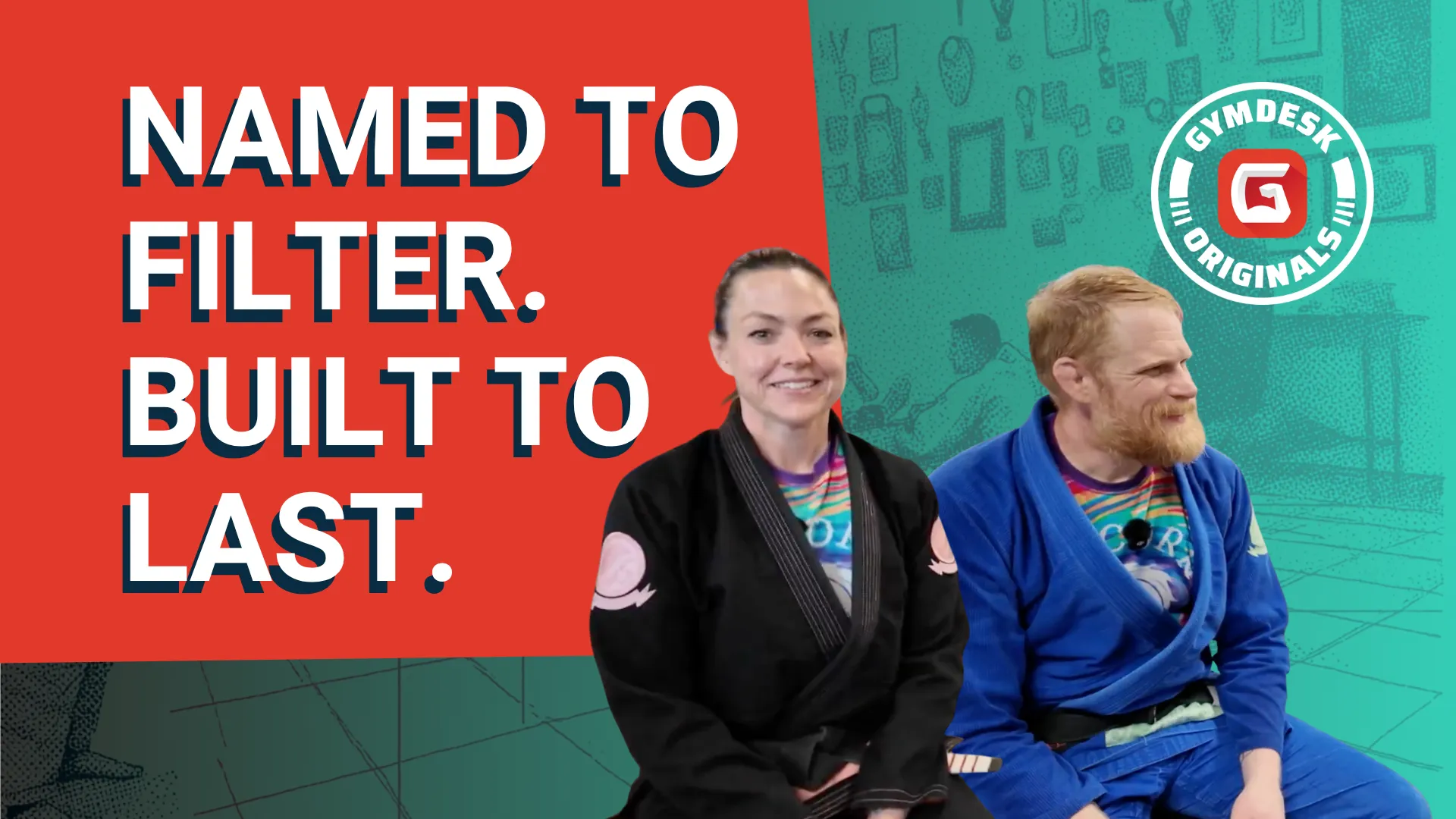
Esta escuela de artes marciales inscribió a más de 300 miembros antes de abrir… así lo hizo

Con

Athan Siamas es cinturón negro bajo Mike Jaramillo y Renzo Gracie. Su experiencia como profesor incluye Renzo Gracie Middletown, Renzo Gracie Union Square y el famoso “sótano azul” de la sede central de la Renzo Gracie Academy, en Nueva York.

Desde que empezó en el BJJ hace más de 25 años, Mike ha competido al más alto nivel: ganó el Campeonato Mundial y el Campeonato Europeo de la IBJJF como cinturón negro y consiguió una medalla de plata en el Campeonato Panamericano de la IBJJF.
Sobre el gimnasio
Renzo Gracie Upper East Side, fundado en julio de 2024, es una instalación de artes marciales de primer nivel en Manhattan. El gimnasio ofrece entrenamiento de jiu-jitsu brasileño para todos los niveles de experiencia, incluidos programas introductorios, clases avanzadas e instrucción especializada en gi y no-gi. Con un fuerte enfoque en los valores de comunidad, la academia cuenta con una instalación moderna, vestidores propios y un ambiente acogedor para practicantes nuevos y con experiencia. Los programas están estructurados para apoyar el desarrollo técnico, el movimiento y la aplicación práctica en un espacio limpio y bien administrado.
📍1264 Lexington Ave, E 85th St 2nd floor, New York, NY 10028
📞 917-336-0339
Resumen
En este episodio, Alex Cuevas visita Renzo Gracie East Side Martial Arts en New York City para conocer la historia detrás de su rápido crecimiento: inscribieron a más de 300 miembros antes de abrir sus puertas. Los copropietarios Mike y Athan cuentan su trayectoria en el jiu-jitsu brasileño, la inspiración para abrir la escuela y su compromiso con construir un ambiente de apoyo y enfocado en la comunidad.
También hablan de los retos de atraer nuevos miembros, la importancia de una cultura positiva en el gimnasio y las tácticas de crecimiento que usaron, como el marketing de base y el reclutamiento de miembros cara a cara. El episodio también destaca su pasión por hacer las artes marciales accesibles para todos, incluidos esfuerzos como apoyar a veteranos mediante iniciativas sin fines de lucro.
El equipo integra Gymdesk en sus operaciones y destaca su facilidad de uso, sus intuitivas funciones de registro de entrada de miembros, sus precios escalables y su automatización de marketing como ventajas clave que agilizan el trabajo administrativo y apoyan su crecimiento. Para cualquiera interesado en las artes marciales o en dirigir un gimnasio exitoso, esta conversación ofrece ideas valiosas tanto sobre comunidad como sobre estrategia de negocio.
Lo que nos contaron
Alex Cuevas volvió a entrar a Renzo Gracie East Side, en el Upper East Side de Manhattan—una de las primeras academias en las que entrenó, hace más de quince años—para sentarse con el instructor principal y copropietario Mike Jaramillo. El gimnasio abrió sus puertas en julio y superó los 300 miembros en menos de nueve meses, pero el número más llamativo llegó antes de que terminara siquiera la obra. La conversación volvía una y otra vez a una idea: el tatami es el arte, pero un gimnasio es un negocio que tienes que llenar desde la calle.
300 miembros antes de abrir las puertas
El local en la 85 y Lexington no tenía letrero y, durante todo un invierno, tampoco interiores terminados. Aun así, Mike y sus socios se paraban en la esquina, señalaban las ventanas vacías y les contaban a los transeúntes lo que venía. Para que la propuesta se sintiera real, convirtieron unos planos en algo que la gente pudiera ver y en lo que pudiera creer.
"Conseguí a alguien en Fiverr para hacer un render 3D y un video de recorrido, y le mostrábamos a la gente en el iPad cómo se vería el espacio, y señalábamos las ventanas y les decíamos que íbamos a estar aquí."
—Mike Jaramillo, Copropietario, Renzo Gracie East Side
Sal a la calle el día que firmes el contrato
Para cuando abrieron, casi 350 personas ya habían dado su tarjeta de crédito para inscribirse en un gimnasio que todavía no existía físicamente. No era la primera vez que Mike lo hacía. Veinte años antes había prevendido cientos de membresías para su primera academia en Williamsburg antes de que el edificio se pudiera usar, y considera esa táctica como todo el juego para un dueño nuevo.
"Así que a cualquiera que esté empezando el negocio, una de las primerísimas cosas, si te doy un consejo: saca el trasero a la calle de inmediato. O sea, en el momento en que firmas ese contrato de arrendamiento, empieza la preventa."
—Mike Jaramillo, Copropietario, Renzo Gracie East Side
El servicio al cliente es lo número uno
Mike ha construido cuatro clubes deportivos y tres restaurantes, así que ha visto a dueños nuevos obsesionarse con lo que no es. El letrero, el instructor principal perfecto, el nombre en la puerta: todo eso, sostiene, viene después de la única tarea que de verdad importa en los primeros meses.
"Tal vez se preocupan por quién va a ser el instructor, y quién, cuál va a ser el nombre afuera del edificio. Pero, al final del día, al principio, después de construir un lugar, lo que importa es lograr que la gente entre por la puerta y cerrar ese trato. Eso es lo número uno."
—Mike Jaramillo, Copropietario, Renzo Gracie East Side
Constructor de oficio
Parte de por qué el lanzamiento fue tan rápido es que Mike no tuvo que contratar a nadie para la obra. Creció en un negocio familiar de construcción y ha pasado toda su vida laboral en el oficio, lo que le dio una ventaja que la mayoría de los dueños primerizos nunca tiene.
"Llevo 40 años en la construcción. Crecí como contratista eléctrico en un negocio familiar … Toda la iluminación de este lugar la hicieron mis muchachos."
—Mike Jaramillo, Copropietario, Renzo Gracie East Side
El primer cinturón negro de John Danaher
Las raíces de Mike en el jiu-jitsu se remontan a 1998 y a la antigua sede de Renzo Gracie, el edificio sin elevador conocido en su momento por la clínica de metadona de los pisos de abajo. Entrenó junto a nombres que hoy el deporte venera, y se llevó una distinción que todavía menciona primero.
"Yo fui el primer cinturón negro de John Danaher. Y cuando él se fue a Puerto Rico y se llevó a los chicos del equipo, yo me hice cargo del programa."
—Mike Jaramillo, Copropietario, Renzo Gracie East Side
El ambiente en todos lados
Mike ha entrenado a peleadores de UFC y ha visto crecer a campeones como Gordon Ryan en sus tatamis, pero insiste en que la pelea casi es lo de menos. Lo que quiere que sienta alguien nuevo al cruzar la puerta es algo que cuida deliberadamente, desde la recepción hacia afuera, y dice que se mantiene sin importar a qué clase llegues.
"El ambiente nos importa muchísimo. Que todos se apoyen. Que todos se animen. Y que sea así todo el tiempo, en todos lados."
—Mike Jaramillo, Copropietario, Renzo Gracie East Side
Lee la transcripción completa
Lightly edited for readability. Speaker labels are omitted because the source recording is not diarised; quotes attributed elsewhere on this page were verified against context.
Behind every gym, there's a story, a mission, a spark of passion that started it all. This is Gymdesk Originals. Real owners, real struggles, and the communities they've built from the ground up. So I'm walking the streets of New York, going to visit another awesome customer I have a little personal connection to. I'm going to Renzo Gracie in the Upper East Side. This is one of the first places I trained in jiu-jitsu, about like 15 years ago, in a different location with Renzo's original location. So I'm super excited to check this place out.
Let's go across the street. There it is right there, Renzo Gracie East Side Martial Arts. Going up to the second floor. Hey guys, if you're ever up on the Upper East Side of Manhattan, 85th and Lexington Avenue, Renzo Gracie's, Upper East Side. Brand new facility, awesome locker room, awesome environment, great community. Please stop by. We'd love to have you. We'd love to have you. We'll be right back. All right, here we are at Eastside, Renzo Gracie. It's so cool to come in again to one of the first places that I ever trained.
I mentioned earlier, I trained at Renzo's, gosh, about 16 years ago when I was a much younger lad. And it's amazing to see the expansion. Would love to learn more about you and your history in martial arts and your background and your relationship with Renzo and all that. Tell us your story. I started BJJ in 1998, just but randomly. I actually joined a karate school three months prior and I got to the yellow belt. In that karate school, there was a gentleman that started in a Waza class, which I guess in Japanese is brown fighter.
They invited me into the class and I was stoked right from the very beginning. He was starting to show his chokes and stuff. And about at the two and a halfway mark, I ended up going to a competition that he competed in New Jersey. There was one team that was dominating the whole event. They were called actually the Renzo Gracie Cyclones. So if you have a little bit of history behind it was the Renzo Gracie Cyclones. I didn't know who Renzo was. I didn't know who the Gracie Jammery was, but I was like stoked to find out.
And I ended up, Renzo at that time felt he wasn't the best business man. For young people, YouTube didn't exist. The way you found facilities was you called 411 or you looked in the yellow pages. In the yellow pages, me didn't have an ad. So I called 411 and they would give me a number. I would call that number every single day for about four weeks. No one would ever answer the phone. I would fall and fall. And to the one point, I asked my wife if we could stop by because I got, I actually got a friend that gave me an ad drill.
I stopped by. I went upstairs on a Friday night. I walked in. It's well known. It used to be called the methadone clinic because the two floors underneath it were a methadone clinic. I walked in, the elevator door opened. As you walked in, there was a small match space with guys rolling. People that know who Sean Williams is, he was the first person to walk up to me and said, hey, what are you here for? And I said, I just wanted to watch. And I asked him how I can take a class.
He ended up telling me, come back on Monday, new class. I showed up there. Matt Serra was a teacher. People that know who Matt Serra is, was a multiweight champion in UFC at one time, beat GFC. Took his class and was just hooked after that. About a month into that, I meet John Danaher, who's a fellow student. And now everybody knows who John Danaher is. And I met him very first time. He showed me a rule and I hit a Kimura. Didn't know what a Kimura was.
Hit it. And he told me, hey, kid, come over here. I walked over there and he said, good job. He said, next time also do this. And that's how that relationship started. Weird thing is, five and a half years later, John Danaher gave me a black belt. I was John Danaher's first black belt. And when he left to go to Puerto Rico and take the kids from the team, I took over the program. I owe a great amount of debt to him. He taught me the game at an incredible deep detail.
He taught me how to think about the game also in an analytical way. I can't rank him enough. And then I still continue to teach the advanced class there. And I'm a big believer in the community and the environment of the school. What the school does and what BJJ does for people. BJJ isn't just Brazilian. He just went fighting for me. It's a meditative, spiritual, accomplish a lot more stuff. Yeah, really amazing story. I just saw on Facebook that John's recovering from surgery. Yeah, he's actually in New York.
On Friday, we went up to see his doctor. On Monday, he got the surgery. Pretty amazing. Johnny, if people don't know, Johnny was born with a bunch of disabilities. The one leg longer than the other. And anytime you have those things, other things start to fall apart later in life because you're out of balance. I just would like to say that I'm a huge fan of BJJ. I'm a huge fan of movement. Even at this age, I'm 55 years old. I watch so much breakdancing and popping videos.
I'm such a big person of movement and fluidity and motion. And that's why I love BJJ. When it's done well, it's done artistic and great. The reason I'm saying this is that people, the young people today see John Bannehill and how he walks. He's the greatest player that I've ever seen the game, play the game. He is that good. People never got to see him in his prime and how fluid and beautiful I'm working. I tell this story. I had a teacher in probably seventh grade.
I wasn't a well-behaved student. I was out of control. I lived on white sugar and the only way they can control me was they would put me next to the teacher and I wasn't glued to her side because I was uncontrollable. And so one time she went, if you really know a little bit of ballet, and I'm not a ballet, but I do know who Mikkelberhoff is. And she had gone to see the ballet and she was a big ballet buff. So I was stuck to her side.
So I would have to speak to her all the time. And she said, Michael, I saw the most incredible thing last night. And I said, what? And she said, I saw Mikkel perform and I went, what was so incredible about it? And it's, he said, she said, it was the way he moved. I can't explain it. The fluidity and the motion and the grace from this and the economy of movement. And that's the way I'd like to describe John Danaher when I would watch him roll in his prime.
It was incredible. The efficiency and movement. And I'm still a fan of movement. And some people that don't know about John and his prime, it's just spectacular to watch. Unfortunately, his body betrayed him at a very rapid pace because some of the limitations were all balancing of his body. Yeah. I was fortunate enough to be in a few of the classes where he was there on the side and such. And he gave me a couple of tips. Probably doesn't remember me. Here I am the same rank 15, 18 years later, but yeah, it was definitely an amazing experience.
And I feel fortunate to have trained in the same place with all these heroes of mine. Frankly, it's really cool. Yeah. So tell us a little bit about you, your journey, and your connection to the gym in this particular dojo. I was 38 years old, 240 pounds, smoky, swing packs, took one and a half to crack the cigarettes a day. I'm just a real mess. But I had seen Jiu Jitsu. I'd watched sports racing in UFC 1 back in 1993. And I wanted to do Jiu Jitsu from that moment until the day that I walked in behind the race and take out of the walk.
The other day I wanted to go, just took about 25 years to walk in the door. Harley Flanagan is a local legend, right? He's a New York hardcore legend. He did my intro class. I knew it was really the hardcore scene, but I knew he was somebody all there. I knew all the morning and Eddie Collins was in there. All the famous people, John Danaher, just starstruck walking in that room. And it was cool to be there. And I started rolling and I just wanted to fight to death on the first day, trying with no technique, just trying to sprawl out of people's clothes forward.
My groin was sore from trying to pinch my legs, clothe and hold people. Yeah. It just got a toe to me immediately. I fell in love with it immediately. Yeah. So then you're training since 18, you said? Since 2018, yeah. Yeah. And then what's your connection here? How did you guys end up teaming up and all getting this place going? Mike, he's taken over two of you classes in the morning at Renzo's before he took over the Nogito game. And I was training with him in the key, Tuesdays and Thursdays, Tuesday Chiqui.
And I liked, I appreciated his style. He talks about movement. I didn't get to see John Danaher in his prime, but I didn't see Mike Luger. Mike is very impressive also. There are a bunch of other people at the gym also, also a fan of move, really. It's an efficiency. There's a weird thing called brace. Yeah. And I would watch and I would think, if I can move somewhat, that would be a win. Yeah, it does now. Yeah. And when you were, what I was imagining, when you said like fluidity and movement, sometimes there's like this gracefulness to Tai Chi or some of these forms that are in guys who roll like that.
And it's just smooth and flows, almost like it's choreographed, but it's not. And that, you have that level of appreciation. Like I know enough to be like, wow, that's, there's something special about what's happening there. Cause it's not forced or muscle. It's just, it's almost like water blending and around them. And then you're not using strength. You're just redirecting strength and you're like misaligning spinal cords and angles. And that's when the game becomes, I don't play chess, but I can understand the idea behind it. And it becomes like human chest of angles and small wedges and precision in like how you miscelate spinal cords.
But it's game becomes really fun to play. Yeah. Even today on the class, it's a basic class and I've learned to choke million, many times over my judo and jujitsu career. But when you go back to the basics again, and then you're like, oh yeah, but if the leg was just a little bit in this position, just that one thing I wasn't doing for the last 10 years. Oh wow. I can get the bow and arrow choke way easier now that I get that leg out of the way.
So it's, it feels like this game never ends. And I'm sure at your levels, you still feel like you're learning too, right? I'm guessing. I don't think you should ever stop feeling that way. Yeah. I, for you people, they come into class and if this is just a suggestion for them, you should always go with that mindset that you're going to learn something because sometimes an instructor can show something that you've seen a million times. It's so critical that you pay attention to everything they do, because sometimes you can walk away with a different perspective that maybe might be something you say, I would never do that.
I would never had that. And when you start to mold your game with adoption of things that flow into patterns that like synergistically, like a beautiful flow of sequences when you adopt and you drop wool. Yeah. Yeah. And they, oh, you chain them together, right? Yeah. When this happens and you flow in. So moving into, you guys were training at headquarters for a long time. Why open your own school or what was the inspiration? Oh, that's a loaded question. Actually started with him. I hadn't gotten my fifth degree, done a fifth degree black belt.
And some of the guys wanted to take me out to eat afterwards. And I had asked him just kidding around and he usually left to work. And that particular day he said he'd come. And I said, you got to go to work. And he said, no, I quit my job. I said, what do you mean you quit your job? And he had a really good job. And he said, man, I spoke to my wife and I just wasn't happy doing what I was doing. I want to do something that makes me happy.
And we left there. I thought, man, like, how could I help him? Because he's a good friend. And when I would do privates, like, he never said no to being my, not being my ookie, like, always helped me out. And that's how we started. And initially we started with a thing called the Happy Pill. Not everybody can afford DVDs. Right. And we just love BJJ so much that it transforms people's lives. So we started to think of Happy Pill where we just would record my lessons.
And then 8th would edit them up and put them in, like, a format so people can learn. And then a young other young lady, Cynthia, who's our manager here, she put together this, like, a PDF where somebody could see the move, then press the picture of the move. And it would take you to YouTube on the day I taught the moves. Oh, wow. So it was really cool. It was all for free. And we just wanted to really help people. And then when we started dealing with joint free seminars and just going around and spreading BJJ to people and knowledge, not everybody can afford a $200 DVD.
And then in some of those DVDs, like, a bigger storyline is not explained of why you do something and when you can do it. They're just showing moves. And then you're supposed to do these moves. And then you don't adopt them because they don't work. And no one's explained to you, like, that does not work blue against black or that only works black to black or that doesn't work when somebody's 50 pounds bigger than you and they're this size. So we tried to explain the game on a deeper level.
And then that led into us doing stuff for a company called Weedify. It's not a company, it's a nonprofit where they take military veterans that suffer some, they don't call it PTSD anymore. They call it military connected disabilities. I think they want to be more inclusive and not just people who have more physical limitations or psychological issues. So what they do is they put a military veteran that qualifies to get a certain score in a BJJ program and they pay for one year of IMTs. On average, it's about $2,800 to get one veteran in.
We also have people that follow up to make sure they're going to class. These are people that are suicidal. I've heard guys tell me stories, gun in their blunt, in the mouth, like, ready to go. And what BJJ does is it creates, like, it does a couple of things. Like, it does something with, is it the pineal land, the Vegas land? They medically have a reason why it helps. But it, because they have an issue, they have a couple issues. They have one where they feel like they have no purpose.
They've lost their tribe. Like, when they were in the military, they had this community. BJJ replaces that community. It also, they have a fear of flight mechanism in it, where they learn through, when they have that fear, that there's an outlet where they can tap. So there's two things. But to get, not to get off the subject, so we met that program. And then with the happy pill and a little bit of, like, internet, like, people finding us on there, we started doing these seminars and raising money.
And total, I don't know, maybe we've raised a couple hundred thousand already. This year, I think we raised about 90,000. The year before, we raised around 90,000. And total, I think the two of us have gotten, like, 90 people in programs. And there are 48 states. I don't know. I think right now they have about 800 people in the program. And there's a waiting list for more people to get in the programs. But it goes to how much money we can raise. We've done so many of them.
We've gone to Fort Dix, Fort Maguire, and just Seattle. Yeah, we've gone to Seattle, Atlanta. We've just all over. Raising, running, and just spreading where BJJ is. We do it for free, as much time as we can to devote to it. But that turned into him one day, darling, why don't we do a gym? And I was like, you want to do a gym? And he was like, yeah, let's, why don't we do a gym? And so the two of us got in the car one day.
We literally drove all over Queens. And at one point, we were about to be in Forest Hills, Queens. And whatever reason, we couldn't make that deal work. And we ended up, a friend of ours, who's also a partner, asked Renzo if we could do the Upper East Side. Because we wanted to be in, I would have loved to be in the Manhattan market, but it was an unwritten rule that you don't enter Manhattan. There's over 100 Renzo Gracie affiliates, but Manhattan was off limits. And Renzo was kind enough to say, hey, you guys can do the Upper East Side.
So it was his idea. It was, in a weird way, his idea in the very beginning, because he came to breakfast that morning when I got my fifth degree. And then it was his idea to do this gym. And here we are today at the Upper East Side. And I want to just, I know I've taught a lot of fighting. I've had a lot of kids in the UFC. And I used to have the guy that was a light heavyweight champion of Bellator and been around many champions.
I saw Gordon grow up in the gym and Nicky Ryan. And they were 16 years old. Nicky was 12 years old. I don't think either one ever went to school. But I saw all of them. And yeah, I get it. The BJJ has a lot to do with fighting. But for us, like the community, the environment, you come into the Upper East Side, and this is how we run the gym. The vibe matters so much to us. Like that everybody is supportive. Everybody is encouraging. And it's like that all the time across the board.
I know the gym has, I know what the art revolves around fighting. To me, it has nothing to do with fighting. It's meditative. You also get endorphins released from exercising. I say sometimes when I'm teaching class, I yell out in a comic way. I yell out, you want to get good at fighting? You want to look good at the beach? You want to lose weight? Happens right now. And when you're pushing those rounds, you get so much benefit out of BJJ. I had my nephew. He goes to the University of Pittsburgh, and he came into town, and I asked him to come to the gym.
And I wasn't going to be there. And I'm a presence at the Head of Grace headquarters. I've been there for so long. Everybody knows. And he said to me, he didn't show up. And I said, why didn't you go? And he said, yeah, I was just so nervous to walk in there. And I went, you wouldn't know. Why? But I've been there so long that it's not, you just get used to it. And I said, what are you nervous about? He said, man, it's intimidating to walk in there.
And I thought, I was like, wow, you know what? You're right. And so I encourage people. It's not an intimidating thing. Like, you got to, I know in this beginning, you're like, man, I don't know how this is going to go. Am I going to get beat up? And so, come try it out. It's incredible what it can do for your body, what it can do for your mind, what it can do spiritually. I've, you know, I've, I've found that over the course of 25 years, like, and he's a perfect example of this is like, yeah, I have childhood friends, but there's no friends like the bond that me and him have.
Like, we have tried to kill each other on the mat at times. And I know that when I'm outside and I need something or I'm in trouble, like, sorry, I could get emotional about this. I could look to my left and I know that he would be there. And so I just encourage people to try it. It's a, it's a really, really beautiful art that transforms your life in many, many ways. So my question, it's related to that. And you said it was your cousin or your nephew.
I'm sorry. Nephew. Your nephew. Yeah. I'm sure there's many people like that. And you had, you're stating that it's important to you get the culture, the feelings. So brand new person, never done any jujitsu. They're in the area. How have you designed this for them to feel when they walk in here? What is it that you're hoping to have them feel? Our front desk people are all carefully selected, right? I don't, we don't want people who are looking at their phones and aren't really interested in the person who walks in the door, right?
Everybody, everybody who's here loves jujitsu, cares about the environment, they care about the vibe, and they all want to be here. Beyond the same vision, right? It's, of course, everybody here is one of my students, right? We're all from the morning class and everybody has the same vision and the same role, right? We've also structured the classes in a way that I think for an academy with one room, I think we've done a pretty good job of separating, like, the introduction people from maybe the more explorers players.
Whether it be with, like, a foundations program for leg locks followed by an all-levels class or splitting the room into groups where, like, maybe a newer group will focus on, like, the fundamental foundations of the position of the philosophy of where you need to be versus the other people who work on one of the technical aspects that may be over the head of somebody who's just walking in the door, right? Because it's hard, jujitsu's hard, right? Like, we practice and we're doing, and even I forget sometimes, like, I'm doing these things, and for me, it's easy, but I spend hours after class practicing these movements.
These people are just walking in the door for the first time, and it can be frustrating when you see this guy who just whoops his hips and does this thing where I say, I don't even remember what I'm supposed to move my hand. How am I supposed to move like that, right? And it can be very overwhelming, right? I think being able to parse the class like that and break them up into different groups and keeping, like, that's a mentality of what most people are new, and you have to, like, you can't just tell them, like, shrimp and flip your hips.
They don't know what you're talking about. They have to break things down for them, you know? Yeah. Yeah, we're really encouraging with member retention so important in this because the attrition rate is so high that we're really critical in making sure that they're learning the art because everybody, you get the happy pill by success. Like, that makes you feel good. So, that could be just, that doesn't have to be that you dominated or submitted somebody. That could just be that you survived. I also want to say that BJJ, those are mindsets.
In today's society, people are on SRIs, what are they called? SSRIs. SSRIs, and I see this all the time. It's my concern. Yeah, antidepressants. The world's full of it right now, and the human mind has about 60,000 thoughts a day, 48,000 of the negatives. It's like, you already start off with more than three quarters, your thoughts in a negative process. BJJ just believes when you're constantly learning how to fight, recover, get up, try to get to a better position, it builds a mindset that transfers over into everyday life.
So, is that mindset the key for, you brought up retention, and you guys have built a very successful gym here. Are you at the number of members you want? Are you still trying to grow? And love to know more about, so when did you actually open? And then, what was that journey like? I'm sure you had your ups and downs, but I'd love to know more about that. I've been in construction for 40 years. I grew up as an electrical contractor in a family business. I've been in construction my whole life, so I have a little bit of, I have a lot of knowledge when it comes to permitting and construction.
All the lighting in this place was done by my guys. I have a little bit of a head start in building a place out. I've also done a lot of businesses. I've had four health clubs that are 12,000 to 15,000 square feet. I have a lot of three restaurants. I have a lot of, they're all mom and pop businesses, but I have a lot of experience in building a small business, also in building it out. All of the places that I've done, I've built myself. So, I have a little bit of a head start in starting stuff.
I wouldn't say too many downs. If anything downs, you'd always want more members, but I wouldn't say anything down. The downs happened a long time ago, 20 years ago when I first opened the gym. So, I learned like boots on the ground, basics, guerrilla warfare, put a stand outside, hit every street fair, put a stand on the corner up there, hand out flyers, do anything you can to get them up here. Then, on top of that, our other partner is incredible at sales. I mean, it all, people sometimes, and this goes into something totally different outside of BJJ, people will worry about, in business, right, they'll put the, I say put the carriage before the horse.
They might worry about who's going to be the instructor, and who, what the name of the building outside is. But, bottom line is, in the very beginning, after you build a place, is getting people to walk through the door and closing that deal. That is number one. Then, after that, it's customer service. Then, it becomes customer service as part of cleanliness. Instruction, yeah, instruction is down the line, but people worry about, what instructor is going to teach? I'll get anybody to teach. I don't want me to, I don't want to finish it that much, but when we're talking about business, it's customer service, and that is the number one thing.
And then, the rest is small. Yeah, the rest is really small. We opened in July 1st. Yeah, July 1st, we are in, yeah, last year, we have over 300 members, we have over 300 members in nine months. I think the facility is going to continue to grow. That's huge. Yeah. We, me and a couple of guys out here, we were standing on the corner here on 86 in Eltsington. Yeah. All winter. All winter. Pointing up at this building that had no sign on it. Yeah. No indication that there's ever going to be anything up there, just pointing up and telling people about it.
Yeah. We had some blueprints, we had picked out some materials. I got somebody on Fiverr to make a 3D rendering and a walkthrough video, and we were showing people on the iPad what the space would look like, and pointing up at the windows and telling them we're going to be here. And if you give us your credit card, then you can come check it out. And we had collected like over almost 350 people who had signed up just from standing on the corner out there. You know what's really crazy is we had a young man that was helping us with sales in the beginning, and the very first day he goes, there's nothing to sell.
I go, no, you're going to sell. And I'll tell you a quick story, when I opened the first gym in Brooklyn, in Williamsburg, it's actually still there. It's called Trough. It's on North Nathan Driggs, and I ended up selling it, but when I first opened it, I didn't have any money. And I had to make this work. I had, and I, and me and my partner signed up over 800 people on a presale. You couldn't even walk in the gym because the building wasn't finished yet with a small trailer and a bunch of little signs.
And he told me, you can't do it. I said, no, you're going to go up on that corner. You're going to pass out these flyers and we're going to still open the doors with 300 members. And so anybody starting off the business, one of the very first things, if I give you advice, get your ass on the street right away. Like the moment you sign that lease, that presale starts. It's impressive to, in nine months, to be at 300 students. That's amazing. What are you guys targeting for this space?
What's your max capacity? We think that we'll max out at about 450 to 500. I don't think you can handle more than that. Everybody would love to be, say like, oh, I'd love to get to 700. You just balance out because what will end up happening is you'll just be too crowded. You won't have enough time in the locker room. There won't be enough showers. People will end up leaving you. We feel that we could sit somewhere around the 500 mark and service everybody really well.
Tell us about how you found us. How'd you find Gymdesk and what's been your experience so far? I think it was just Google, right? I think you guys advertised as being specific to Martial Arts Academy. It was definitely on my list of people to check. And I checked out everybody, right? One of the things I liked about Gymdesk is the check-in feature, right? I like the idea of having people check in, right? And then being able to see who's in the class right on the dashboard.
I don't like the kind of the traditional system where you dig through a box, you find your card, you take your card downstairs, you put it on the bench. The guy upstairs, sitting at the desk that you just took the card from, comes downstairs, picks up your card, goes back upstairs to the desk that you just got it from, and then manually enters it into this. I mean, it's a crazy system. So I didn't want to have that kind of inefficiency. I want to pay somebody to sit there at the desk and check key punch, right?
It's not, we don't need data entry people. But I also liked that when you're starting a business, the expenses are high and your income is very low in the beginning, right? Gymdesk was, had like kind of that sliding scale, right? Where you could start with zero to 50 members and it wasn't like $700 a month right out of the box. We don't even have any members. You're going to charge them $700 for the software. So the scaled increase, the price as your membership grows, I think was also very helpful for us.
Yeah. I also find that the operating system is very intuitive. I just like the way it works. The look of it, the look and feel is nice. Awesome to hear it. I'm glad you appreciate the pricing because from our perspective, if we can help you grow, then we both win. Yeah. This is why we've invested a lot into marketing. Have you guys used the marketing automation? Absolutely, yeah. The automated emails and everything. Yeah, we're all over. Yeah. My background is in marketing. Okay, all right. I love marketing.
Have you seen the templates we have in there already as well? Yeah, the email templates. Yeah, and we have a bunch of templates for different workflows in the marketing automation that we put in. We just utilize it all over. That's beautiful. I'm playing around with the app. I have a little dojo attached to my office, actually. Here's where I teach my kids and I'm giving them different moves. But have you seen when you can do belt progressions, you can also add skills. Are you guys utilizing the skills?
We don't really promote that way, but I have seen that feature with the tests. And you can set up specific knowledge areas that you want them to learn before you move them on to the next level. Yeah, it's all very innovative, very creative stuff. Yeah, only because you guys already have the content. I think if you have videos about, let's say, a Kimura, Armbar, Americana, whatever you have, you can put that as a skill in there and link to your video. Yeah. So then your student, when they're at home, they're like, oh, you just did whatever class.
They can see the description. They click on your video straight from the membership app. It's built into the app now. So all you need to do is set up the skill. So you could set up like a profile. So let's say to go from white belt to blue belt, you have to know these 25 skills. That's right. And then you could check them off as they go. And then you could add links so they could see like what those moves are. You could record the lesson in class and upload it.
You could link to like YouTube videos. Yeah. It's a cool feature. Yeah. Yeah. And if you ever, some folks will use it to also promote or at least give somebody a rating like, all right, guys, today we're going to check your arm bar. And then you can give them either a pass fail or five stars, three stars, whatever. So then they know, okay, I'm good here, but I'm really weak over here. That's something else that you could potentially leverage. And the help desk is very great too.
We've called them. We called them almost every day for a month. I don't think the guy hated our gut. Who did you speak to? It was a couple of people. Okay. It was a while ago. Yeah. That's awesome to hear. And as I mentioned, I've been here for seven months and we were adding more and more layers into our support and customer success to help. First of all, I want to go out there and meet customers like we're doing here today, but how can we best serve you?
We came up with a couple of ideas. So if I am in your shoes, there's two things that I would think about, like grouping all of our features and functionality. Number one is let's reduce the administrative work that you just mentioned, the cars. Get rid of, so we call that less admin, anything to speed you up there. And then we have more members. And we believe that with those two things, if we focus our product, our services, everything around that, then we, then I go back to, we're adding a little bit more to our mantra here, our company mission.
But just helping you unleash your passion because I think this is what it's all about, right? Giving you as much time here and you don't have to mess around with all of the things that aren't that fun, all the office work and that kind of thing. For anyone, never trained, but is very curious and very nervous, what would you say to them? Oh, man, you have to get over it. Yeah, you have to get horrible. Yeah, this is whatever you think is going to happen when you get here.
Jiu-Jitsu will change your life for sure. It changed my life. Everybody comes here because they want to learn how to fight, whatever they say, right? Everybody wants to know how to defend themselves. They want to get in shape. They're watching UFC, but when you stick around for a little while, you really do fall in love with the art of this, right? Every day becomes less and less about fighting and more and more about movement and practice and discipline. They're just people. The world is full of procrastination, man.
Just that day, wake up and just do it, man. Just do it. Just walk in and say, I want to do this and get started. You'll give yourself a million reasons and how you do anything is how you do everything. That just won't be in BJJ. That'll be in other parts of your life, whether you didn't clean your closet, whether you didn't make your bed, whether you didn't eat well. You can't change yesterday, but you can change tomorrow. And that's just being like, hey, I'm going to do this.
I'm going to do it tomorrow morning and just go. Just go. And then like what I was saying earlier about BJJ, if you start to capture that mentality, it'll transfer over to other parts of your life. And how you do everything. Yeah. Come on down to Renzo Gracie Eastside. If you're in the New York area, come check it out. And yeah. How'd they find you? What's the best way? Website? The website is renzogracieeastside.com. You can find us on Instagram, renzogracieeastside. The Happy Pill Project on Instagram. Instagram, TikTok, YouTube. Yeah, we post full class videos on YouTube. About 20 minute long videos, deep dive into technique and then some short, shorter techniques. Most, a lot of inspirational stuff on Instagram. you